The Soul of Tuscany
A Private Luxury Journey Through Italy’s Most Extraordinary Region
A Private Luxury Journey Through Italy's Most Extraordinary Region.
There are places in this world that do not simply receive you. They ask something of you. Tuscany is one of them.
Private luxury travel in Tuscany, at its finest, is not the arrangement of beautiful hotels and scenic drives. It is something altogether more profound — an immersion into a living landscape, shaped by millennia of human devotion to the land, the vine, the table and the craft. It is the scent of pine resin and wild thyme on a hillside above the Val d'Orcia at first light. The silence of a cellar where wine has been ageing for decades. The particular quality of late afternoon gold that settles over the Chianti hills and makes the world briefly, completely, still. At Sculptured Journeys — founded as Italian Allure Travel, with Italy as the foundation upon which everything we do has since been built — Tuscany is not a destination we approach from the outside. It is a landscape we have inhabited, studied and loved with the fidelity of those who understand that this kind of place reveals itself only to those who return, and return again, with genuine curiosity and profound respect.
We are responsible travellers first, curators of rare experience second. This region — its nourished soil, its ancient olive groves, its artisan traditions and its unbroken relationship between the land and the people who tend it — is something to be approached with care, with humility, and with the kind of long-term commitment that makes genuine access possible. The friendships we have built here over the years, with estate owners, winemakers, truffle hunters, chefs and craftsmen, are not professional relationships. They are human ones. And it is those relationships that make the journeys we design for our clients entirely unlike anything that can be bought from a catalogue or assembled from a website.
Florence, which deserves and has received a story entirely its own, is where the Tuscany journey begins for many of our clients. What follows here is the wider landscape: the ancient hilltop towns, the private estates of the Chianti and the Val d'Orcia, the wild coast, the regenerative farms, the concert beneath the open sky. This is not a guide. It is an invitation.
"Tuscany does not need your presence. That indifference is precisely what makes it extraordinary."

Ancient Towns, Living History
To move through the hilltop towns of Tuscany with the right knowledge and the right time is to understand why this region has occupied the imagination of the world for centuries. These are not monuments to a past that has concluded. They are living communities, each with its own civic pride, its own seasonal rhythms, its own fierce sense of identity — and each one revealing an entirely different dimension of what Tuscany actually is.
San Gimignano rises from its hilltop in a silhouette that has not materially changed in seven centuries — its medieval towers, recognised by UNESCO since 1990, still the dominant presence against the Sienese sky. A private arrival in the early morning, before the day asserts itself, offers the town at its most generous: the Piazza della Cisterna in near silence, the local producers opening their doors, the particular pleasure of a place that rewards those who arrive with patience. Nearby, a private lunch within the ancient walls of Monteriggioni castle — one of the most perfectly preserved medieval fortifications in Tuscany — is an arrangement that sits in the memory long after the journey has ended.
Volterra, set high above the Val di Cecina with Etruscan walls that predate the Romans and alabaster workshops that have been operating in the same tradition for two thousand years, offers a stillness and a depth of history that more visited towns cannot match. Lucca, enclosed within its Renaissance walls, operates with a quiet self-possession that is entirely its own. Pisa, beyond its famous piazza, is a city the Arno divides in two — Tramontana to the north, Mezzogiorno to the south — its riverbanks, the Lungarni, lined with noble palazzi and historic bridges. Its historic centre, framed by nearly three kilometres of well-preserved medieval ramparts offering elevated walking routes through quiet gardens, is itself divided into four distinct quarters — Santa Maria, San Francesco, Sant'Antonio and San Martino — each retaining its own atmosphere of narrow cobbled alleys and hidden piazzas. It is a university city with a daily life and culture that exists entirely apart from the tower everyone comes to see. Each of these is a private day journey that we design with the same care as the journey itself — not as an excursion, but as an encounter.
Siena: A City That Predates the Renaissance
Siena itself rewards unhurried attention. Its most prosperous era predates the Renaissance, and much of the city's fabric still belongs to the older Gothic and Romanesque tradition as a result — nowhere more so than its cathedral, striped in black and white marble, one of the finest expressions of that period anywhere in Italy, its interior every bit as commanding as its façade. The Piazza del Campo, watched over by the soaring tower of the Palazzo Pubblico, remains one of the most complete medieval piazzas in the country — a shell-shaped square that has held the civic life of this city for the better part of eight centuries. A private morning here, before the piazza fills, followed by lunch at a table we know well, is among the quieter and more considered ways to understand Tuscany before the Chianti unfolds south of the city walls.

The Chianti: Wine, Land and the Art of True Connoisseurship
The Chianti Classico zone — stretching between Florence and Siena through some of the most beautiful agricultural landscape in Europe — is among the most studied wine regions on earth. Yet the understanding that comes from visiting it privately, from inside the cellars and across the harvest tables of the people who have made wine here for generations, is of an entirely different character to anything that can be acquired from a book or a bottle.
The private wine experiences we curate in the Chianti are designed for genuine connoisseurship rather than consumption. At Il Cellese, a boutique estate set deep in the Chianti countryside, a private descent into the ageing cellars precedes a return to the tasting room, where five of the estate's signature wines are poured in sequence, each matched by the estate's own kitchen to a dish built specifically to draw out that wine's particular character. At Castello di Fonterutoli — the historic Mazzei family estate where the architecture of the winery, designed by Agnese Mazzei with genuine environmental intelligence and low ecological impact, is as considered as the wine — we arrange fully private, customised experiences, including access to the estate's own Author's Cellar, where a guided tasting can extend to five labels, three of them single-vineyard Crus, each chosen to build a genuine narrative of the estate's terroir rather than a standard flight. This is the Chianti for those who want to know it, not simply pass through it.
Further south, in the hills above the Orcia Valley, the Brunello di Montalcino experience is of a different order entirely. Brunello — produced exclusively from Sangiovese Grosso on these specific slopes, among the most age-worthy red wines produced anywhere on earth — is a subject worthy of serious private attention. The biodynamic estates we work with above the Orcia Valley, farming uncontaminated soil with the kind of care for the land that goes well beyond what is required of them, offer our clients a quality of access from cellar to tasting room that exists nowhere in the public domain. Private barrel room access before vintages are released is reserved for the right client at the right moment, and we make that arrangement when the time is correct.
Beyond the celebrated zones, the ancient DOCG of Carmignano — where the Medici were already experimenting with French grape varietals in the Renaissance, producing wines of singular character that remain largely undiscovered internationally — rewards those who arrive with genuine curiosity. The Medici Villa at Poggio a Caiano, built for Lorenzo the Magnificent in the 15th century, and Pontormo's extraordinary painting The Visitation, still in its original position within the Basilica of the Santissima Annunziata, give the wine its full historical and cultural context. This is Tuscany at its most layered: a land, its history, and what the soil produces from it, understood as a single continuous story.

Val d’Orcia: The Landscape That Stops the World
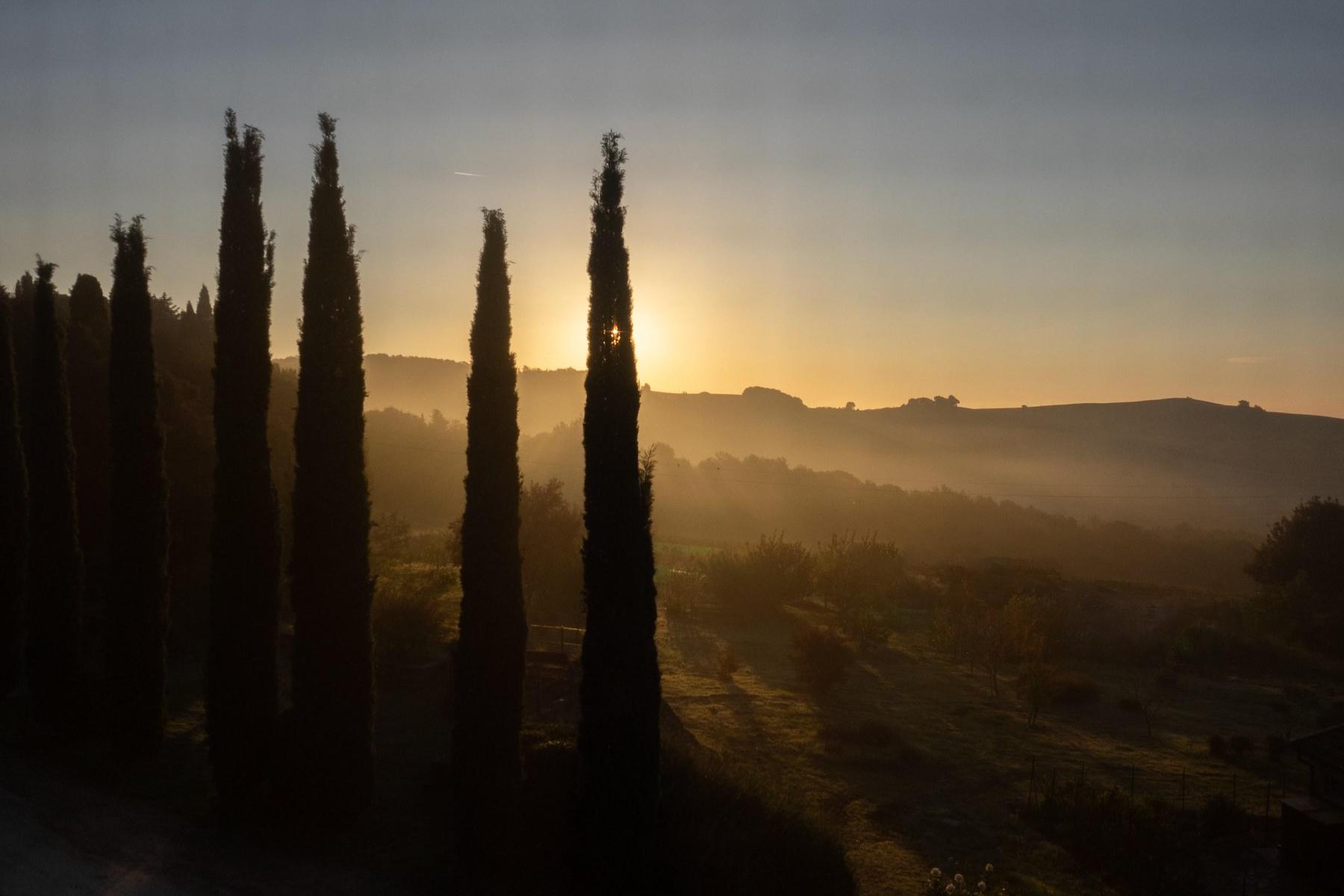
There are very few landscapes on earth that match the expectation formed by every image ever taken of them. The Val d'Orcia — the broad UNESCO-designated valley of southern Tuscany, its pale hills drawn with cypress lines, its light at dawn and dusk a phenomenon that photographers have spent lifetimes attempting to capture — is one of them. To arrive here for the first time, particularly at the hour before the rest of the world wakes, is to understand immediately and without argument why this land has been considered sacred in the most secular sense of the word for a very long time.
The Val d'Orcia has been designated a UNESCO World Heritage Site not simply for what it contains but for the integrity of what it has refused to become. It remains agricultural, largely private, and essentially unchanged in its essential character. Pienza — the Renaissance ideal city commissioned by Pope Pius II and laid out in the 15th century as a vision of humanist perfection — sits at its edge, as does Montepulciano, whose noble Vino Nobile has been produced on these volcanic slopes since the Middle Ages. Pitigliano, Sorano and Sovana, the ancient Etruscan towns of tufa stone rising from the gorges of the southern Maremma, offer one of the most dramatic and least visited landscapes in Tuscany — a world apart from the cypress-lined hills of the north, older and in some ways more mysterious. These are private journeys we design with great care, each one approached not as a day trip but as an encounter with a specific dimension of what Tuscany actually is.

Rosewood Castiglion del Bosco is, in the fullest sense, a world unto itself. Its origins reach back to 1100 AD — a medieval borgo of extraordinary history, adorned with a 14th-century fresco by Pietro Lorenzetti that still hangs in its original position in the estate's ancient church. It was Massimo and Chiara Ferragamo who, in 2003, saw what this place could become and dedicated years of meticulous, loving restoration to making it so: the historic buildings of the village brought back to life with the involvement of the finest local Tuscan craftsmen, the winery — one of the seven original pioneers of the Brunello di Montalcino denomination — entirely renewed, and the only private 18-hole golf course in Italy, designed by British Open champion Tom Weiskopf, laid across the estate's 5,000 acres of rolling Val d'Orcia landscape. What the Ferragamo family created here was not a luxury hotel. It was an act of civilisation: the restoration of an entire medieval estate, complete with its church, its village, its wine, its golf and its soul, to a state of living beauty. Today, as a Rosewood property of the very highest order, with Michelin-starred dining at Campo del Drago, private villa accommodation of extraordinary distinction, harvest experiences, and outdoor event venues of unrivalled drama set among castle ruins and ancient kitchen gardens, it remains one of the defining private estate experiences in the world. The harvest season here, with the Brunello vineyards in full colour and the cellar at work, is an experience we hold in the very highest regard.

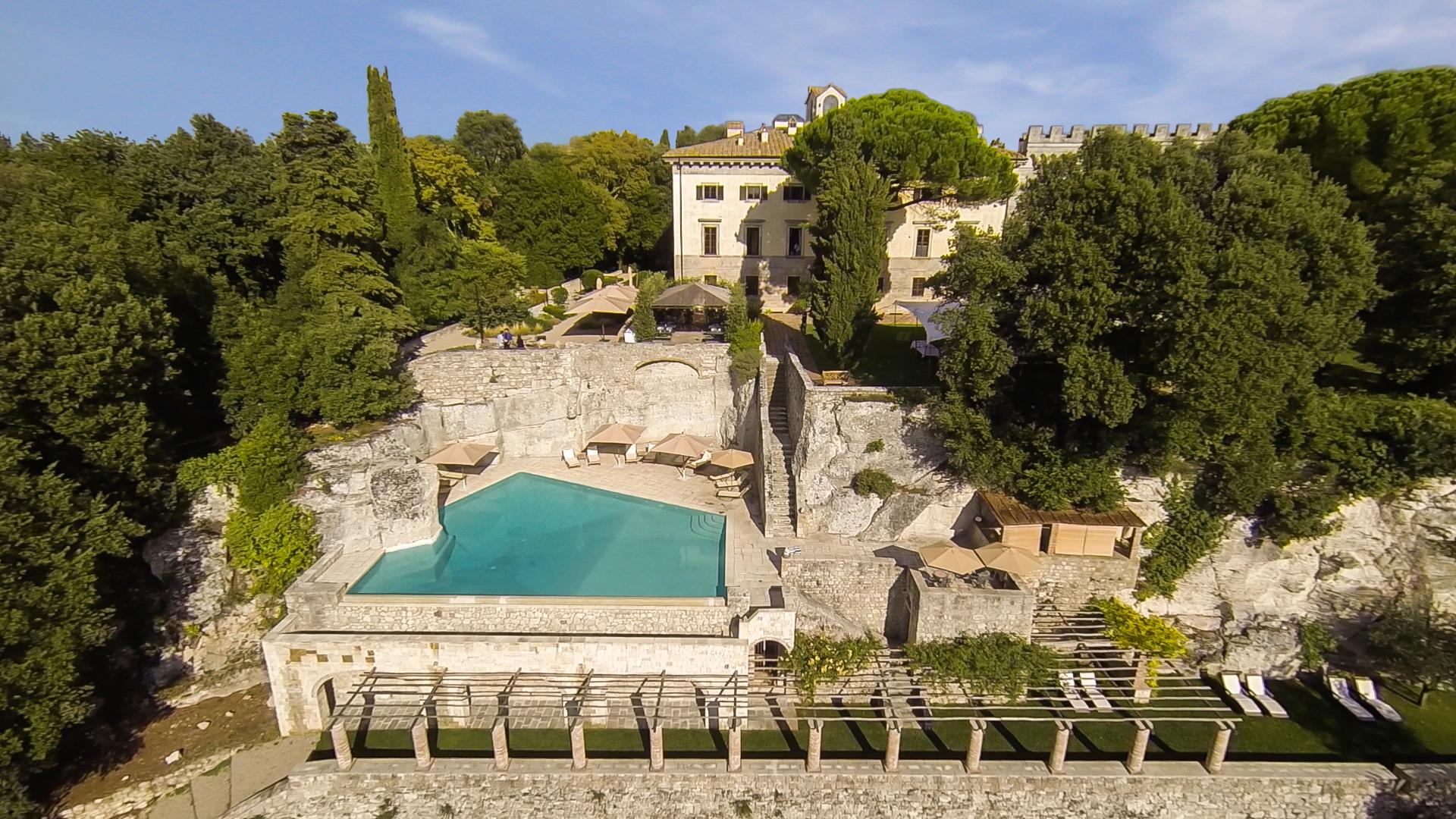
Castello di Vicarello occupies a different register entirely — and one of equal distinction. A fortress of the Republic of Siena in its origins, its ruins were discovered in the 1980s by Carlo and Aurora Baccheschi Berti, a Florentine with an impeccable eye for design and his Milanese wife, a tastemaker of rare aesthetic intelligence, who were at the time dividing their lives between Bali and Milan, immersed in the worlds of fashion, textiles and furniture. What they saw in these ruins was not a project. It was a calling. Over more than twelve years of meticulous restoration — Carlo overseeing every stone and finish personally, Aurora crafting the singular aesthetic that defines the property to this day — they transformed a Sienese fortress into one of the most quietly extraordinary private estates in Tuscany. Three generations of the Baccheschi Berti family now give this place its warmth and its character: the eldest son Brando as wine custodian of the estate's organically farmed vineyards, the kitchen in the hands of Aurora's exacting Tuscan standards, the hospitality shaped by a family whose relationship with this land is entirely personal. Set near Cinigiano in the southern Maremma, producing wine and olive oil from its own estate, Castello di Vicarello is available for whole-estate buyout — an experience of private Tuscany that has no equivalent.
“This is a land that nourishes. And the finest way to honour it is to arrive slowly, to leave lightly, and to hold what it gives you with both hands.”
The Truffle: A Forest Education
Tuscany is one of Italy's most revered truffle-producing regions, and the knowledge of where to find what it yields belongs to a very small number of families who have worked these forests for generations. Walking deep into the Tuscan woodland at dawn accompanied by a truffle hunter and his dog — a relationship between man, animal and land of extraordinary intimacy and mutual understanding — is one of those rare experiences that engages every sense simultaneously and changes, in some quiet but permanent way, how one thinks about food, about soil, about the relationship between the wild world and the table.
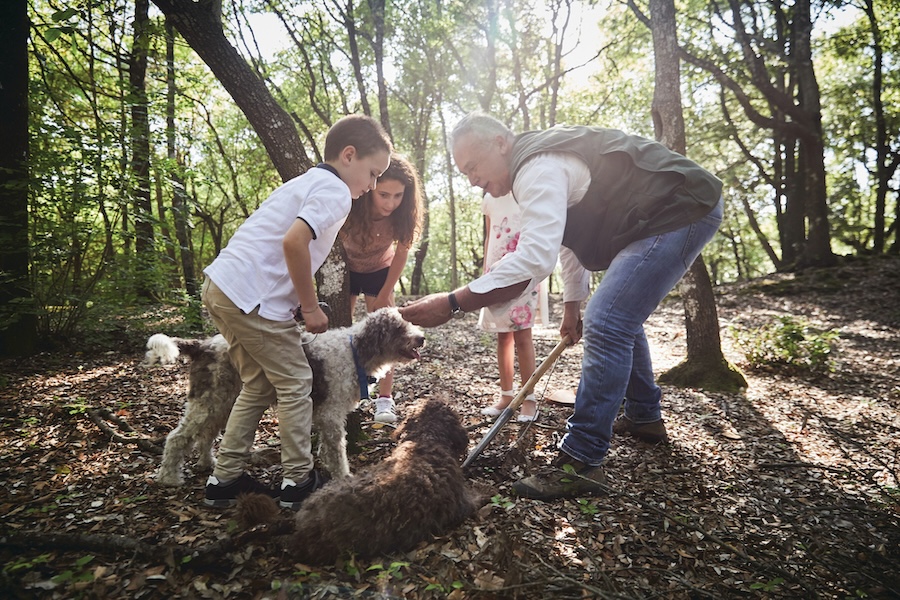
The truffle is, in its most precise description, an underground mushroom — a subterranean fruiting body whose relationship with the root systems of specific trees above it is still not entirely understood by science, which makes the hunter's generational knowledge of it all the more remarkable. Tuscany produces three distinct varieties across its seasons: the Marzolino, or Marzuolo, found between January and April; the Scorzone, a black truffle found between May and July; and the White Truffle, the rarest and most prized of the three, found between September and December. The Marzolino carries a sharper, almost peppery edge; the summer Scorzone is milder, closer to hazelnut and wild mushroom; the White Truffle of autumn is the most complex of the three, its aroma deeper and more persistent than the other two only hint at. Each demands its own hand in the kitchen.
The private truffle experience moves from the forest to the table in a single morning: the hunt itself, the education in the biological cycles of what has been found, and then a private cooking class in which the truffle is the teacher — handmade pasta, the techniques of a Tuscan kitchen, the alchemy of heat and fat and the underground mushroom that has no substitute. This can be followed, for those who wish it, by a Brunello di Montalcino tasting of genuine depth, pairing the rarest truffle of the season against one of Italy's greatest red wines in a combination that requires no argument. We also pair this experience with private farm lunches, cellar visits, and panoramic terraces above the Tuscan hills. It is one of those mornings that reframes everything that follows it.
Conscious Luxury: Sustainability, Wellness and the Regenerative Estate
The most extraordinary luxury properties in Tuscany share something that goes well beyond the quality of their architecture or the depth of their service. They share a philosophy: that the land they occupy is not simply a setting but a responsibility. At Sculptured Journeys, this is not a position we have adopted because it is fashionable. It is one we have held since long before the language of sustainable travel entered the mainstream, because the estates and families we have built relationships with here have always understood their land in precisely these terms.
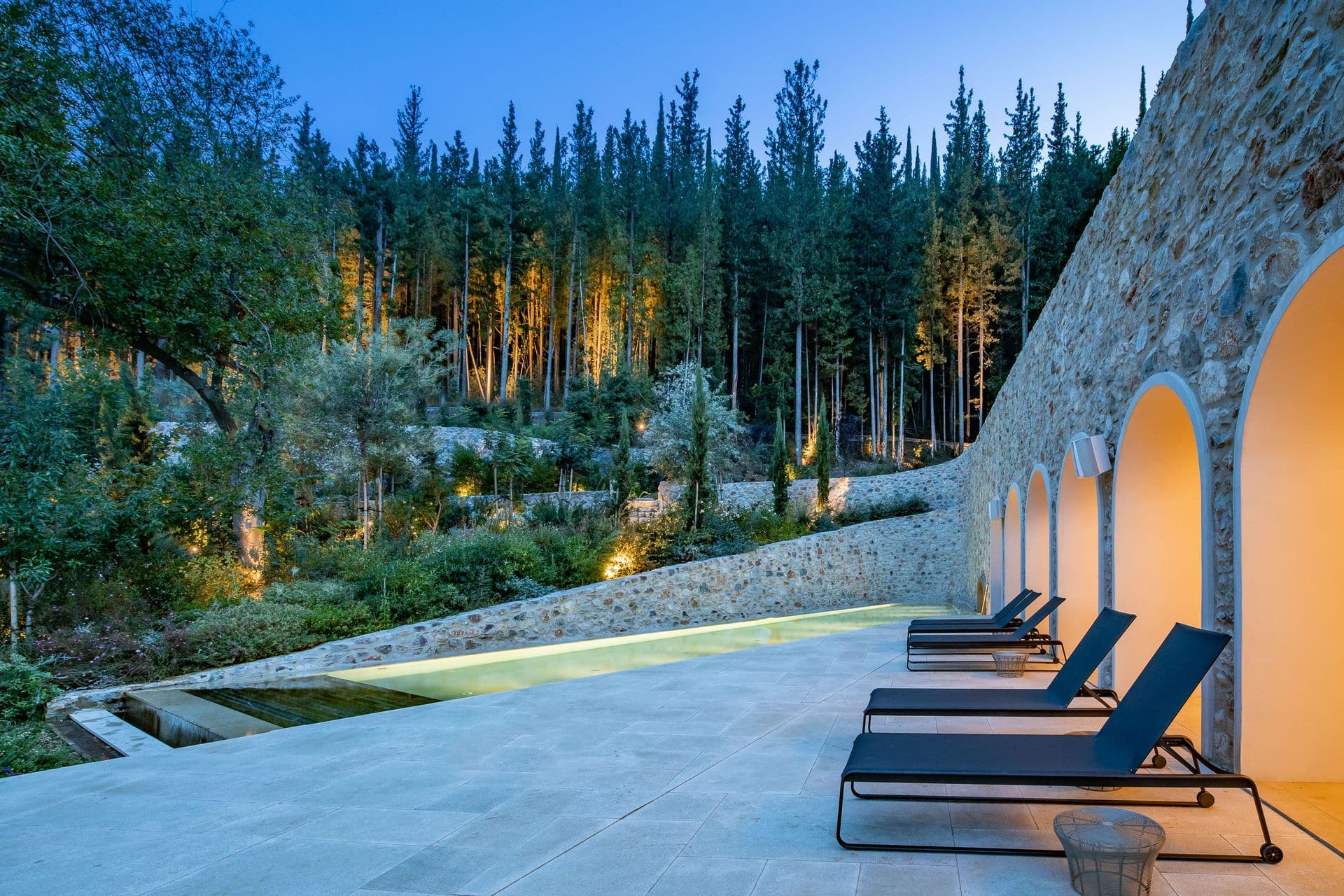
Borgo Pignano, set in the Val di Cecina near Volterra on an estate of exceptional scale, is the most complete expression of regenerative luxury available to our clients. The farm-to-table philosophy here is not a menu descriptor — it is the organising principle of the entire property. Organic farming, natural building materials, and direct access to the estate's adjoining Berignone and Castelvecchio nature reserves — home to wild boar, roe deer, hares and porcupines, and to birdlife ranging from kestrels and ospreys to storks and cranes — connect guests to the working rhythms of the land in the most literal sense. A guided foraging walk across the estate, learning to identify and gather the wild and cultivated plants that have always found their way into the local kitchen, is among the quietest and most memorable of these encounters: the kitchen draws on what the estate produces, the guest experience is shaped by what the season allows, and the carbon footprint of the stay is taken as seriously as the thread count of the linen. To inhabit Borgo Pignano for several days is to understand what luxury looks like when it is genuinely rooted in a place rather than imposed upon it.
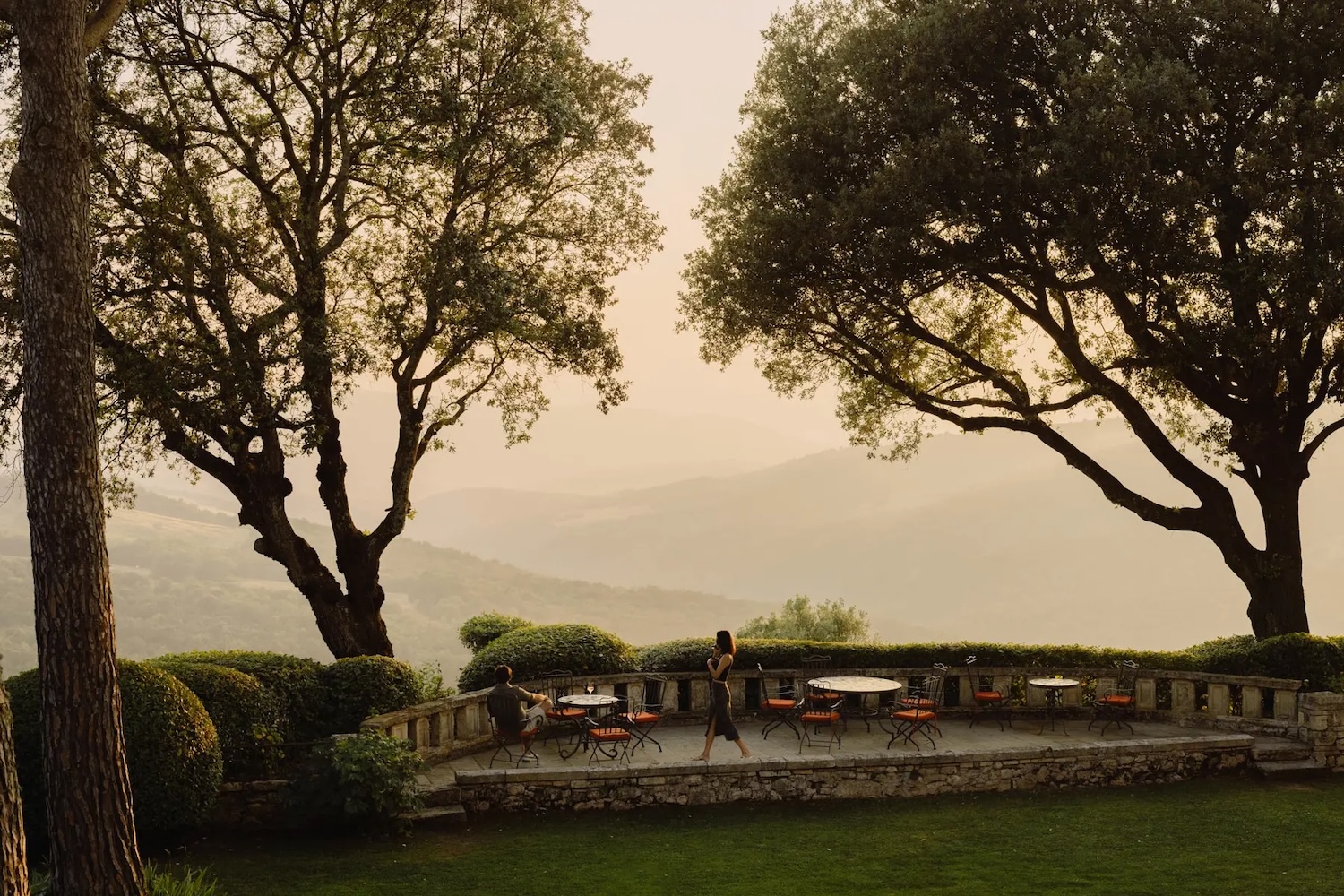
Borgo Santo Pietro in the Maremma — a 900-year-old estate near Chiusdino with 300 acres of certified organic farmland, its own Seed to Skin botanical skincare line drawn entirely from the estate's own gardens, and a wellness programme that understands the relationship between landscape, body and restoration as something indivisible — carries the same conviction with the same uncompromising thoroughness. The biodynamic wine estates of the Brunello zone treat their vineyards as living ecosystems. The plastic-free ethos that increasingly defines the finest addresses in this region is not an accommodation request. It is an expression of who these places are.
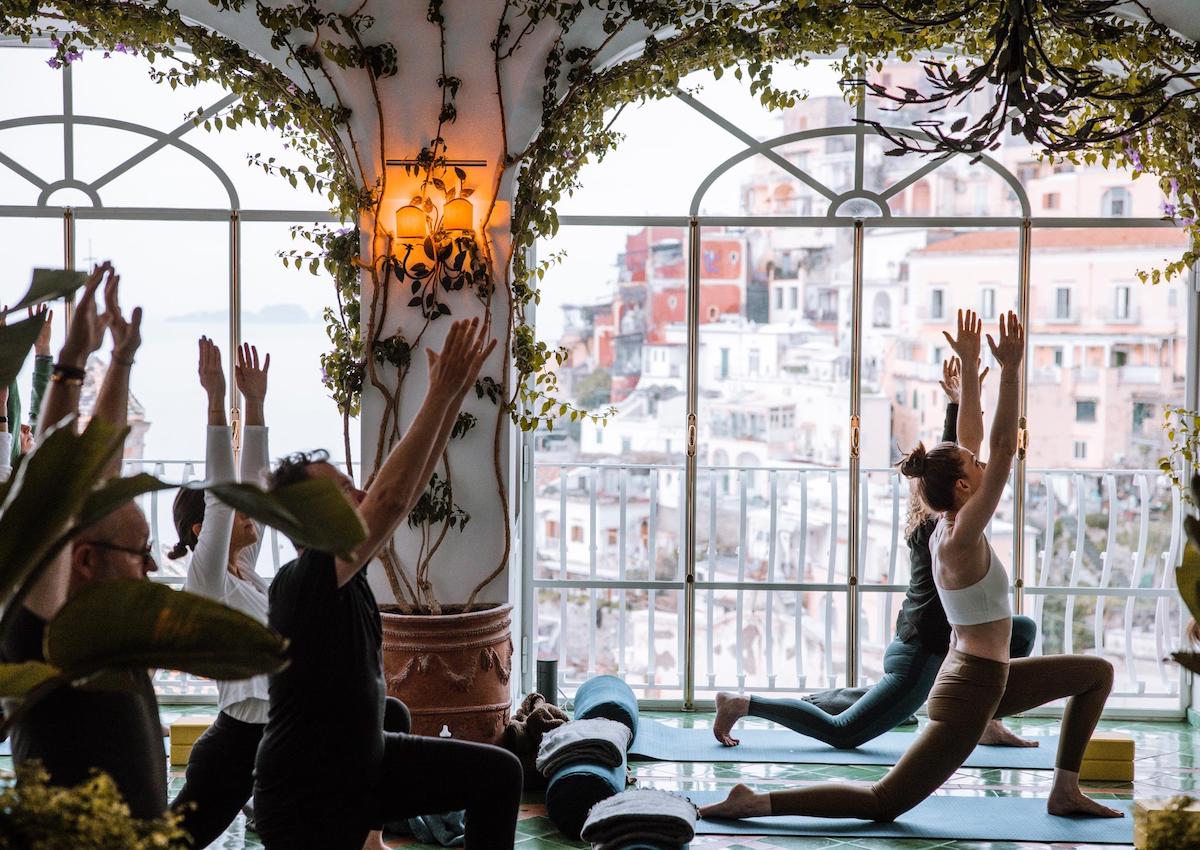
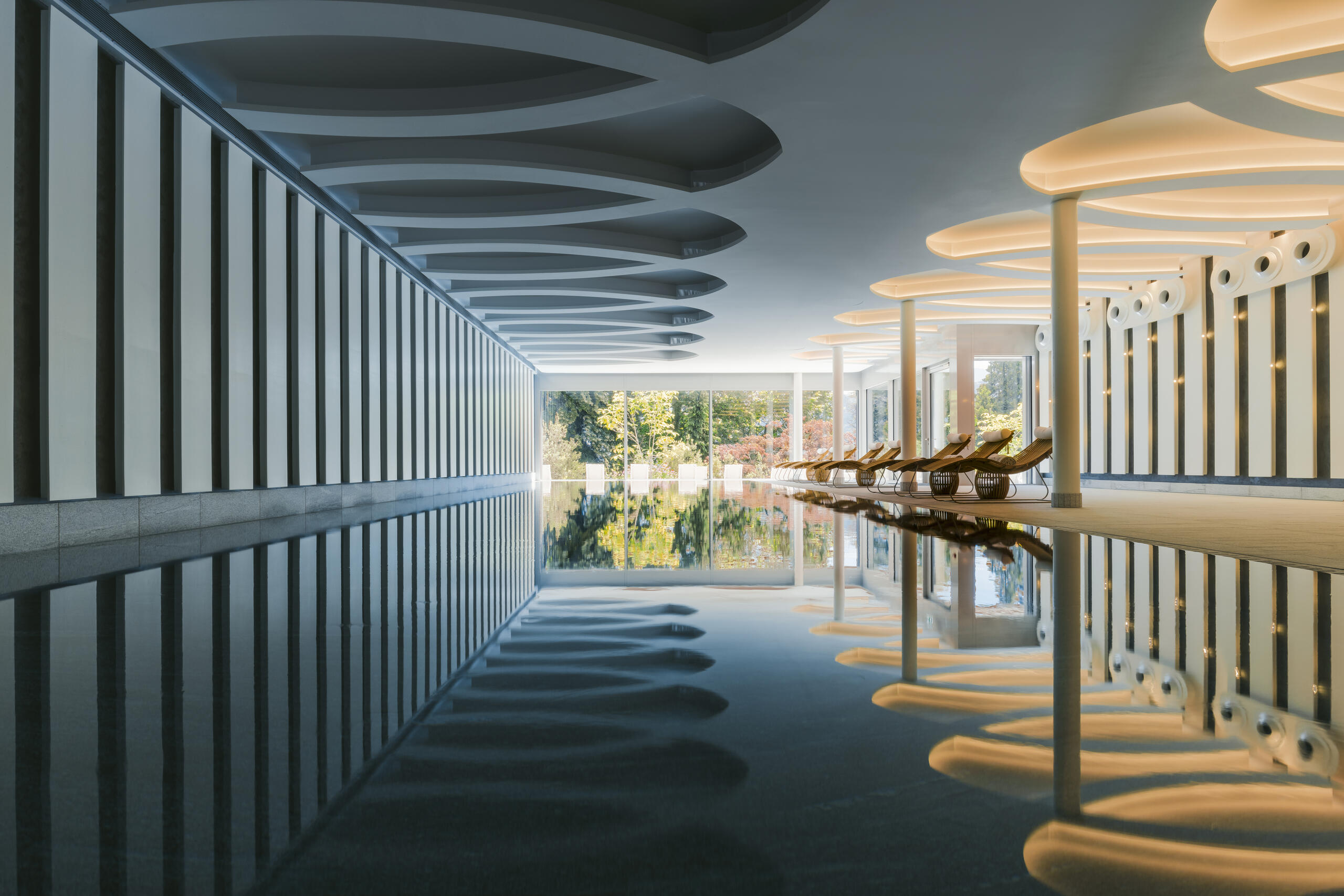
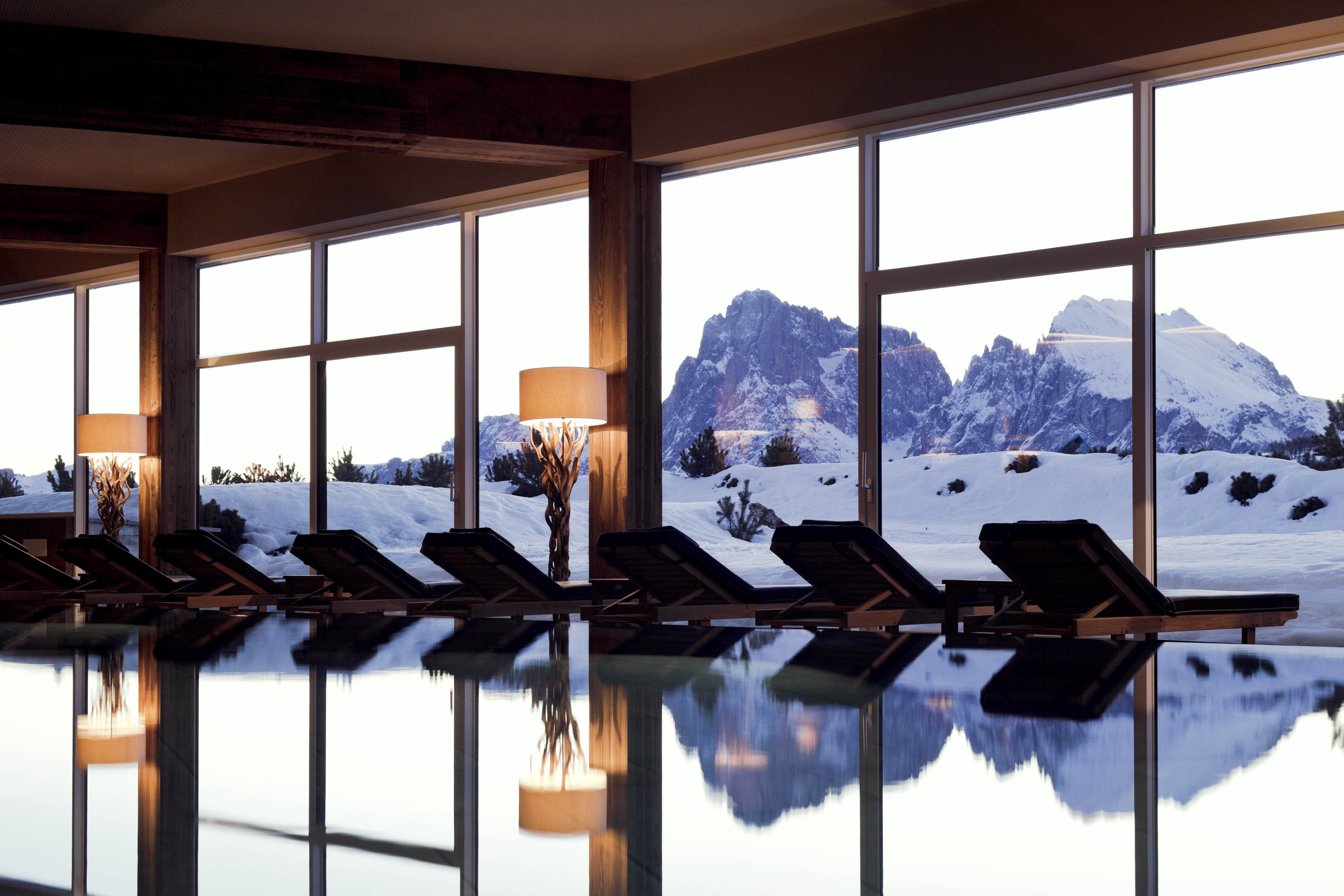
Wellness, in the Tuscany we know, is not a facility. It is a consequence of being in the right place, at the right pace, with the right quality of food and silence and landscape surrounding you. The properties we partner with understand this at a fundamental level: spa programmes of genuine therapeutic depth, nutrition rooted entirely in organic estate produce, restorative sleep environments of extraordinary quality, and the kind of stillness that no urban wellness retreat can manufacture regardless of its budget. For clients with specific and advanced wellness requirements — longevity-focused programmes, medically supervised retreats, specialist therapeutic protocols, or the kind of deep physical restoration that requires more than a traditional spa menu can offer — we curate access to the right providers and environments with the same precision and discretion we bring to every other element of the journey.
Private Villas and Estates: Tuscany Without Compromise
For those for whom privacy is not a preference but an absolute requirement, Tuscany offers some of the most compelling exclusive estate rental experiences available anywhere in the world. Sculptured Journeys curates a collection of private villas and estates — historic farmhouses, Renaissance villas, working wine estates and purpose-restored properties of extraordinary architectural distinction — available for the exclusive use of one family or group, staffed to the highest imaginable standard and with no dimension of the experience shared with anyone outside the party.

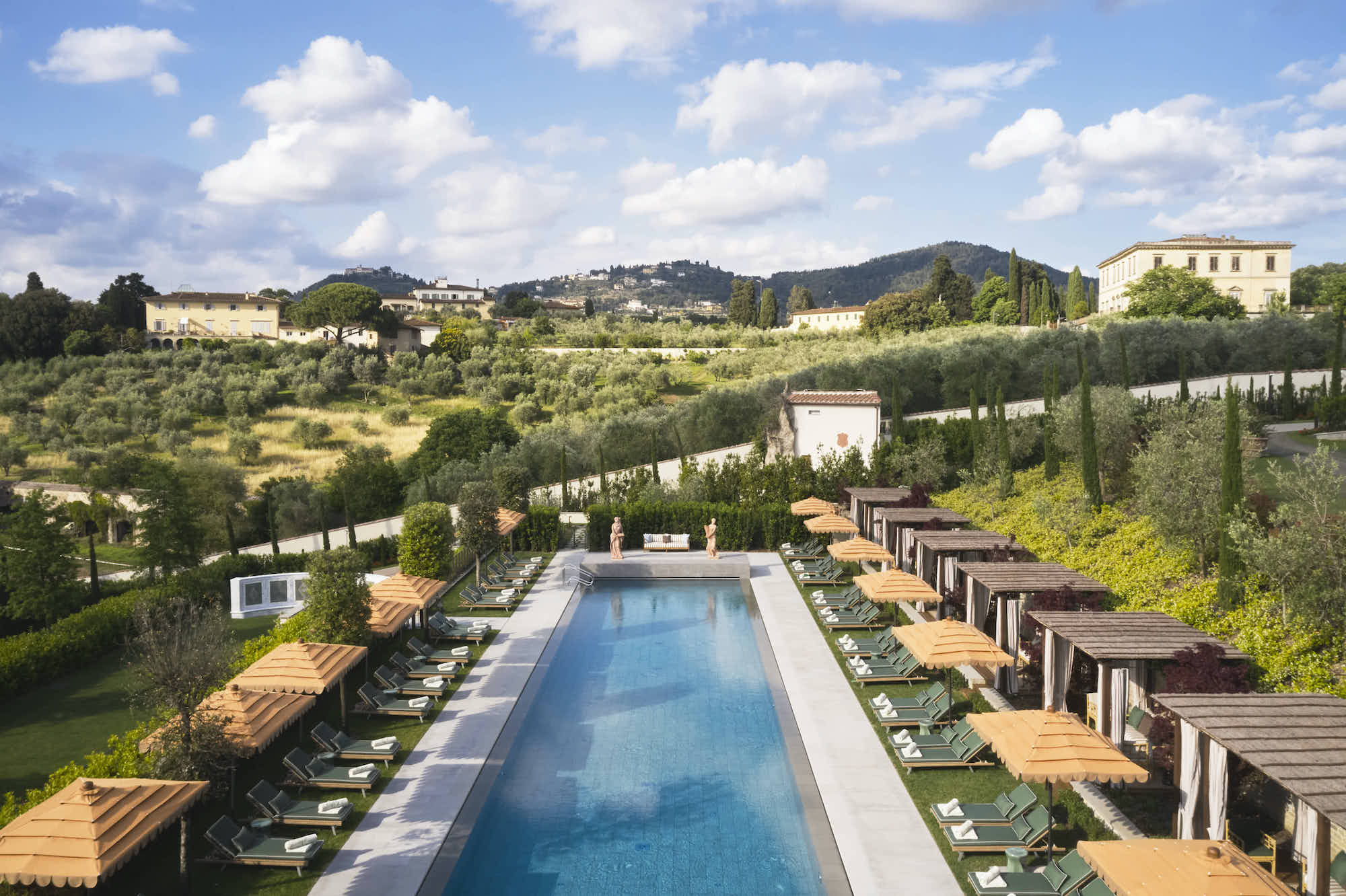
Secluded estates within the Chianti Classico zone with private chefs working exclusively with seasonal, locally sourced produce, dedicated concierge services managing every element of the stay from chauffeured vehicle arrangements through to private sommelier access and bespoke excursion design. Historic Tuscan properties with heated pools, private olive groves and kitchen gardens, and the kind of silence that city life has made genuinely rare. Whole-estate buyouts for private family gatherings, milestone celebrations and exclusive corporate retreats of the highest order — occasions where the property, the staffing, the catering and the programme are designed from the ground up around the people who will inhabit them.
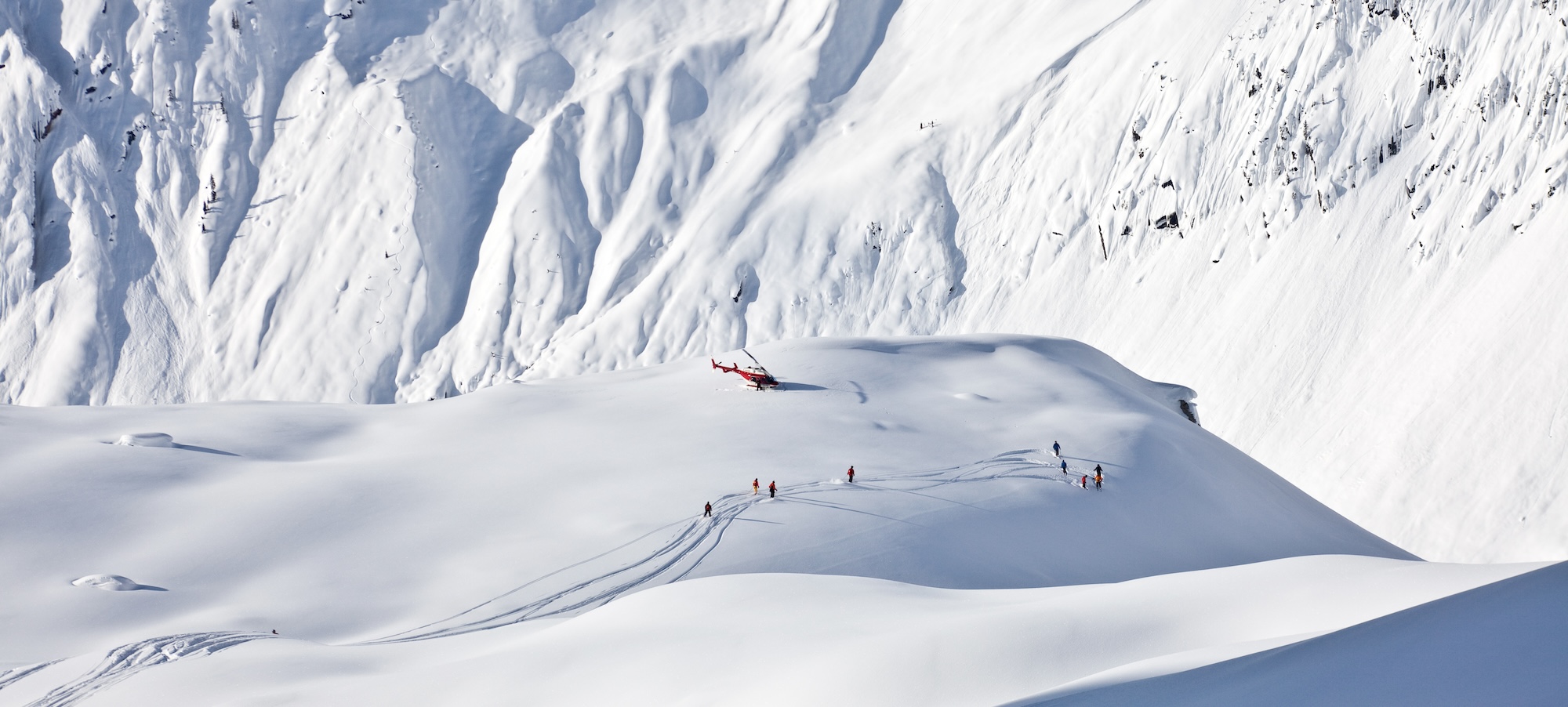
For family offices and private client advisors serving UHNW principals, we understand the full spectrum of requirements: absolute privacy and security, staffing vetted to the highest standard, seamless logistics from private jet arrival at the nearest suitable airport through to helicopter transfer directly to the property, advance reconnaissance and preparation as standard. Properties with helipad facilities are available within our portfolio for clients whose requirements extend to direct airside arrival. Our Tuscany villa portfolio is available entirely by private enquiry, and what we present publicly is only a reflection of the standard, not the full extent of what we hold.
For clients requiring additional discretion, selected properties within our portfolio are held entirely off-publication. We recommend a direct conversation.
Private Aviation, Supercars and the Poetry of Arrival
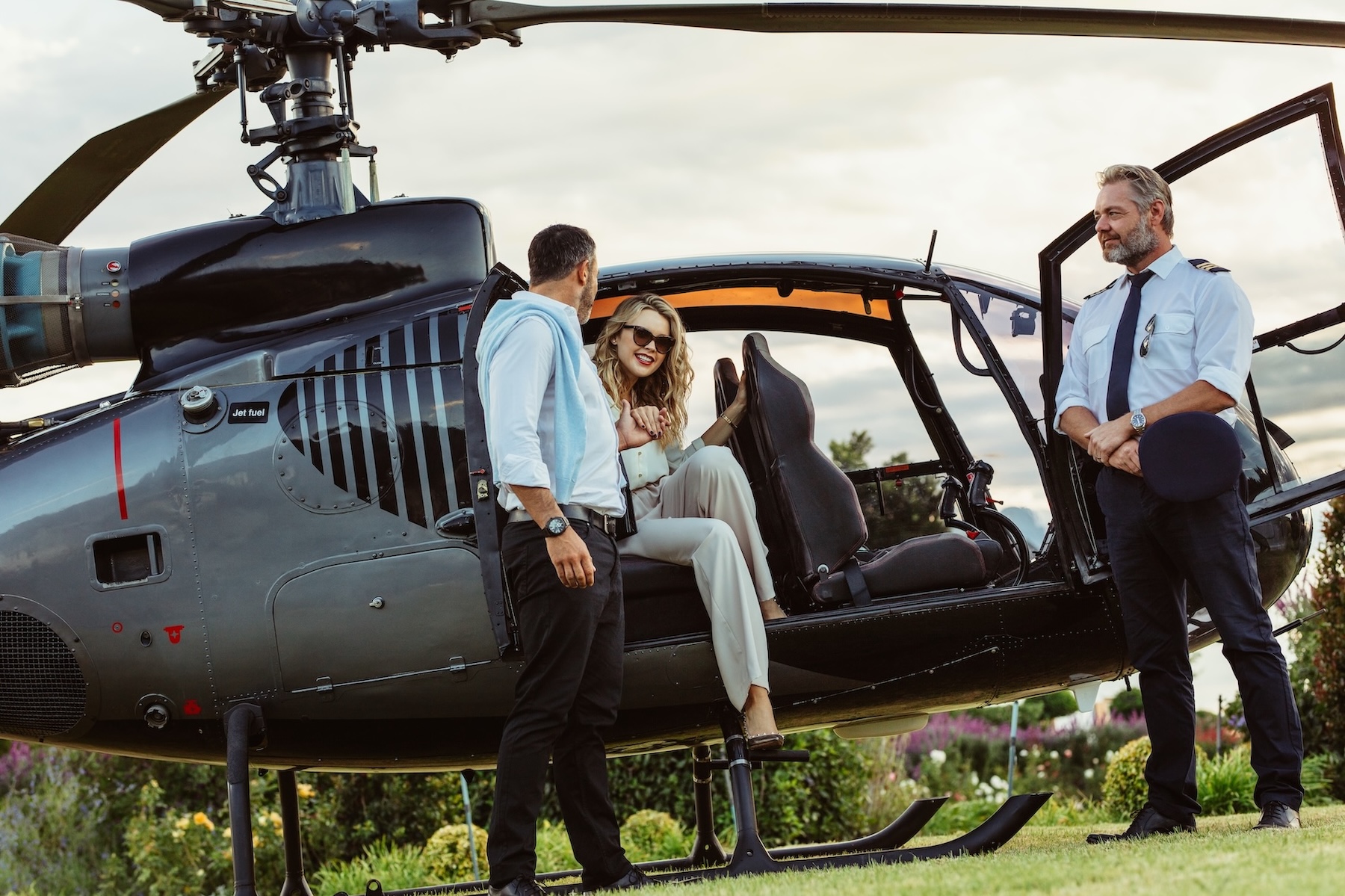
There is a particular kind of arrival in Tuscany that belongs to a category of its own. The private helicopter approaching a hilltop estate as the Val d'Orcia opens below. The Ferrari or Lamborghini taking the road between Greve and Radda as the morning light arrives across the Chianti hills. The meticulously restored Fiat 500 from the 1970s winding through an avenue of cypress trees towards a farmhouse that has been waiting in the same position for five hundred years. Each of these is, in its own register, an expression of the same truth: that in Tuscany, the journey and the destination are inseparable, and both deserve to be done well.
Private jet access into Tuscany — through Florence, Pisa, Grosseto and selected smaller airfields — combined with private helicopter charters and chauffeured vehicle transfers, ensures that the quality of the journey begins before the estate is reached. For clients wishing to combine Tuscany with time in Rome, private jet connections from Lazio region airports — including Ciampino and Fiumicino — allow a seamless transition between the two, with the capital and the countryside held within a single, coherent private itinerary.
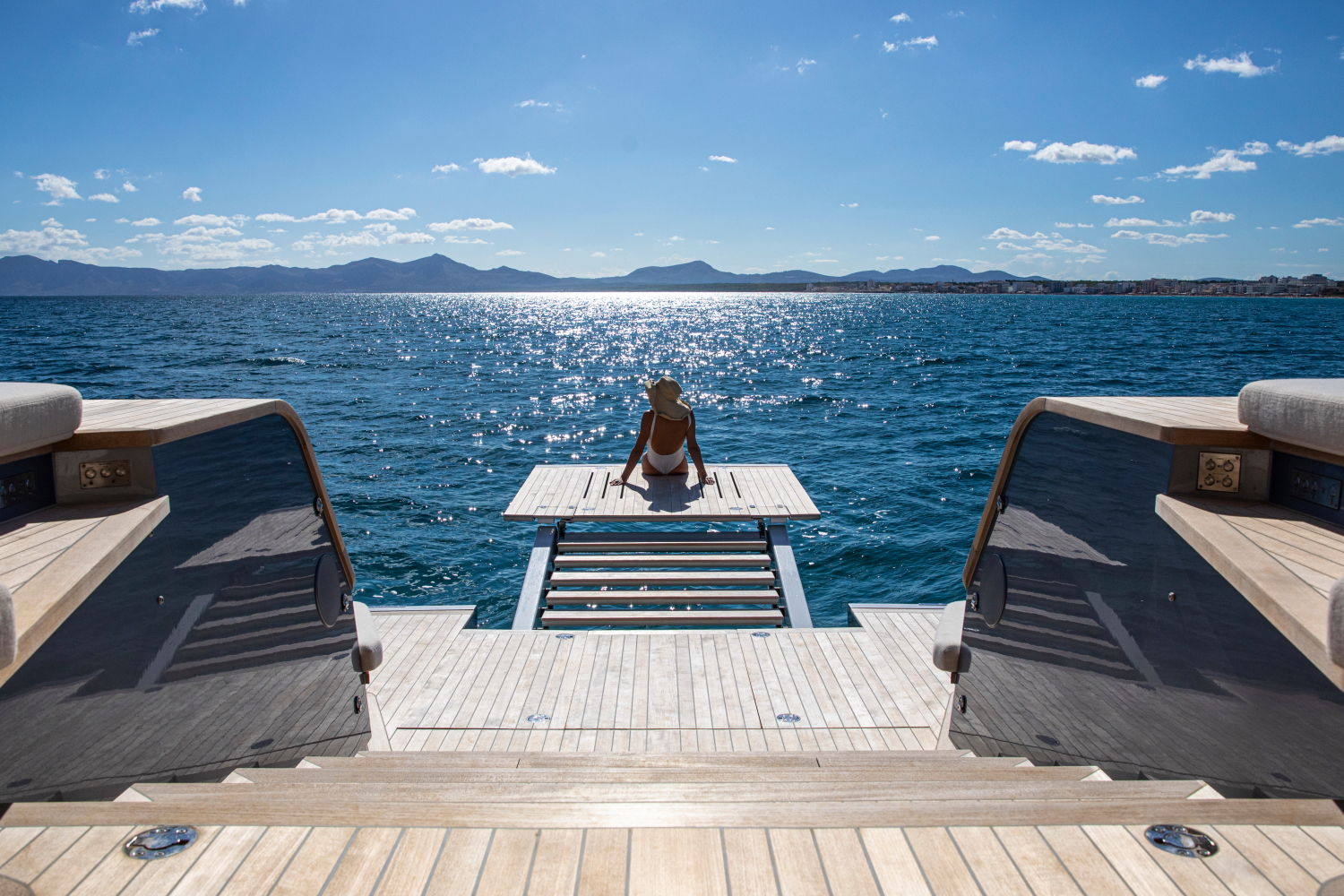
Details of our private jet services are available on request here. For estates with helipad facilities, direct airside arrival removes any transition between the aircraft and the property. Private boat access along the Monte Argentario coastline, exploring the hidden coves and sea-caves accessible only from the water, extends the same principle of private, unhurried discovery to the Tuscan sea.
The private gourmet helicopter journey — a bespoke aerial experience over the landscapes of Chianti, Brunello di Montalcino, Montepulciano and the ancient hilltop towns of the Val d'Orcia, combining the view from altitude with private access to estates, cellars and tables below — is among the most singular experiences we arrange in the region. The landscape from that elevation, in the right light, is the argument for Tuscany made in the most immediate possible terms. Hot air ballooning over the Val d'Orcia at dawn belongs to a quieter, perhaps more interior register of the same experience: the landscape unfolding beneath without engine noise, in the hour before the world has fully asserted itself.
The Living Landscape: Golf, Hiking, Painting, Horseriding and the Private Cooking Table
Tuscany is not only a landscape to be contemplated. It is one to be moved through, worked in, and understood from within. Golf at Castiglion del Bosco — across the only private 18-hole course in Italy, designed by British Open champion Tom Weiskopf, rolling across 5,000 acres of Val d'Orcia estate — is an experience of a wholly different order to any round played elsewhere: the landscape is the course, the course is the estate, and both are extraordinary. Hiking through the Val d'Orcia, the Chianti hills or the wild terrain above Volterra with a private naturalist guide opens Tuscany at the pace the landscape deserves — slowly, with attention, and with the kind of incidental discovery that only unhurried movement makes possible.
Horseriding across an estate in the Maremma, through oak forest and open meadow, connects our clients to a tradition of this land that goes back centuries and has no urban equivalent.
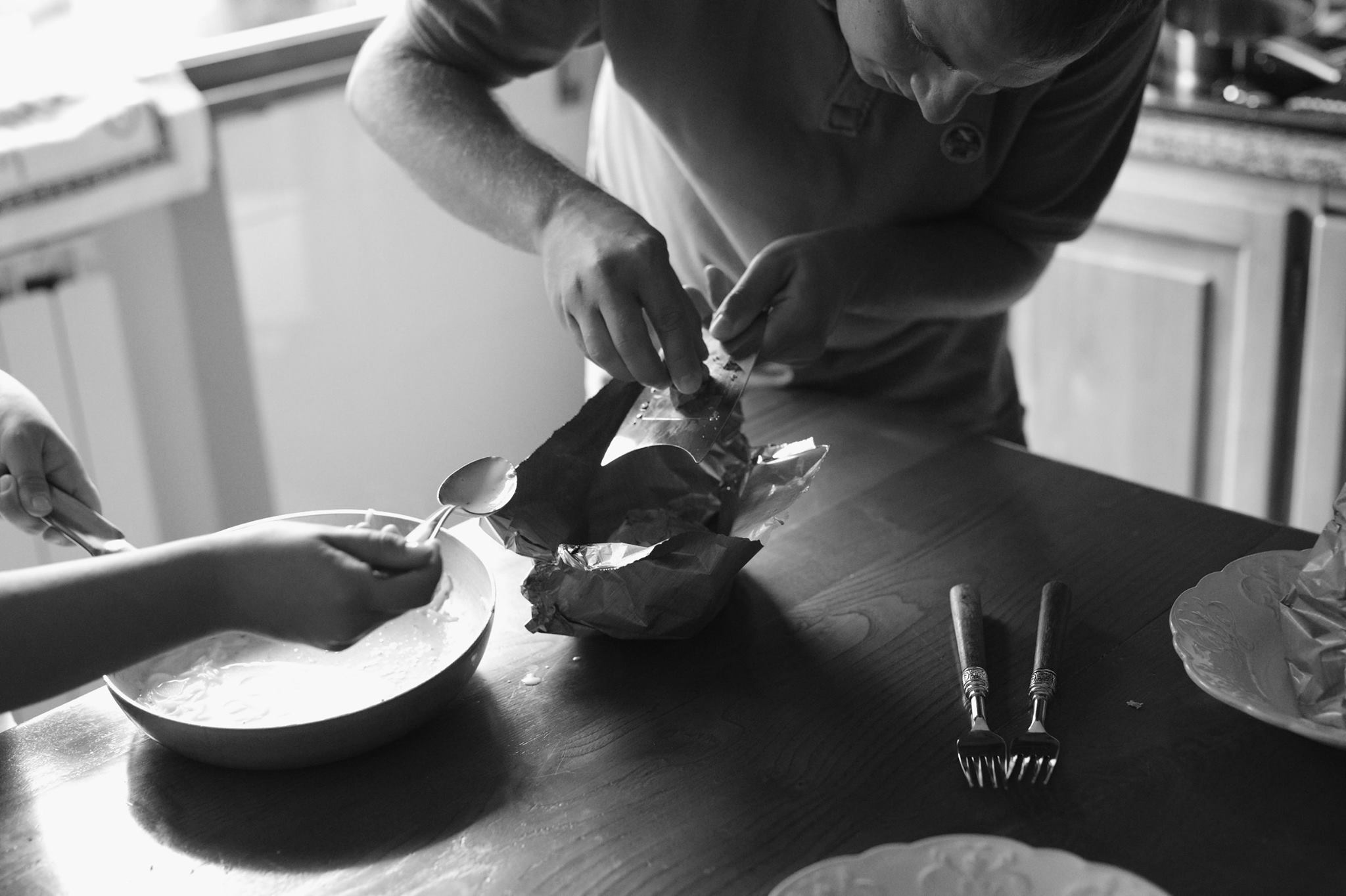
Private painting experiences in the Tuscan landscape — working in oils or watercolour in the presence of the Val d'Orcia hills or the medieval rooftops of a hilltop town, guided by an artist of genuine skill — offer a quality of immersion in the visual world of this region that no gallery visit can replicate. The landscape has been painted for five hundred years. To add one's own hand to that tradition, however modestly, is an act of genuine connection. Private cooking classes in the Tuscan tradition — working with estate produce, learning the logic of a cuisine rooted entirely in seasonal ingredients and ancestral technique — are among the most requested experiences we curate, and among the most lasting in their effect on how clients think about food long after they return home.
Not far from Montalcino, the Abbey of Sant'Antimo stands in a valley of olive groves and silence as one of the most moving pieces of Romanesque architecture in Italy — a Benedictine monastery whose origins are traced, in legend, to Charlemagne himself, and whose travertine and alabaster stone glows gold in the afternoon light in a way that photographers and painters have returned to for generations. To visit Sant'Antimo in the early morning or at Vespers, when the Gregorian chant of the monks fills the nave, is an encounter with continuity and beauty of a kind that is increasingly rare in the modern world. We design private visits here as a natural complement to the Brunello experience at Montalcino — wine and sacred architecture as two expressions of the same ancient and nourished landscape.
Under the Open Sky: Italy’s Most Extraordinary Cultural Evenings
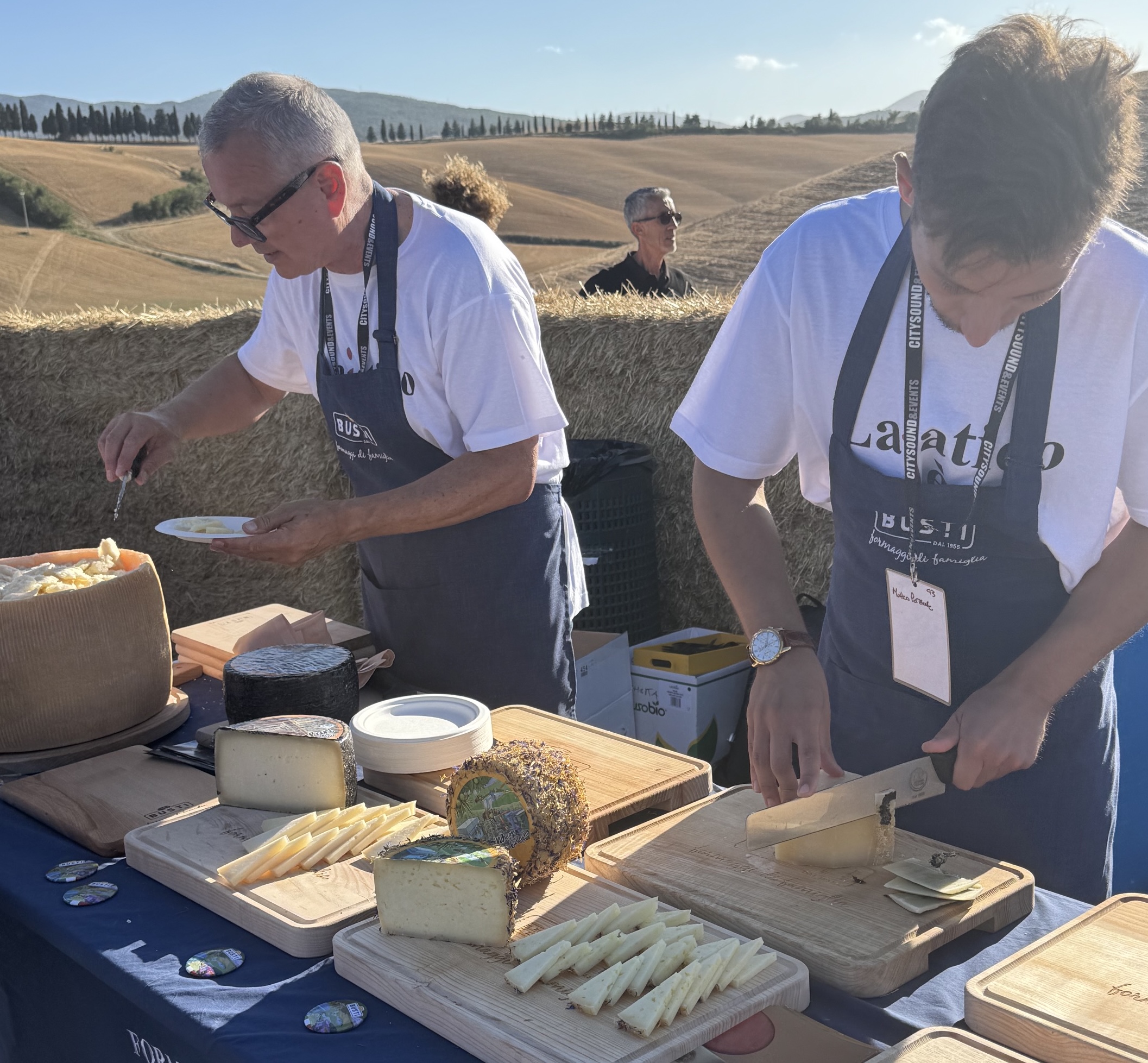
Italy is a country where the setting of a cultural experience is considered as seriously as the experience itself — and Tuscany, with its ancient arenas, its hilltop towns and its landscapes of operatic scale, is at the heart of what has become one of the most extraordinary circuits of open-air performance in the world. Major concerts take over Italy's most iconic settings each summer, from ancient Roman arenas to vast open-air stages set within landscapes of breathtaking beauty, and the emotional charge of experiencing serious music in these settings is something that the finest concert halls in the world cannot replicate.
Among the most singular of these occasions is the annual open-air performance held in Lajatico — the Tuscan hilltown that is the birthplace of Andrea Bocelli — where a temporary stage is constructed in a natural amphitheatre of the countryside for a single night only. It is built, the performance takes place, and then it is gone. The impermanence is part of the meaning. To be present for an evening of this kind — arriving privately, dining before, departing through a landscape that is entirely different at night than it is in daylight — is an experience that our clients carry with them long after the practical details of the journey have faded. We design around these evenings with the seriousness they deserve, treating them as the anchoring moments of a Tuscany journey rather than its optional additions.
The Tuscan Coast: A Different Register of Beauty

The Tuscan coast offers two addresses of entirely different character.
Forte dei Marmi has been the Italian Riviera of choice for those who prefer discretion to display for well over a century. Old money, considered taste, private beach clubs of impeccable standard, and evenings that move at the pace of a long dinner among people who have been returning to the same tables for decades. Principe Forte dei Marmi and Hotel Byron are two addresses we know well, and return to consistently. From Forte dei Marmi, a private excursion into the Carrara marble quarries — the source from which Michelangelo cut the block that became David, and from which the facades of the greatest buildings of the Florentine Renaissance were dressed — is one of those arrangements that connects the Tuscan coast to the full breadth of Italian civilisation in a single, unforgettable journey.
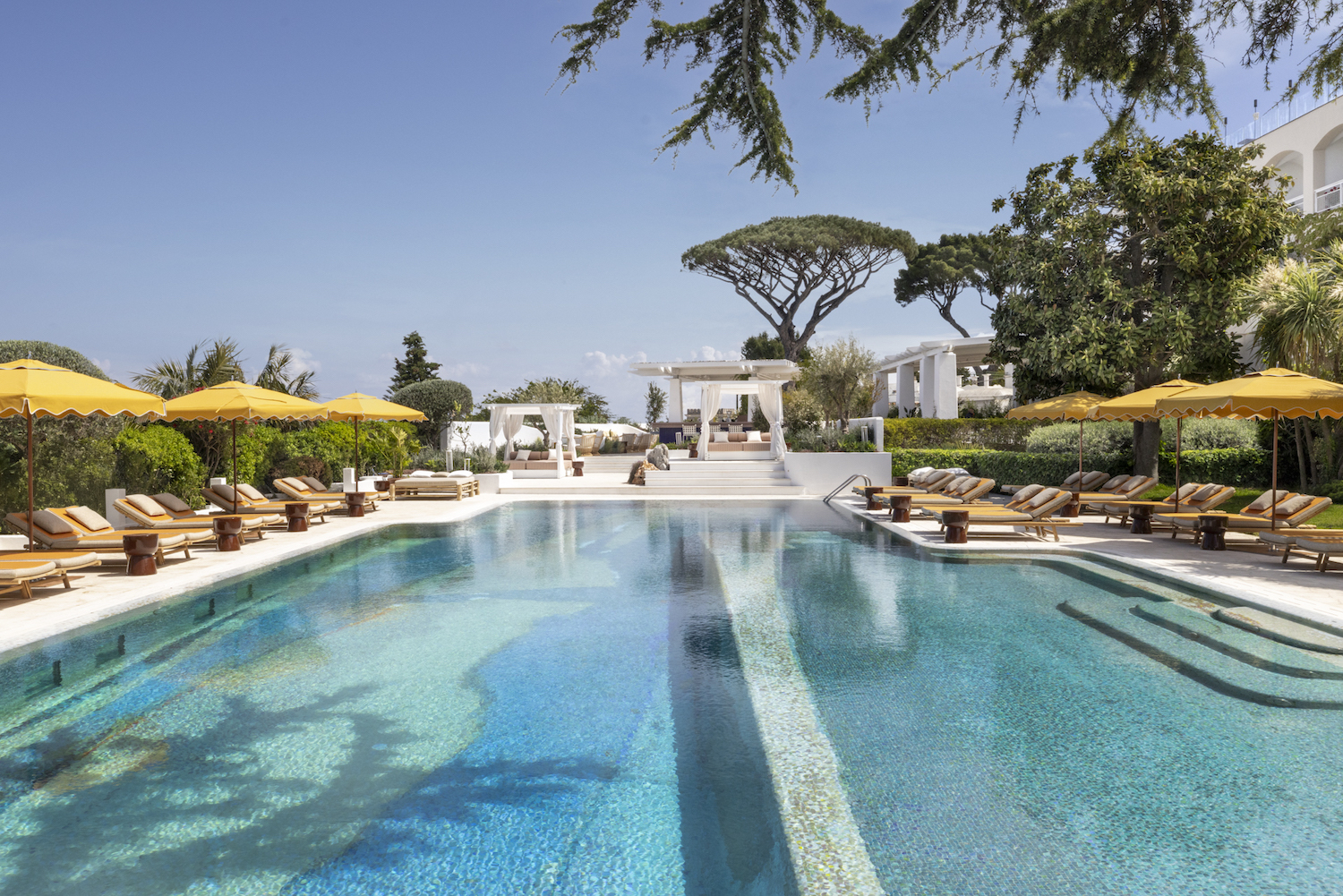
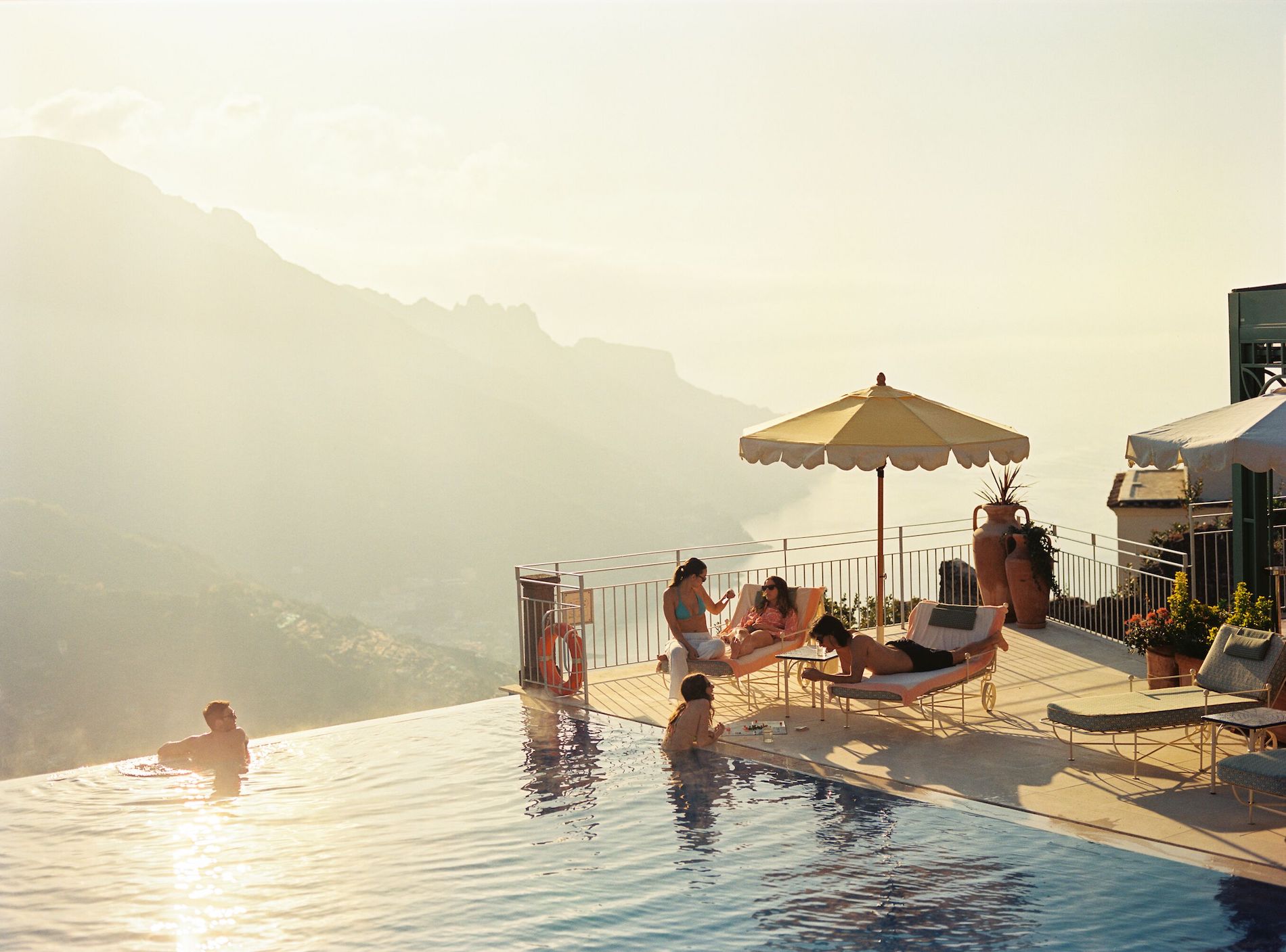
Monte Argentario exists at a greater remove from the world's attention, and is richer for it. A promontory in the southern Maremma that has never entirely decided whether to be peninsula or island, it carries a quality of light and a sense of remove that is without equivalent on the Italian coast. Hotel Il Pellicano — a privately owned house turned hotel in the 1960s, its terrace looking out over the Tyrrhenian Sea, its Michelin-starred kitchen, its sea-pool cut directly into the rocks below — is one of the defining addresses of Italian coastal luxury, and one of those rare properties that requires no explanation to those who have been there.
The Maremma: For Those Ready to Go Further
The Maremma is the Tuscany that has never sought approval. Wilder, rawer, and less shaped by the gaze of the visitor than the landscapes to its north, it offers a version of this region that rewards the traveller who has moved beyond the famous postcard and is ready for something more honest, more direct, and ultimately more nourishing. The food here is immediate — Morellino di Scansano and Bolgheri wines of genuine character, pork from animals that have lived well in oak forests, fish pulled from a sea that has not yet been entirely over-managed. The producers we know in the Maremma are not performing. They are doing what their families have always done. Ornellaia, on the Bolgheri coast, is one of the clearest examples. Founded in the early 1980s as part of the generation of estates that proved Bordeaux varietals could produce something distinctly Tuscan, it carries the imprint of two of Italy's most storied and historically rival wine families across its history, and continues to be run with an exactitude that treats every vintage as its own singular expression of the vineyard rather than a repeated formula.

Borgo Santo Pietro, the 900-year-old organic estate near Chiusdino that we have already described in the context of its sustainability philosophy, is also simply one of the most beautiful places to stay in Tuscany — its 22 individually designed rooms, its organic kitchen garden, its spa drawing on estate botanicals, and its unhurried sense of time combining into an experience that clients return to, consistently, as among the most restorative they have encountered. Those who find their way to the Maremma through us tend to return. It is, reliably, that kind of place.
The Journey Begins with a Conversation
The journeys we design in Tuscany are crafted with soul, intention and the quiet pursuit of beauty — shaped around who you are, what moves you, and what this extraordinary region might give you that nowhere else on earth could. Our clients belong to a world of rare experiences, built on years of deep relationships with the estates, the families, the winemakers and the tables that exist entirely outside the public domain. Tuscany rewards those who arrive with depth, and those who know where to look.
Private Tuscany Travel — Questions We Are Asked
What defines a truly private luxury Tuscany journey?
A private luxury Tuscany journey, curated by Sculptured Journeys, is designed entirely and exclusively for one party — one family, one group, one set of individuals whose particular interests, pace and aesthetic shape every element of what is designed for them. Every property, every private experience, every arrangement — from private jet arrival and helicopter transfer to Michelin-starred private dining and exclusive cellar access — is built on relationships with the people of this region that have taken years to earn, offering an insight into Tuscany that a standard itinerary simply cannot reach. The distinction is not one of luxury level. It is one of genuine, irreducible personalisation, delivered with the discretion and privacy that journeys of this depth and complexity require.
What exclusive private villas and estates are available in Tuscany?
Sculptured Journeys curates access to some of the most exceptional private villas and estates in Tuscany — from historic Chianti farmhouses and Renaissance villas to large working estates available for whole-property exclusive rental, with private chefs, dedicated concierge, heated pools and complete privacy as standard. Whole-estate buyouts for family gatherings, private celebrations and exclusive retreats are among our most frequently curated arrangements. Our villa portfolio is available entirely by private enquiry - here.
How do you arrange private jet and helicopter access to Tuscany estates?
Private jet arrivals into Tuscany are handled through Florence, Pisa, Grosseto and selected smaller regional airfields. For clients wishing to combine Tuscany with time in Rome, private jet connections from Lazio region airports — including Ciampino and Fiumicino — allow the two destinations to be held within a single seamless private itinerary. Private helicopter charter and chauffeured vehicle transfers complete the arrival sequence from the point of landing to the property door. For estates within our portfolio with helipad facilities, direct airside arrival can be arranged. All aviation logistics are managed end to end, coordinated with the client's own travel team or aviation provider as appropriate.
Full details of our private jet services are available here.
What private wine experiences do you curate in Tuscany?
We curate private wine experiences across the full depth of the Tuscan wine landscape: exclusive cellar access and bespoke food and wine pairing experiences in the Chianti Classico zone; fully private guided visits to biodynamic Brunello di Montalcino producers above the Orcia Valley, including panoramic tasting room access and, for the right client, private barrel room access before vintage release; and a combined wine and cultural journey through the ancient Carmignano DOCG incorporating the Medici Villa at Poggio a Caiano. Every experience is designed around the specific knowledge and curiosity of our clients, not around a fixed programme.
What is the best time of year for private luxury travel in Tuscany?
Tuscany rewards every season, but differently. Late spring — May and June — offers full landscape colour, cooler temperatures and relative quiet before the summer arrivals. Autumn is the season we recommend most consistently: harvest on the Chianti and Val d'Orcia estates, White Truffle season from September through December, and a quality of light that is without equal in the Italian calendar. The major open-air concert season, including the Bocelli event in Lajatico, takes place in July. Winter in the Chianti and the Maremma offers a Tuscany that almost no international visitors ever find — and which rewards those who do with a depth of access and a quality of quiet that the warmer months cannot provide.
Do you curate private truffle experiences in Tuscany?
Yes. We curate private truffle experiences across the seasonal calendar, from the Marzolino truffle found between January and April, through the summer Scorzone, to the prized White Truffle of September to December. Each experience involves a private hunt with an expert hunter and his dogs through Tuscan woodland, a full education in the biology and seasonal cycles of what has been found, and — for those who wish it — a private cooking class in which the truffle becomes the teacher: handmade pasta, traditional Tuscan technique, and the alchemy of the season's finest ingredient at the table. Private Brunello di Montalcino tastings, pairing the truffle against one of Italy's greatest red wines, can be incorporated for a morning of rare sensory depth. These are entirely private arrangements for our clients' party only.
What wellness and regenerative travel experiences do you offer in Tuscany?
Wellness in Tuscany, at the level we curate it, is not an amenity. It is a consequence of the right landscape, the right pace, the right food, and the right quality of silence surrounding you. The properties we partner with understand this at a foundational level: spa programmes of genuine therapeutic depth drawing on organic estate botanicals and seasonal produce, restorative sleep environments of exceptional quality, and the kind of profound stillness that no urban retreat can manufacture. For clients with specific and advanced wellness requirements — longevity-focused programmes, medically supervised protocols, or the kind of deep physical restoration that goes well beyond a traditional spa menu — we curate access to the right providers with the same precision and discretion we bring to every other element of the journey.
Can you arrange a private journey from Florence into Tuscany and the wider region?
Extensively. Florence is the natural entry point for a private Tuscany journey, and we design the transition from city to landscape with as much care as the journey itself. Private chauffeured vehicle, helicopter or self-drive supercar arrangements from Florence into the Chianti, the Val d’Orcia, the hilltop towns of Siena, Volterra, San Gimignano, Lucca and Pisa, and the coastal addresses of Forte dei Marmi and Monte Argentario are all curated privately and on the client’s terms. Our dedicated Florence editorial here covers the city in full.
What distinguishes Sculptured Journeys in the luxury Italy travel market?
Italian Allure Travel — the founding company from which Sculptured Journeys was born — has specialised in Italy for close to fourteen years. This is not a country we discovered. It is one we have inhabited, travelled exhaustively and come to know with the kind of depth that only time and genuine human connection can build. We know the owners of the estates, the truffle hunters who work the forests at dawn, the winemakers who open cellars they keep entirely private, the boat owners, the private guides, the local specialists in every region — the people who are the heart and soul of this country and who make the experiences we design genuinely impossible to replicate elsewhere. Italy was our foundation. As our clients began combining it with France, Greece, Spain and beyond, our world expanded naturally with them — and now encompasses Europe, Japan and Africa. But Italy remains what we know most completely, most personally, and most deeply. Sculptured Journeys does not work from a catalogue. Every journey begins with a conversation, and what emerges from it is shaped entirely by relationships that have taken years to build and cannot be manufactured overnight.




.jpg)




















-002.jpg)