Florence, Italy — A Founder's Guide to Luxury Travel | Sculptured Journeys
By Melissa Martin, Founder & CEO— Sculptured Journeys
I first came to Florence in 2005 as part of a whirlwind passage through Italy — one of those early trips where you cover distance without truly understanding what you are moving through. And yet Florence stopped me. There is no other way to say it. Among the blur of arrivals and departures, the city held something I was not prepared for, something that refused to be rushed past or neatly filed away.
I returned in 2007, not to visit but to live. To slow down. To immerse myself in Italy entirely — its rhythms, its people, its particular way of moving through a day. I wanted to understand the culture from the inside rather than from the outside looking in. Florence was one of the places I returned to again and again during those years, and each time it revealed something new. I am still returning. I am still learning.
What I know now is that Florence does not give itself up easily. It asks something of you. It asks you to slow down, to look properly, to resist the urge to process it like information. The city is not a collection of things to see. It is an atmosphere, a weight, a particular quality of light on stone that painters spent centuries trying to understand and never quite exhausted. Once you feel it, it stays with you in the way that only a small number of places in a lifetime ever do.
“Florence is not a city you see. It is a city you feel — and once felt, it does not entirely leave you.”

I always return to the Arno. The river threads through Florence like something composed — unhurried, deliberate, reflecting the stone facades and the specific gold of Tuscan light at the particular hours that matter. The Ponte Vecchio does not announce itself. It simply appears, as it always has, lined with jewellers who have been there in various forms since the sixteenth century. To stand on its eastern parapet at dusk and watch the light leave the water is one of those experiences that feels almost impossibly beautiful. I have done it many times. It has never diminished.
The streets are cobbled and immaculate in the way that only very old Italian cities can be — not sterile, but tended, cared for, loved. The architecture does not perform. It simply endures, and in that endurance communicates something about what it means for a place to have been made with genuine seriousness of purpose. Boutiques from local designers sit beside workshops where the same craftsmanship has been practised for generations. There is a buzz here that coexists with extraordinary elegance — not despite each other, but because of each other. Florence has always understood that beauty and rigour are not in tension.
Why the Renaissance Still Matters Here

Florence occupies a privileged position in the northern heart of Tuscany — set in the bowl of the Arno valley, sheltered by gentle hills, connected by ancient roads to Rome and Venice and the wider world of European commerce. Its geography was never incidental to what it became. The city sits at the centre of a landscape that has shaped Italian culture for centuries, and when you understand that position — not just on a map but in the physical experience of arriving down through the Fiesole hills and seeing the Duomo rising from the valley floor below — something about Florence begins to make sense.
The Renaissance was not a style. I want to be clear about this, because it matters for how you experience the city. It was a rupture — a decisive and extraordinary break with the medieval world and a rediscovery of the classical one. Perspective. Proportion. The human form rendered with anatomical precision and emotional truth. These were genuinely revolutionary ideas, and they emerged not from a royal court or a great empire but from workshops and studios within walking distance of one another in a single Italian city. Florentine workshops. Florentine patrons. Florentine ambition.
The Medici understood instinctively that art and power were not separate pursuits. To commission Brunelleschi was to announce something about the kind of city Florence intended to be. To patron Botticelli, Leonardo, Michelangelo was to shape how the world would understand beauty for five centuries to come. The dome of the Cathedral — Brunelleschi’s extraordinary engineering act, completed without a single precedent to draw upon — was not a finishing touch. It was a statement of intent. It still reads that way. When you see it rising above the rooftops of the city, you understand that something very serious happened here.
Michelangelo was a Florentine. So was Donatello, whose bronze David — the first freestanding nude of the Renaissance — changed everything about what sculpture was allowed to be. So was Ghiberti, who spent over two decades on the bronze Baptistery doors that Michelangelo would later call the Gates of Paradise. So was Botticelli, who gave the Western world Venus rising from the sea. These were not coincidences of geography. Florence created the conditions in which greatness was possible, and it knew what it was doing.
“What the Renaissance produced in Florence was not simply a body of work. It was a new way of seeing — and that way of seeing is still very much alive in these streets.”
What the Architecture Does to You

There is no gentle introduction to the architecture of Florence. You step into it. The Cathedral of Santa Maria del Fiore — the Duomo — dominates the skyline with a presence that is almost unreasonable in its scale and confidence. Brunelleschi’s dome rises 114 metres above the city and it still stops people in the street. To climb to the terraces above it — which we always do with clients, because the view fundamentally changes how you understand everything below — is to look out over a city that has not been meaningfully violated by the twentieth century. Florence from above is as close to its Renaissance self as any major European city you will find.
The Palazzo Vecchio in the Piazza della Signoria carries the weight of civic power across seven centuries without apology. The loggia beside it holds sculptures in the open air — works that in any other city would be behind glass — because Florence has always understood that art belongs to public life, not just to institutions. The Vasari Corridor — the elevated passageway Cosimo commissioned in 1565 to move between palaces above the rooftops of the city, crossing the Arno over the Ponte Vecchio — is one of the most extraordinary gestures in European urban architecture, and private access to it is something we are able to arrange. To walk it is to experience Florence from an angle that almost no one ever sees.
And then the Uffizi. I have stood in those galleries more times than I can count, and the density of what is contained within them still requires a kind of preparation. Botticelli’s Birth of Venus, Titian, Raphael, Caravaggio, Leonardo — all within the same building that once served as the Medici administrative offices. The bureaucracy of empire housed alongside its greatest artistic expressions. Florence was always like this: the practical and the transcendent occupying the same space, often indistinguishably.
Before Milan, There Was Florence
This is something I love telling people, because it almost always surprises them. Before Milan had any claim on Italian fashion, Florence was the fashion capital of Italy. The workshops, the culture of exceptional making that the Renaissance embedded in this city, the obsession with material and craft — these produced something that would eventually go out into the world and become the Italian fashion industry as we now know it.
Guccio Gucci opened his first leather goods shop in Florence in 1921. He was a craftsman before he was an icon, working with the specific Florentine seriousness about quality that this city has always demanded of the people who choose to make things here. Salvatore Ferragamo established his atelier in 1927 — he was not simply a shoemaker but an artist of the form, and the earliest pieces from his archive, displayed today in the Ferragamo Museum in the heart of the city, are sculptures as much as shoes. We take our clients there as a matter of course. The museum is small and very beautiful, and it says something about Florence that is difficult to say any other way.
Emilio Pucci, Roberto Cavalli, and more recently Ermanno Scervino— founded here in 2000 — all carry the same lineage: the Made in Italy instinct for richness and precision that runs through Florentine art from the fifteenth century onward. Walking past the flagship houses on Via de’ Tornabuoni, it is possible to see the thread that connects the Renaissance goldsmith to the contemporary leather house. The same obsession with quality. The same refusal to compromise. Florence has never lost this, and it is one of the reasons the city continues to matter.
The Florence We Create for Our Clients
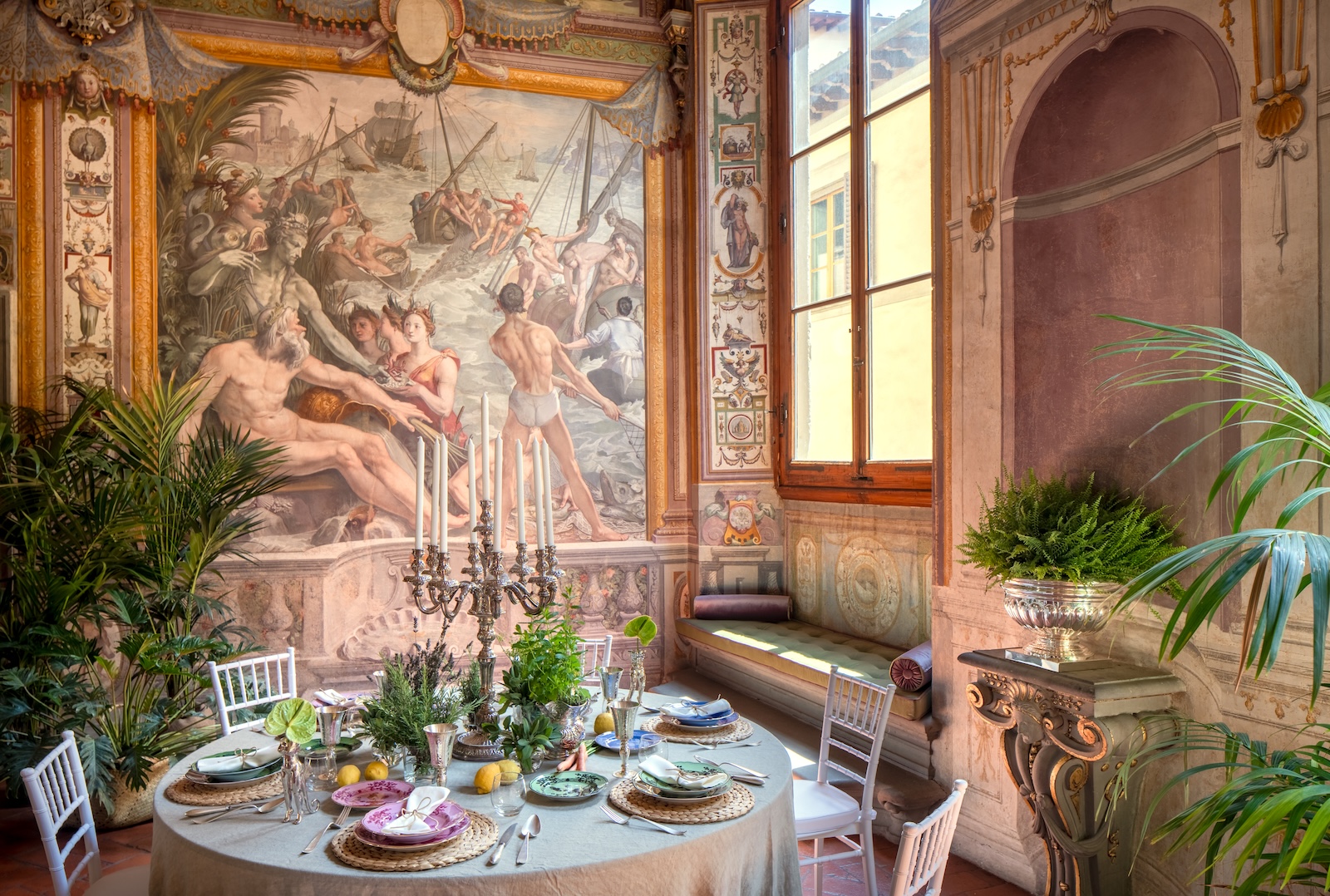
Everything we do here begins with a single conviction: that Florence must be approached at the level of its soul, not its surface. The landmarks are extraordinary — I would never argue otherwise — but what Florence actually is, what it has always been, is a city of makers. A city where the knowledge of how to create something of genuine beauty has been passed from hand to hand across generations, in ateliers and studios and private workshops that have no interest in being found by anyone who is not genuinely seeking them.
We have spent years building those relationships. The goldsmiths, the leather workers, the silk and lace designers, the perfumers, the fresco painters, the mosaic artists working at a level of microscopic precision that is almost impossible to comprehend until you sit beside them. The ceramicists. The makers of fine Cashmere fabrics. Many of these artists are known to very few people outside Florence. They are not interested in visibility. They are interested in the work. And we consider it part of our responsibility — and our privilege — to bring the people we work with into their world.
I want to be honest about something, because I think it matters. This heritage is under real pressure. The skills required to produce the finest Florentine craftsmanship — the goldsmithing traditions that predate Gucci by centuries, the ancient technique of fresco, the leather-working methods that belong to a different understanding of time and patience — are not being learned at the rate at which they need to be. Part of what we do, in connecting our clients with these craftsmen, is to support the continuation of that knowledge. It is not a charitable act. It is simply the right way to engage with a place you claim to love.
“To meet a master mosaic artist in his private studio, to hold a piece he has made that has walked an international red carpet, to understand the technique behind it — this is what Florence actually offers. Not the souvenir. The source.”
What we offer in Florence is not a programme. It is not a list of things to see in a given number of days. Everything we create is built from the ground up around the person making the journey — your curiosity, your pace, your particular hunger for this city. Some clients arrive wanting to live inside the Renaissance entirely: the Uffizi after hours in near-silence, the Accademia without a single other person in the room, standing before Michelangelo’s David and finally understanding what it is. Others want three hours with a goldsmith and nothing else. Most want something in between that they could not have articulated before we began the conversation. What follows are simply examples of the world we are able to open. The journey itself is always different, because you are.
Private Access and the Art of Seeing

The Uffizi and the Accademia are among the most visited institutions in Europe. We do not experience them that way. Private after-hours access, with specialist guides who have devoted their academic lives to these collections, creates a quality of engagement that simply cannot exist in the presence of crowds. The paintings become available in a different way. Botticelli’s Venus, in particular, requires space and silence to give back what it contains — the extraordinary strangeness of it, the way the figure seems to hover at the exact threshold between the mythological and the real. And David: I have watched clients stand before that sculpture in near-silence and come out of it changed. Its scale, its presence, the way the marble holds light — you understand it differently when there is no noise between you and it.
The Vasari Corridor is something I hold very close. A kilometre of frescoed passageway running above the rooftops of Florence, crossing the Arno over the Ponte Vecchio, connecting the Palazzo Vecchio to the Palazzo Pitti. Cosimo built it in 1565 so that he could move between his residences without descending to street level — without, in other words, being among his own people. It is one of the most revealing things about the Medici. The corridor requires the right connections, the right timing, and a guide who genuinely understands what they are walking you through. We have both.
The Boboli Gardens behind the Palazzo Pitti are not simply a beautiful piece of landscape — though they are that, undeniably. They are an encyclopaedia of classical mythology in stone and water, built over three centuries by people who wanted to inhabit ideas as well as space. We take clients through them with guides who can trace every allegory, every layer of meaning that accumulates in a garden designed to express the intellectual ambitions of its owners. What begins as a walk becomes a journey through a way of thinking about the world that has almost entirely disappeared.
The Craftsmen, the Kitchens, the City at Its Deepest
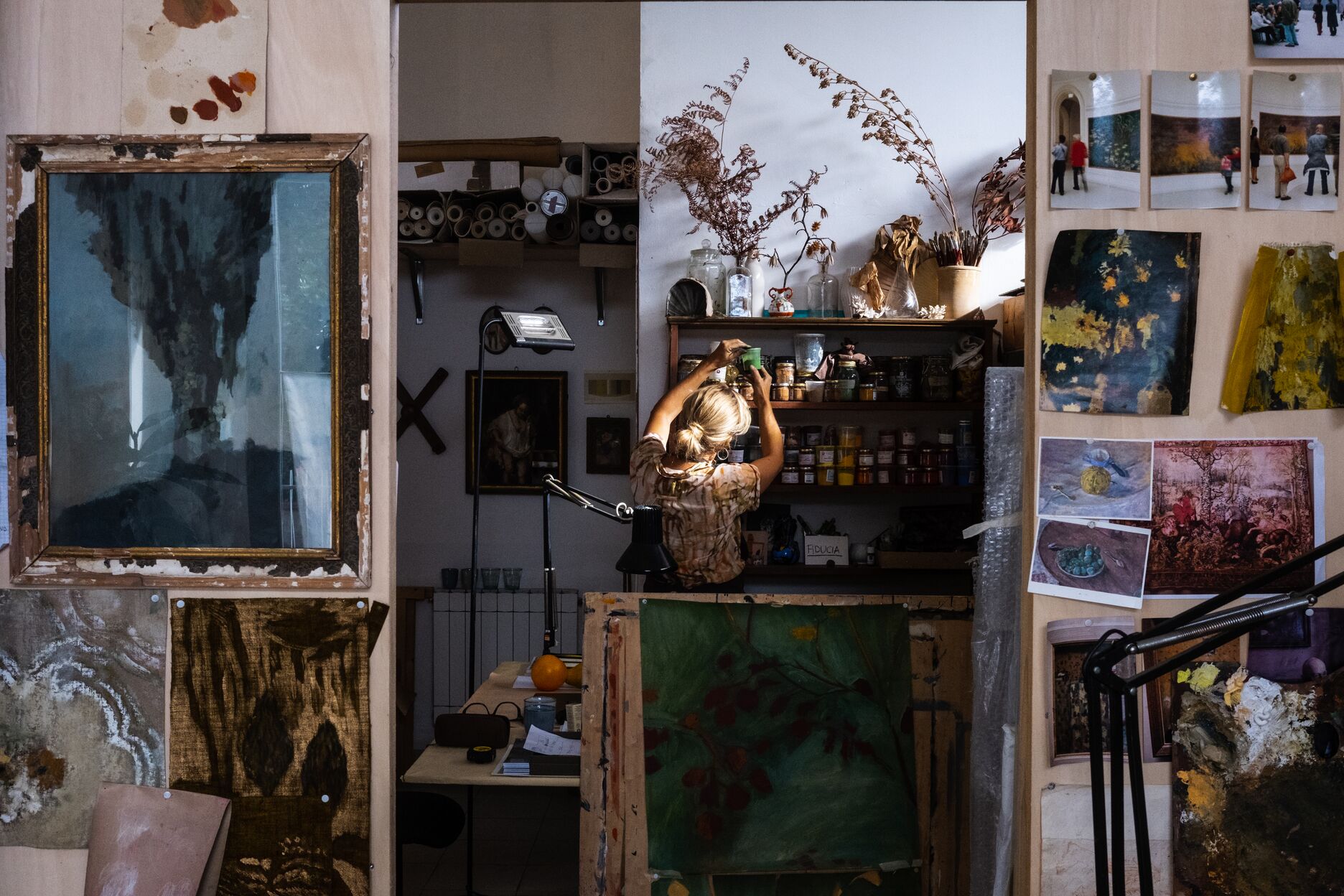
There are artists in Florence whose work exists ata a level of complexity that defies easy description — master mosaic makers creating pieces of microscopic precision, commissioned by collectors and cultural institutions whose names you would recognise. To be introduced to this world, to witness the technique and understand what goes into a single piece, is one of the quieter and more extraordinary things we are able to offer.
A private fresco session — hands in the plaster, learning the original Renaissance technique with a master painter — changes how you see every frescoed surface in Florence afterward. Fresco is irreversible. You cannot correct it. The paint is applied to wet lime plaster and becomes part of the wall as it dries, which means every gesture carries consequence. Understanding this, physically, through your own hands, is a different order of education from standing in front of a finished work and being told about it.
Our private market visits and kitchen experiences in Florence are not cooking classes. They are introductions to the logic of Florentine food — its absolute insistence on the quality of the ingredient above everything else, its quiet confidence that simplicity handled with intelligence is the highest form of cooking. We begin in the market with a local cook, understanding what is in season and why it matters, and then move to a private Florentine kitchen where the morning’s produce becomes lunch. The meals our clients eat in these kitchens tend to be the meals they remember longest.
For those who want to understand the perfumers’ art, we can arrange a private session with one of Florence’s finest — a guide through the construction of a scent and the creation of something entirely your own. For those drawn to leather, to gold, to the ancient techniques of ceramics or the delicacy of Florentine lace — we have those introductions too. And for clients who wish to carry something of the city home that could not be bought in any boutique, we know the artists who can make it for them.
“The Oltrarno, south of the Arno, is a different city — quieter, more artisanal, alive in the evenings in a way the historic centre cannot replicate. No understanding of Florence is complete without it.”
The City Beyond the Centre
The neighbourhood of San Niccolò and the wider Oltrarno district have always been where the real Florentines live and work. The workshops here are genuine. The trattorias are the kind that do not appear in guides. The pace is different and the quality of the encounter is different, because you are moving through a place that has not been modified for the visitor. We incorporate these streets into every itinerary we design for Florence, because the city makes no complete sense without them.
We can put you on a private boat on the Arno at the hour when the light is doing something extraordinary to the bridges and the facades. We can take you up in a hot air balloon at dawn over the Florentine hills, in the same light that Florentine painters spent their careers attempting to understand. We can put you in a Ferrari and take you through the Chianti hills — because both are expressions of the same Italian instinct, the same absolute refusal to compromise between the eye and the hand.
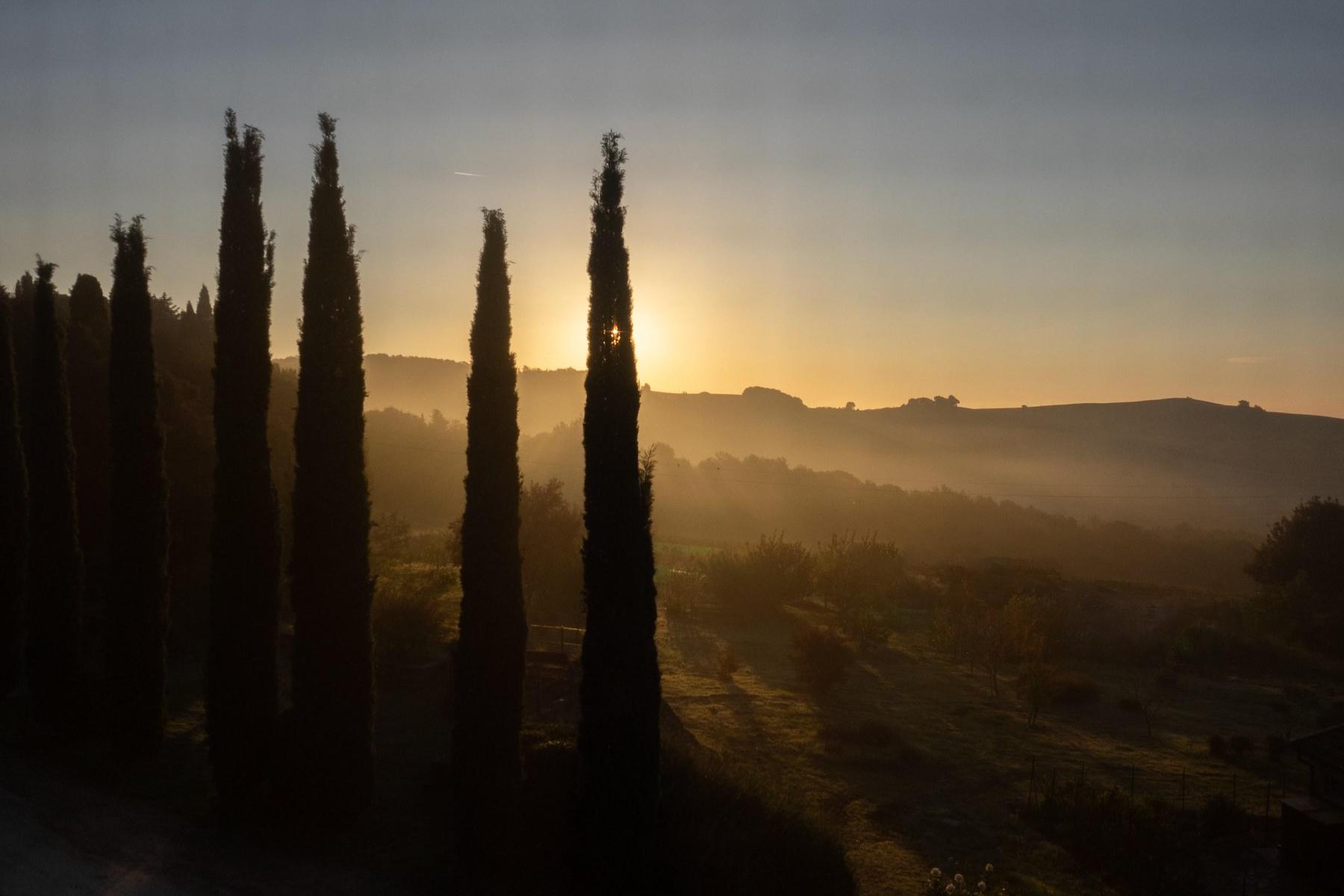
From Florence we build private truffle hunts on family estates, exclusive wine cellar tastings deep in the Chianti hills, and intimate private events in frescoed rooms within historic Medici buildings for families and close groups of friends. And then there is the land beyond the city walls — the cypress lines, the silver of the olive groves, the Tuscan landscape that held Florence in its hands for centuries and shaped everything the city became. That is a story I will tell you separately, and it deserves every word.
The Properties We Recommend in Florence

At Sculptured Journeys, where our clients stay is one of the most important decisions we make together. Accommodation does not simply provide a base — it can elevate the entire experience, or diminish it. What we have learned, after years of working with the finest properties in Florence, is that it comes down to people. The warmth of the welcome, the quality of the service, the way guests are made to feel from the moment they arrive. Atmosphere follows from that. Every property we recommend here has been personally experienced by our founder Melissa Martin, and chosen because it meets a standard we will not compromise on. The decision of where to stay will always be a considered one — and the approach we often return to, particularly in the warmer months, is to divide the stay. Three or four nights at a property in the Fiesole hills or the surrounding landscape, followed by two nights within the city itself. The contrast is not incidental. It is architectural.
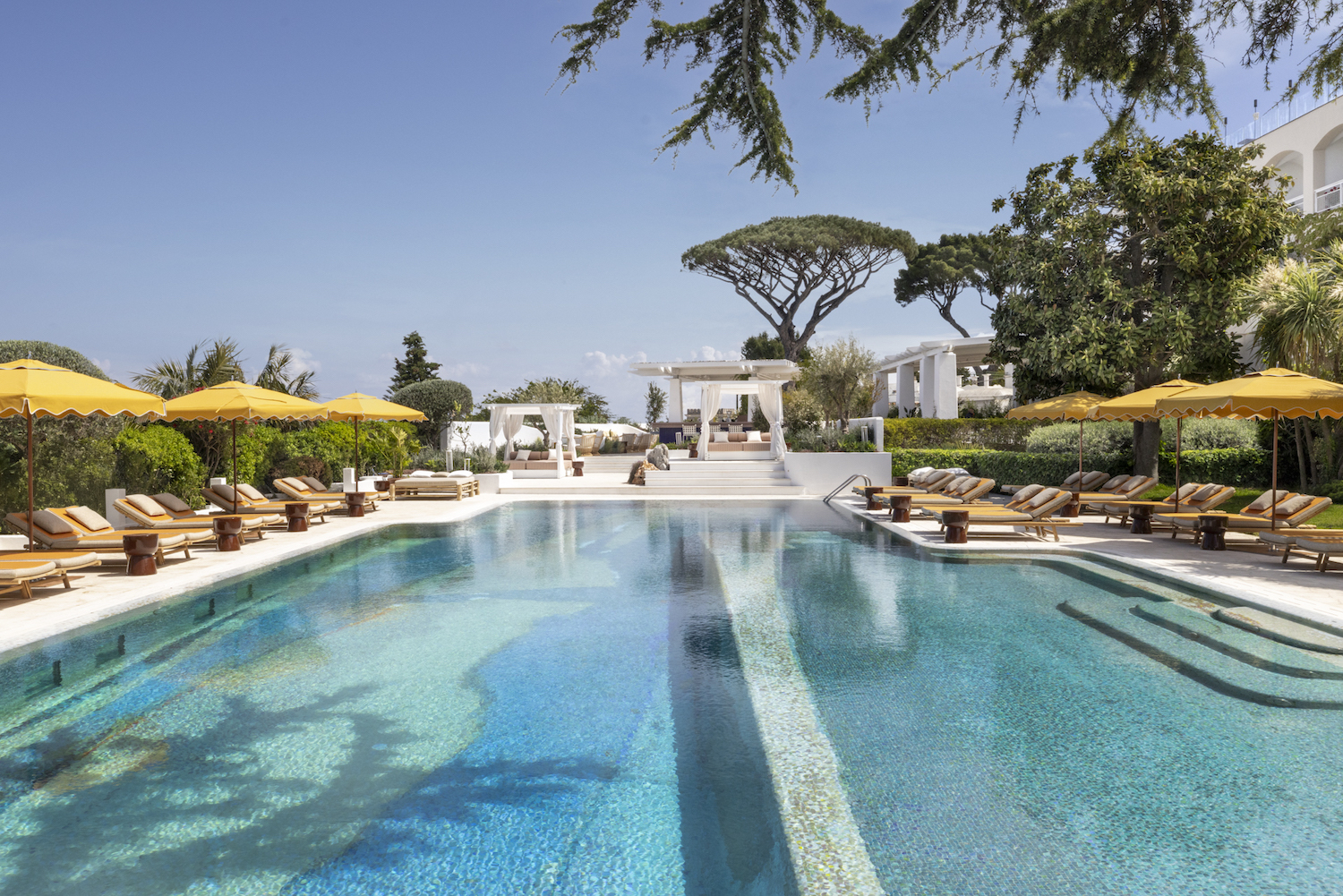
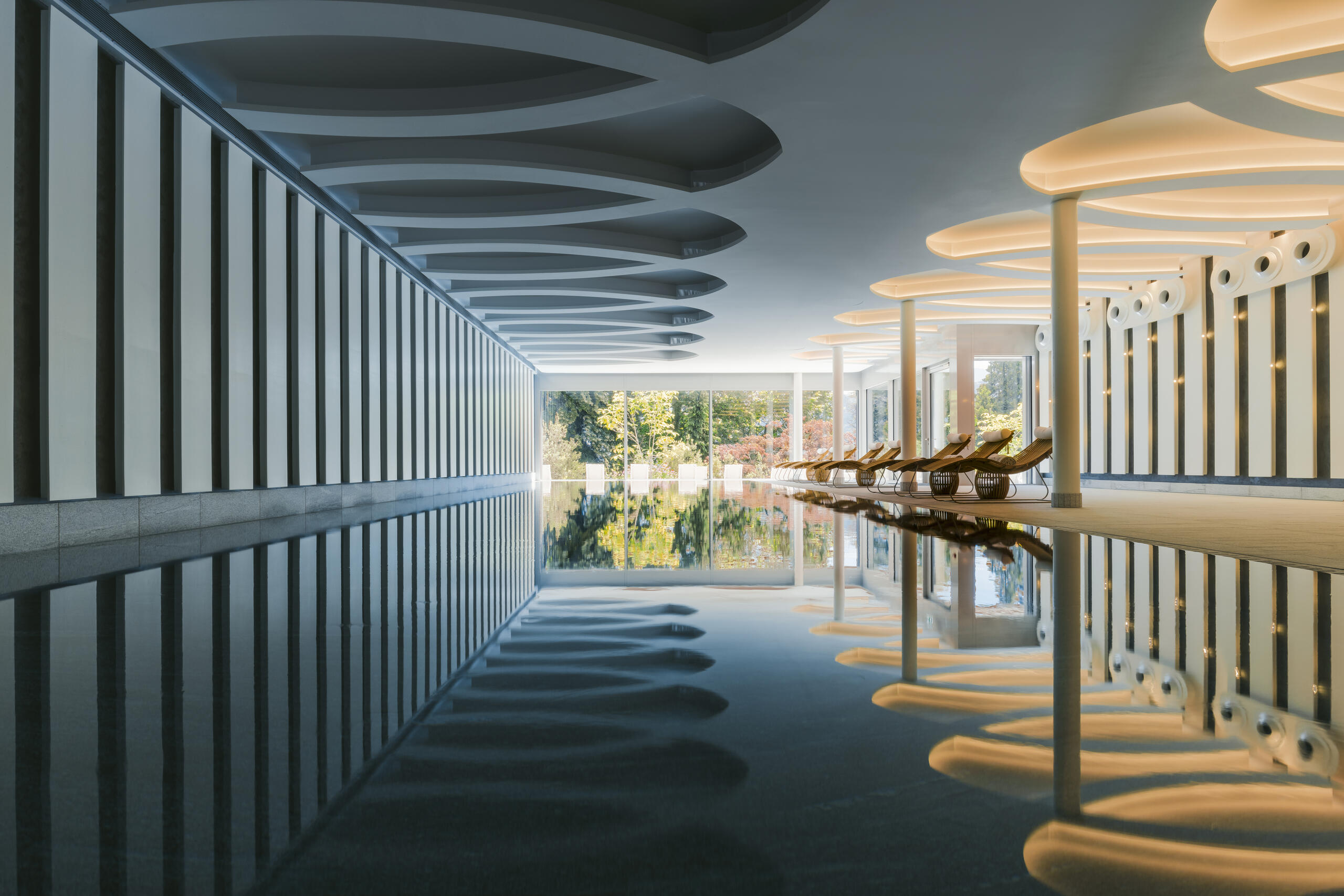
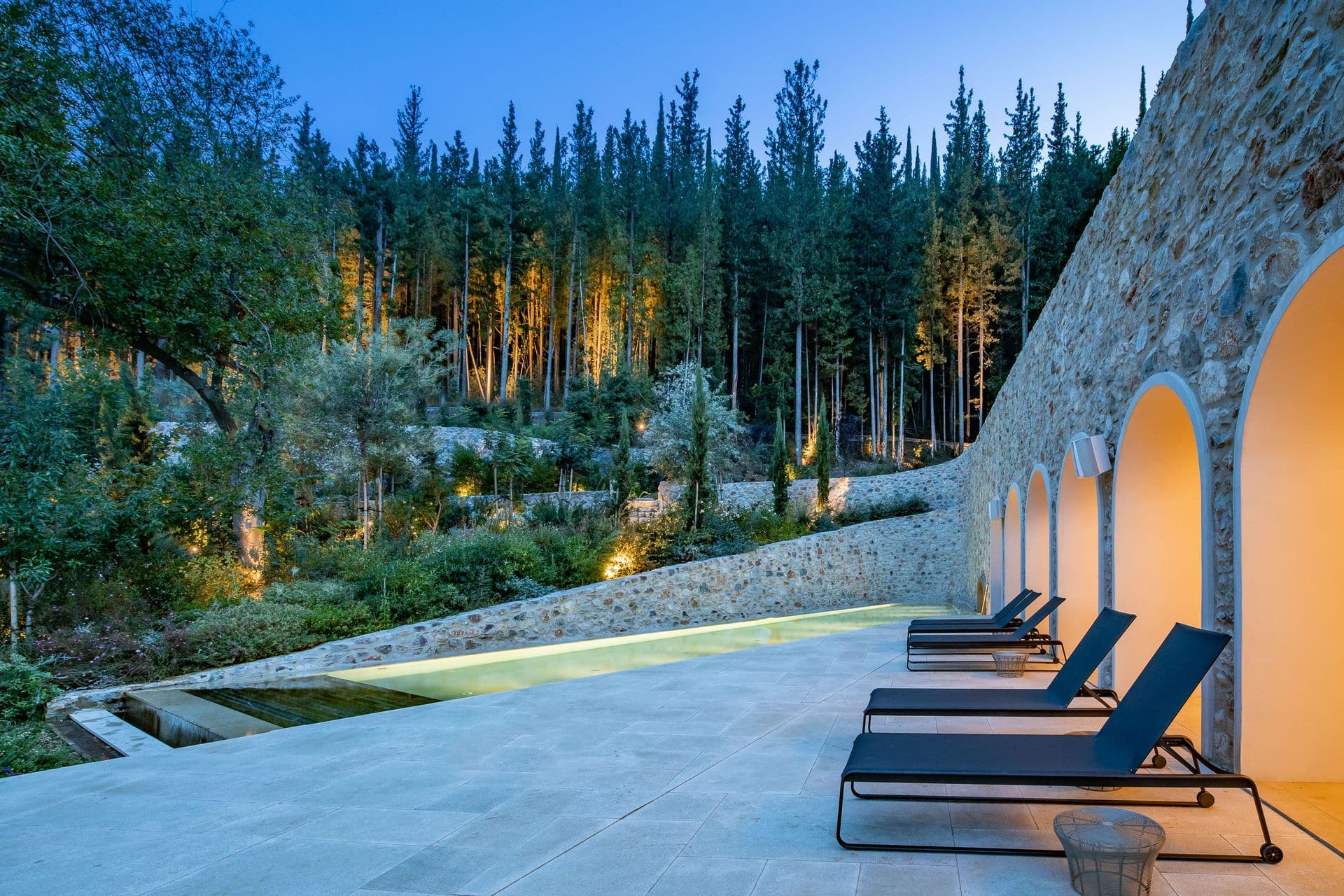
After days of deep immersion in the streets and the art and the noise of the city, returning in the evening to the quiet of the hills is one of the most restorative things Florence can offer. A swimming pool. A garden. Dining that belongs to the landscape rather than the piazza. It changes the quality of everything. The city you return to each morning feels cleaner, more available, more itself.
The Four Seasons Firenze is among the great hotels of Italy, and we are proud to work with it. The grounds are eleven acres in the heart of Florence — which is almost incomprehensible when you say it aloud. Eleven acres. A private garden of that scale, in a city this dense, is not a luxury. It is a different category of experience. The Renaissance palazzo at its centre carries the full weight of the architecture, and the service is intelligent in the way that the Four Seasons always manages at its finest.
Collegio alla Querce is, at this moment, our favourite property to recommend in Florence — and it is one that works beautifully for both couples and families. A former Jesuit college transformed with extraordinary restraint into a hotel of real architectural character, it sits in the charming hillside neighbourhood of Fiesole and offers what we consider the finest vantage point in the city. The cuisine here is a genuine highlight: clean, fresh, seasonal produce that speaks of the landscape immediately surrounding the property. You breathe different air. The views are magnificent — Florence laid out below, the valley, the hills. It is a timeless retreat that happens to put everything within reach.
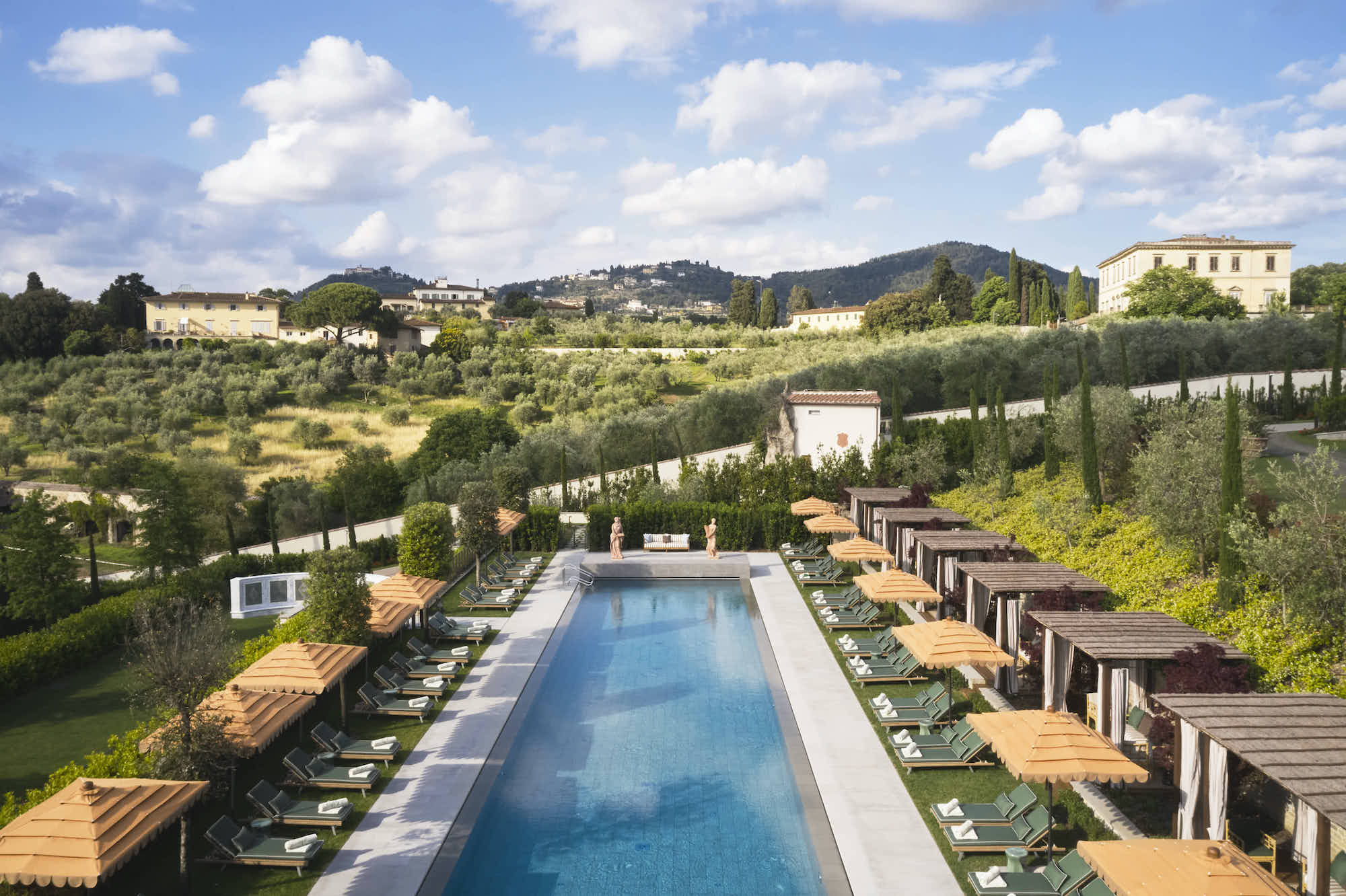
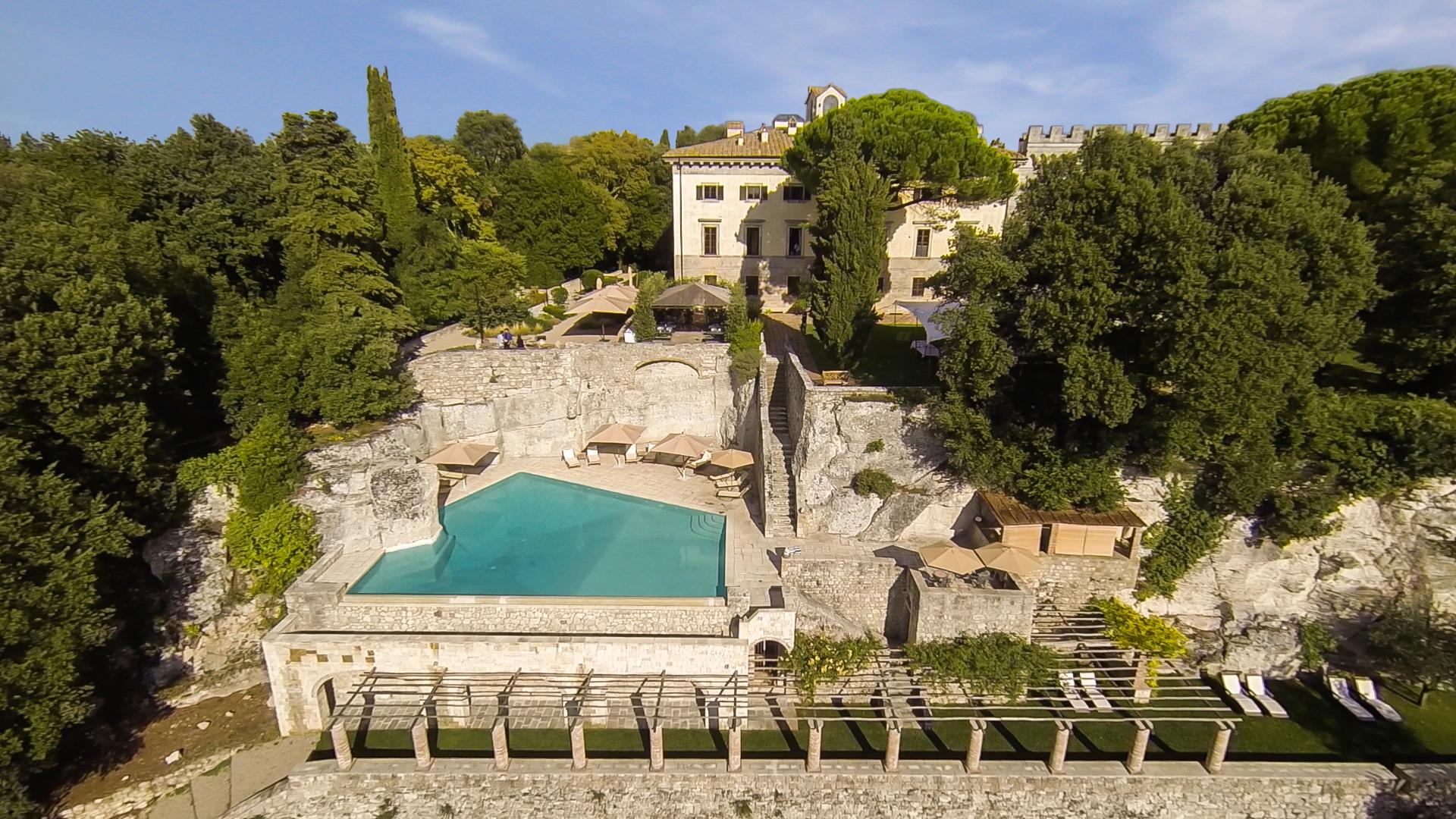
Villa San Michele, A Belmond Hotel in Fiesole is one of the great hotels of Italy. A fifteenth-century former monastery with a façade attributed to Michelangelo, set in the hills with views across the city and the valley. Belmond cares for it with the reverence it deserves. The return up the hill each evening — the lights of Florence below, the gardens in the dark, the stillness of the monastery around you — is one of those things you spend the rest of the stay looking forward to.
Borgo Pignano Florence opens in summer 2026, and it is already one of the arrivals we are most looking forward to welcoming into our portfolio. Carrying the same DNA as the extraordinary Borgo Pignano estate in the Volterra hills — space, privacy, deep immersion in the Tuscan landscape — this new Florence property promises to be something genuinely special.
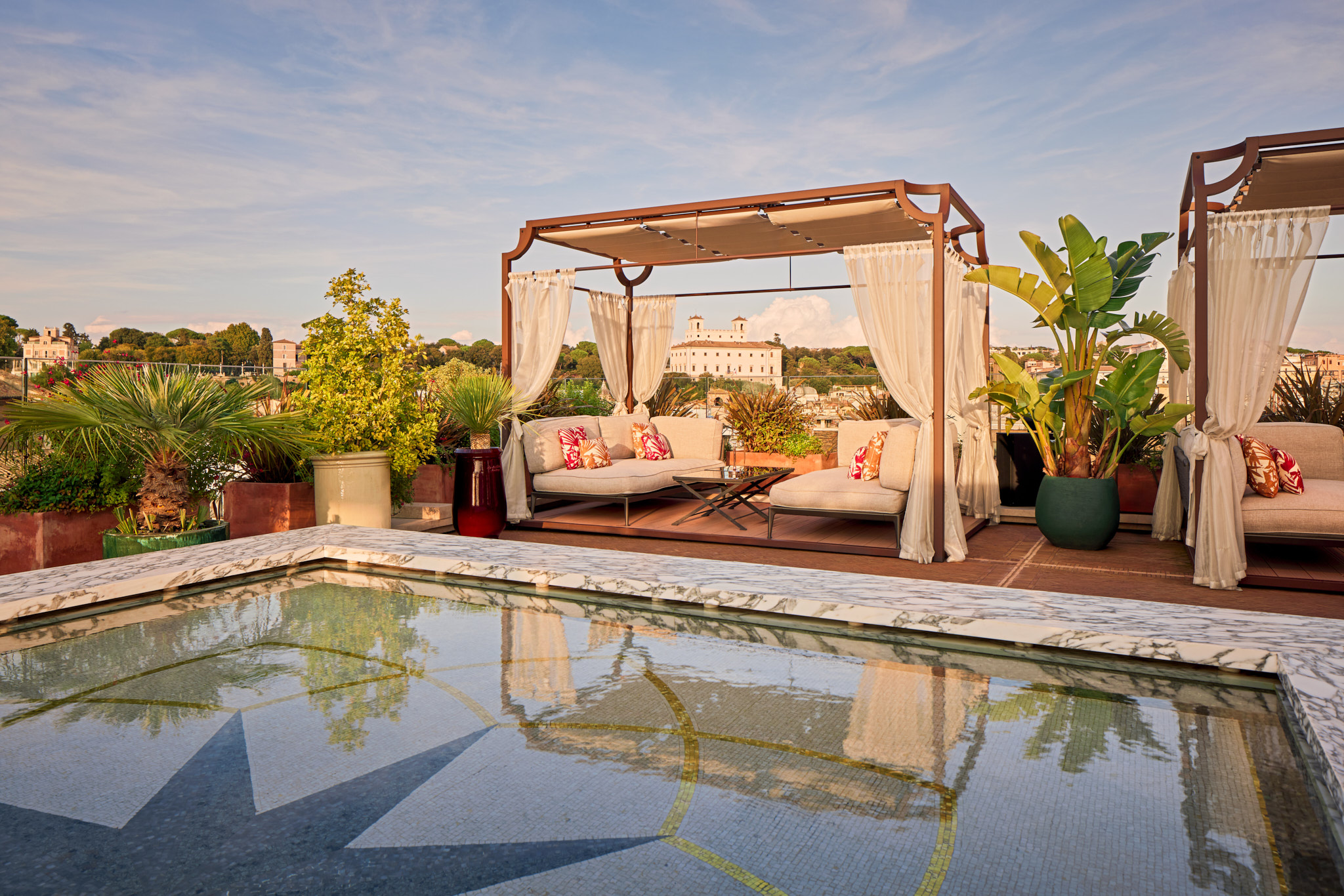
Portrait Firenze sits directly on the Arno, a few steps from the Ponte Vecchio, entirely contemporary in its sensibility while remaining unmistakably Florentine. The rooftop terrace commands some of the finest views in the city, and the scale of the property — intimate, precise, never overwhelming — suits a certain kind of client very well. The St. Regis Florence on Piazza Ognissanti is the other end of the formal register: the full weight of the palazzo, butler service, the Iridium Spa, and the kind of dining room that Florence has earned the right to.
The Place Firenze, on Piazza Santa Maria Novella, is a property I feel strongly about — particularly for couples. It is a member of Leading Hotels of the World, five-star in every sense, and yet its defining quality is intimacy rather than grandeur. It functions more like a private residence than a conventional hotel: a small number of rooms and suites, each considered carefully, and a Kitchen and Bar that opens onto the Renaissance piazza for breakfast in the morning light. The food is sourced from artisanal producers with the same seriousness that informs the rest of the property. The position in the historic centre is exceptional, and the sense of having your own piece of Florence — your own piazza, your own table, your own version of the city — is something that larger properties simply cannot offer.

The Hotel Lungarno, on the south bank of the Arno in the Oltrarno, gives immediate access to the less-visited and more authentic side of Florence, with direct river views and one of the best restaurant terraces in the city. Villa Cora, set in its private gardens above the Boboli in a nineteenth-century neoclassical palazzo, offers the remove and the stillness of a private residence with the grandeur of its architecture and an easy reach into the centre.
The Savoy, A Rocco Forte Hotel sits on Piazza della Repubblica at the very heart of Florence — one of the great civic spaces of the city, and a address that carries the full weight of its position. Rocco Forte brings to it the same hallmark of understated elegance and deeply personal service that defines the group at its finest: considered interiors, exceptional dining at Irene, and a quality of attention that makes a stay here feel both grand and genuinely intimate. For clients who want to be at the centre of Florence — steps from the Duomo, the Uffizi, the Arno — while never feeling the noise of the city, The Savoy delivers this with quiet authority. Caffè Gilli, one of Florence's most celebrated historic cafés, sits directly on the same piazza — a natural extension of the morning.
The Table
Florence at the table is a city of serious convictions and very little tolerance for pretension. The Florentine kitchen is not interested in performance. It is interested in the quality of the olive oil, the age of the bistecca, the specific family dialect of ribollita that a particular cook has been making the same way for three generations. This is food that knows exactly what it is, and has no desire to be anything else.
We move across the full range — from trattorias in the Oltrarno where the menu has not materially changed in decades, to Michelin tables exploring what the Florentine kitchen can become when given the freedom to move, to private dinners in spaces that exist entirely outside any restaurant category. Every recommendation is personal, drawn from the table rather than from a list. And for clients who want to begin at the very source, the private market visit and kitchen experience I described earlier reframes every restaurant meal that follows it.

A small selection of the tables we return to — and keep a close eye on. For traditional Florentine dining, Cantinetta Antinori on the Via dei Tornabuoni is a benchmark: refined seasonal cooking where Chianti meets exceptional Antinori wines, in a setting that has remained consistently excellent. Buca Lapi is legendary for its Bistecca alla Fiorentina — classic Tuscan dishes, handmade pasta, warm ambience, and a kitchen that has been doing this correctly for a very long time. In Fiesole, La Reggia degli Etruschi offers a panoramic terrace with sweeping city views and a cellar of exceptional wines that makes the drive up the hill entirely worthwhile.
For Michelin dining, Enoteca Pinchiorri remains one of the great restaurants of Italy — Tuscan tradition meeting French finesse with a wine list of world-class depth. Saporium takes a different approach: a sustainable, unique dining journey rooted in organic farm ingredients, where the philosophy of the kitchen is as considered as the cooking itself. Both are in Florence, and both reward a proper occasion.
For something more contemporary, Atelier De’ Nerli blends high-end dining with a contemporary art gallery and a sophisticated, inventive menu — an experience that feels entirely of-the-moment while remaining unmistakably Florentine. And for the truest Tuscan soul, Angiolino ai 13 Arrosti near the Basilica di Santa Spirito serves traditional Tuscan cuisine with a family-friendly warmth and a kitchen that takes its ribollita as seriously as anywhere in the city.
Then there is Procacci on the Via dei Tornabuoni — an institution in the truest sense. A bar, high-table style, tiny and traditional in the most beautiful way, serving its legendary truffle panini alongside a perfectly considered glass of wine. I stop here frequently when I am in Florence. It is one of those places that asks nothing of you and gives everything in return. Nearby, Café Gilli — close to the The Savoy, a Rocco Forte Hotel on Piazza della Repubblica — is one of the finest historic cafés in the city, and a natural pause in any day in Florence. We have many other recommendations across bars, cafés and restaurants — our clients are always welcome to ask.
What Florence Has Given Me

Florence is not a destination you exhaust. It is a place that rewards a different kind of attention — slower, more patient, more willing to be surprised by what is not immediately obvious. Something about the density of what has been made here, over so many centuries and at such a consistent level of ambition, does something to the way you see. It nourishes creativity. It nourishes innovation — it always has, and that is its enduring argument. Florence opens something in the people who spend real time here. We see it consistently in the clients we bring.
At Sculptured Journeys, we have spent years building the relationships, the access, and the understanding of this city that make a truly private Florence possible. The knowledge of which room holds the best light, which craftsman deserves an entire morning, which table serves the ribollita that will remain with you. What we offer here is not a programme. It is an introduction to the real city — shaped entirely around who you are.
“To understand Florence properly is to understand something about the history of beauty itself. I have been trying to understand it for twenty years. I am not finished yet.”
Frequently Asked Questions
How long should I spend in Florence?
Florence rewards those who linger. Most visitors allow two nights — it is never enough. For a stay that moves beyond the surface, I recommend a minimum of five to seven nights. This allows time to move between a property outside the city and one within it, to surrender to the pace of the city rather than fight it, and to access the private experiences that simply cannot be rushed.
What is the best base — inside Florence or the surrounding hills?
Both, in sequence. My preferred approach is to open with three to five nights at a property in the Fiesole hills or the surrounding countryside — Villa San Michele, Collegio alla Querce, or the forthcoming Borgo Pignano Florence — before moving into the city centre for two nights at Portrait Firenze or the St. Regis. The contrast is extraordinary. After days of deep immersion in the city, returning to the quiet of the hills feels like an exhale.
Can Sculptured Journeys arrange private access to the Uffizi and Accademia?
Yes. Private after-hours access, dedicated specialist guides, and completely line-free entry can be arranged to both institutions. Standing before Michelangelo's David in near-silence is one of the truly rare experiences we offer — and one that changes how you understand the city.
What kind of private artisan experiences do you offer in Florence?
Our network includes master goldsmiths, leather craftsmen, perfumers, fresco painters, mosaic artists, silk and lace designers, and ceramicists — many of whom are known to very few outside Florence. These are not demonstrations. They are genuine encounters, often in private ateliers, with the makers themselves. Several of our artisan partners have created pieces worn on international red carpets. We also arrange private showings with local Florentine fashion designers — an intimate, champagne-in-hand experience of their latest collections in their own studios, entirely outside the public retail world. These are among the most personal and memorable experiences we offer in the city.
Do you organise private day trips from Florence?
Extensively. Florence is a magnificent anchor for the wider region, and we arrange private day journeys to some of the most extraordinary towns in Tuscany — Siena, Volterra, San Gimignano, Lucca, Pisa, and beyond — each one offering something entirely different and each one best experienced privately, at your own pace. We also arrange truffle hunts on private estates, exclusive wine cellar tastings in the Chianti hills, Ferrari drives through the Tuscan countryside, hot air balloon journeys at dawn, and immersive private journeys into the wider Tuscan landscape. The region surrounding Florence is equally extraordinary — and entirely accessible from the city.
Can Sculptured Journeys host a private event in Florence?
Yes. We arrange intimate private events for families and close groups of friends in some of the most extraordinary settings in the city — including frescoed rooms within historic Medici family buildings. These are not event spaces. They are living pieces of Florentine history.
What is the best time of year to visit Florence?
Spring and early autumn — April through June and September through October — offer the most refined conditions. The light is extraordinary, the gardens are at their finest, and the city holds a certain composure that midsummer cannot always sustain. That said, Florence in winter has its own particular beauty — quieter, more intimate, and deeply atmospheric.
How does Sculptured Journeys approach restaurant recommendations in Florence?
We curate across the full range — from centuries-old trattorias where the pasta is made the same way it has always been, to Michelin-recognised tables offering contemporary Florentine cuisine, to the kind of dinner in a private palazzo that few visitors will ever experience. Every recommendation is personal. We do not work from a generic list.




.jpg)






















-002.jpg)