Four Seasons Hotel Firenze: Six Centuries of Renaissance History, Medici Legacy & Timeless Luxury in Florence
There are few addresses in Europe where six centuries of political ambition, papal power, aristocratic patronage and modern reinvention converge as seamlessly as they do at the Four Seasons Hotel Firenze. Set within the Renaissance grandeur of Palazzo Scala–Della Gherardesca and the former convent of La Villa, this extraordinary Florentine residence is not simply a hotel; it is the city’s most historical home par excellence—a living chronicle of Florence itself.
Its story begins in the 15th century with Chancellor Bartolomeo Scala, a humanist scholar and statesman of the Florentine Republic. Scala commissioned a residence that reflected the intellectual refinement of the Renaissance elite. His palazzo was conceived not merely as a dwelling, but as a statement of cultural authority—architecture as diplomacy, fresco as philosophy. Even today, beneath layers of careful restoration, the original spirit of this humanist ambition endures in vaulted ceilings and quiet courtyards.

The residence later became entwined with one of the most formidable dynasties in European history: the Medici. When Giovanni de’ Medici ascended to the papacy as Pope Leo X, the property entered the orbit of a family whose patronage shaped Western art. Florence under the Medici was a crucible of genius, and this house stood within that magnetic circle of power. Art, theology, politics and spectacle were not separate disciplines here—they were facets of a single Renaissance worldview.
By the 17th century, the palazzo had passed into the hands of the Della Gherardesca family, whose name it bears today. For generations, they expanded and embellished the estate, cultivating what is now the largest private garden in Florence—Giardino della Gherardesca. The ballroom of the piano nobile became a theatre of aristocratic life, its frescoed ceilings luminous after meticulous restoration. On the first floor, hand-painted Chinese wallpaper—hung in the 19th century—remains a rare testament to the cosmopolitan tastes of Florentine nobility, a whisper of the Silk Road filtered through Tuscan light.

In the 19th century, the palazzo captured the imagination of Ismail Pasha, Khedive of Egypt, whose dream was to transform it into a princely residence befitting his vision of modernity. His ambitions, emblematic of an era intoxicated with progress, were never fully realised. Yet the building continued to evolve, later serving as the headquarters of the national railway administration—a centre of economic power during Italy’s industrial expansion. Few Florentine palaces can claim to have witnessed both Renaissance diplomacy and the mechanics of modern statehood.
Its ultimate transformation into the Four Seasons Hotel Firenze followed a long and exacting restoration under the supervision of the Florentine Monuments and Fine Arts Service. Years of dedicated conservation revealed frescoes long obscured, stabilised architectural treasures, and reimagined spaces for contemporary life without compromising historical integrity. The result is an experience that is at once intimate and monumental: a Renaissance palazzo reborn as one of Europe’s most refined urban resorts.

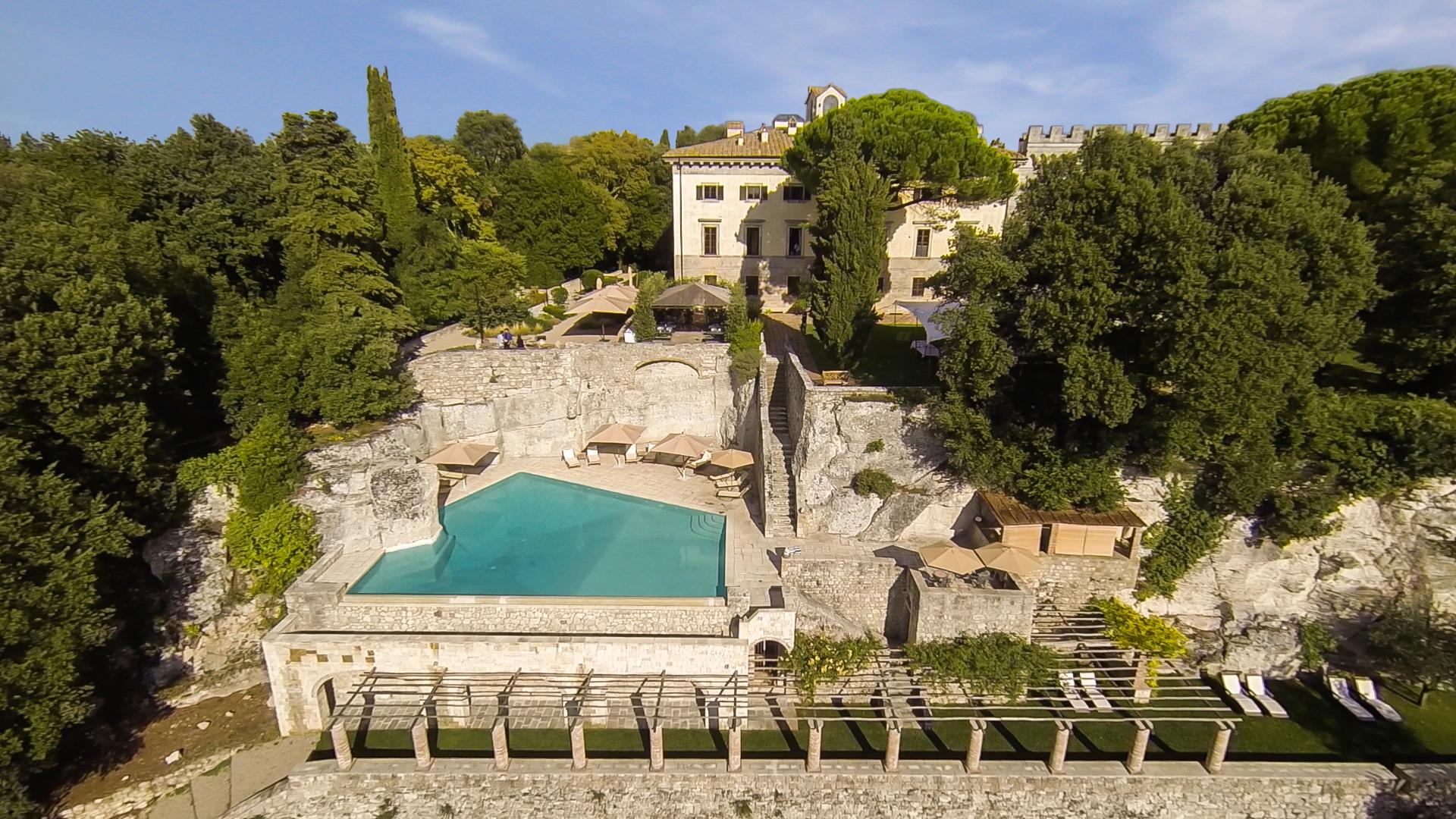
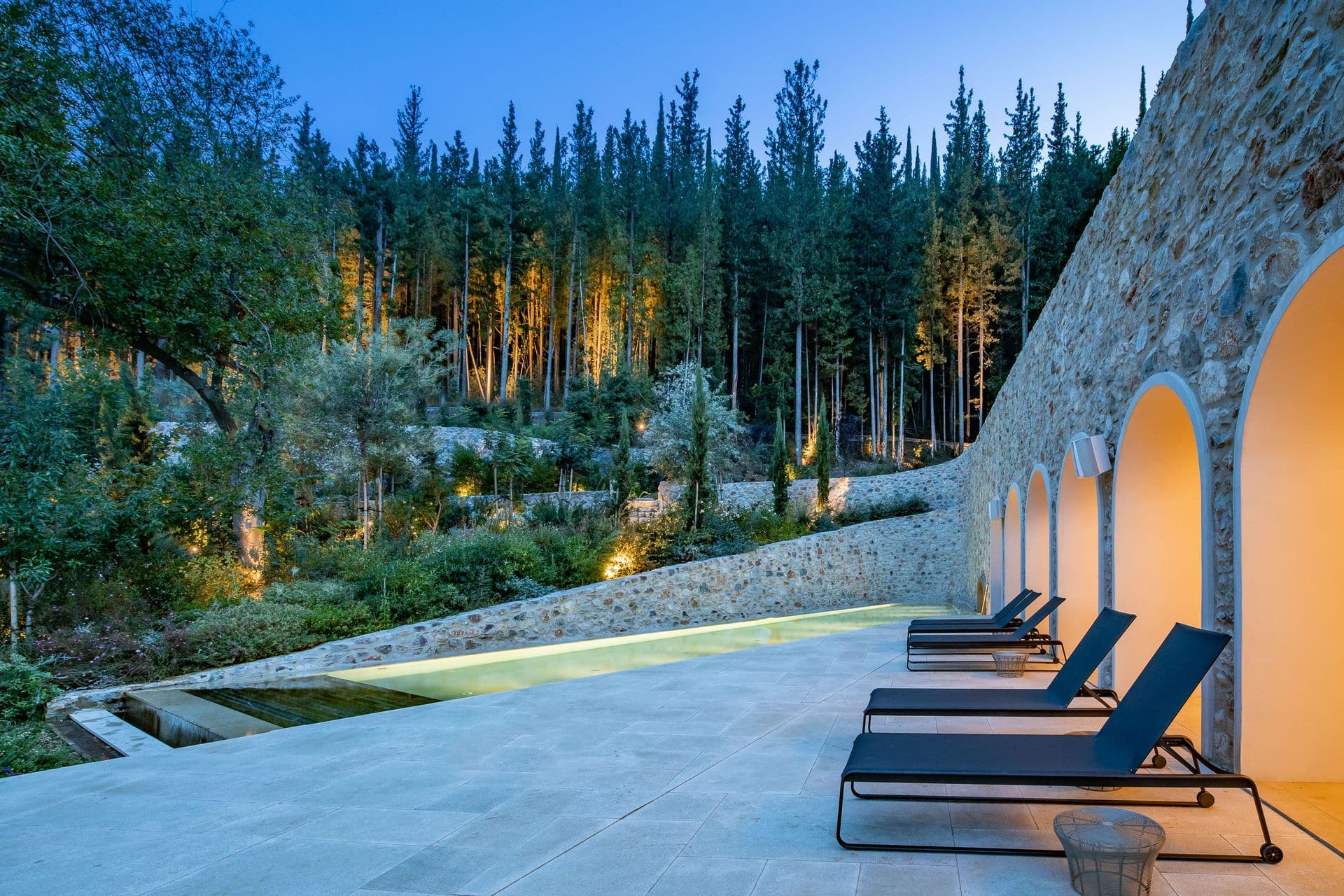
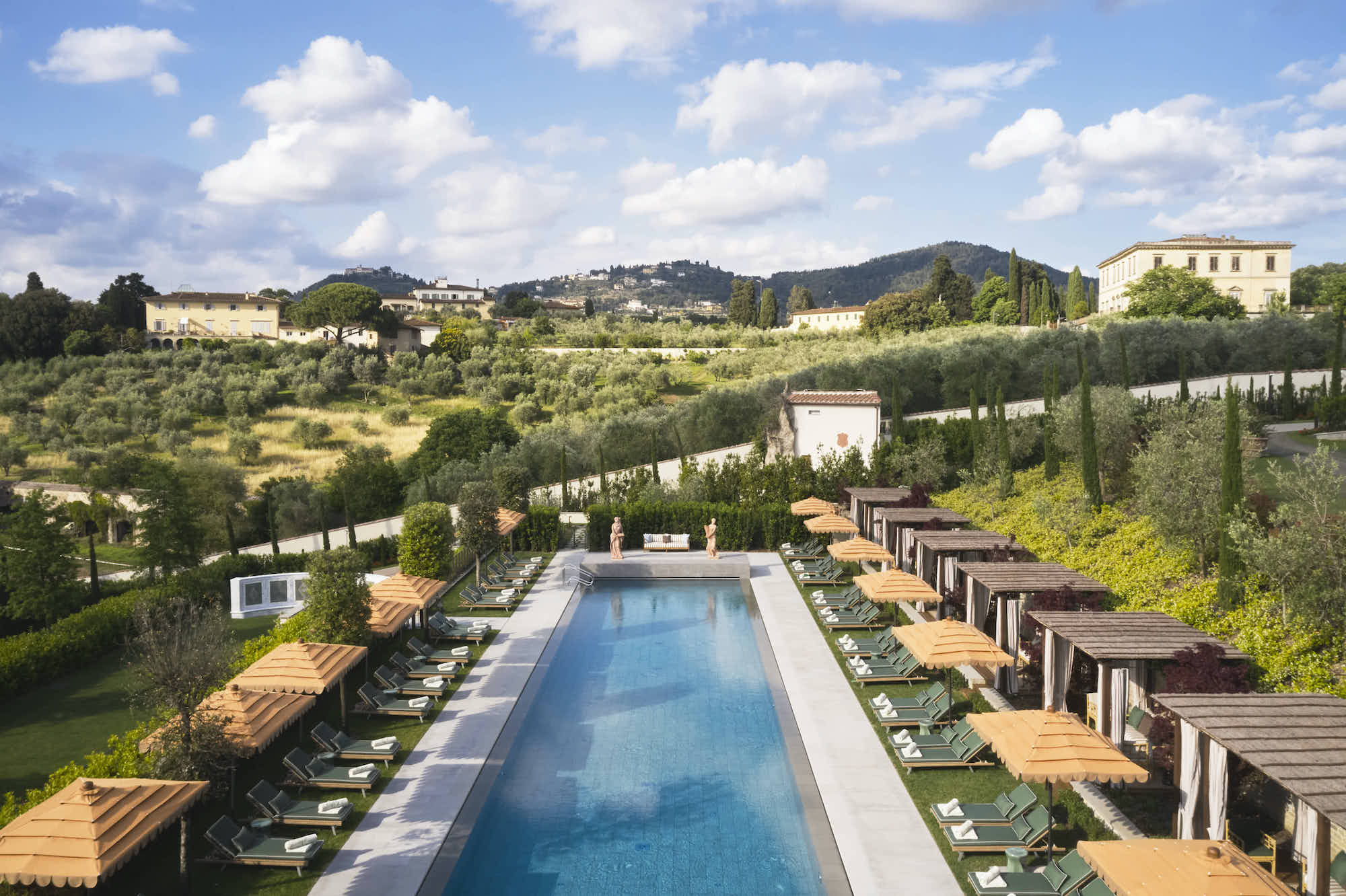
Today, guests drift between centuries with effortless grace. They wake beneath frescoed ceilings, descend grand staircases once trodden by nobility, and step into 11 acres of private gardens—an oasis rare within Florence’s medieval walls. The secluded outdoor swimming pool is enveloped by centuries-old trees; the Spa inhabits the former convent cellars, where vaulted brick ceilings frame rituals of modern wellbeing. Dining unfolds across elegant salons and garden terraces, where Tuscan gastronomy is interpreted with contemporary finesse. Every detail is layered with narrative.

Yet the true privilege of residing here lies in what surrounds it. Just two minutes along Borgo Pinti stands the Church of Santa Maria Maddalena dei Pazzi, founded in the 13th century. Within the chapter house, the sublime Crucifixion by Pietro Perugino, executed between 1494 and 1496, remains one of the period’s most significant frescoes—a quiet masterpiece often overlooked by the casual visitor.
A ten-minute walk brings you to Piazza San Marco and the Basilica of San Marco, rebuilt in 1437 under Cosimo de’ Medici. Inside, works attributed to Fra Angelico illuminate the High Altar, their spiritual intensity amplified by inscriptions and symbols uncovered during restoration—likely dating to the Medici reconstruction.
Continue fifteen minutes to Piazza del Duomo and the Museo dell'Opera del Duomo, custodian of masterpieces from the Cathedral complex. Here rests Michelangelo’s Pietà Bandini, alongside one of the world’s most important collections of works by Donatello, original reliefs from Ghiberti’s “Door of Paradise,” and sculptures by Arnolfo di Cambio and Nanni di Banco. It is an immersion into the sculptural soul of the Renaissance.
Within easy reach are further cultural treasures: the Museo di Storia Naturale dell'Università di Firenze, enriched by Medici collections; the Museo Firenze in the former Convent delle Oblate, chronicling the city from Roman foundation to modern urban transformation; the Franciscan grandeur of the Basilica of Santa Croce; and Casa Buonarroti, the Buonarroti family palazzo dedicated to Michelangelo’s enduring legacy.

For our clients, these are not simply monuments to be visited, but narratives to be unlocked. We curate private, after-hours access, scholarly-led explorations, and thematic itineraries that trace the arc of Renaissance thought—from Medici patronage to the ateliers of master sculptors. A morning might begin with a private meditation before Perugino’s fresco, continue with exclusive access to conservation ateliers within the Duomo complex, and conclude with a candlelit dinner beneath the frescoes of Palazzo Della Gherardesca.
To reside at the Four Seasons Hotel Firenze is to inhabit Florence not as a spectator, but as a custodian of its living heritage. The beauty is extraordinary; the history, profound. Yet it is only through thoughtful curation—through the art of considered, private journeys—that one truly understands the magnitude of this house and the Renaissance world it continues to embody.





.jpg)



























-002.jpg)