
Switzerland in Winter: Ski, Restore and Disappear
A Sculptured Journeys guide to the 2026/27 season
To arrive in Switzerland in winter is to enter a country that has spent centuries perfecting the art of receiving guests who require nothing less than everything. The altitude does something to the senses — sharpens them, then stills them. The air has a quality impossible to manufacture elsewhere: clean in a way that feels almost corrective, as though the body recognises it immediately.
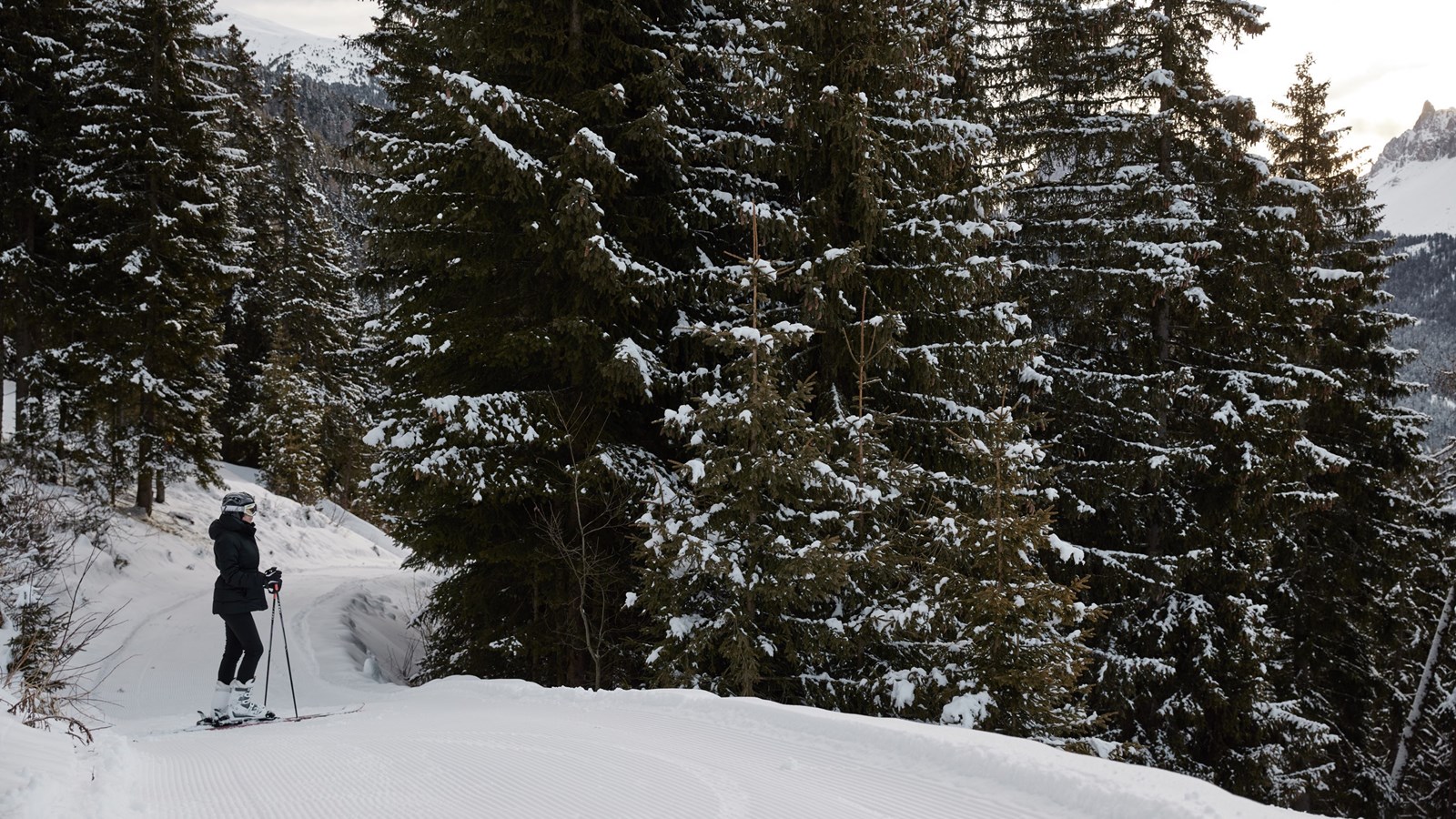
Switzerland in winter is not, at its finest, primarily about skiing. It is about the particular combination of extreme natural beauty, extraordinary accommodation, and the kind of institutional calm that comes from a culture that has always understood privacy as a form of hospitality. The skiing — among the finest in the world — is only one register of the experience: thermal waters, private chalets above the treeline, spa programmes of genuine medical rigour, and the slow, restorative rhythm of alpine life conducted entirely on one's own terms.
The ski season runs from December through March. April and May, by contrast, occupy an in-between quality that serves neither the ski enthusiast nor the summer walker: the principal reason to plan Switzerland for winter or, alternatively, for the hiking and wellness months of June through September. For those beginning to think about the winter of 2026/27 — and the finest properties fill considerably earlier than most anticipate — what follows is a considered account of where to go, and why.
Zurich: The Arrival
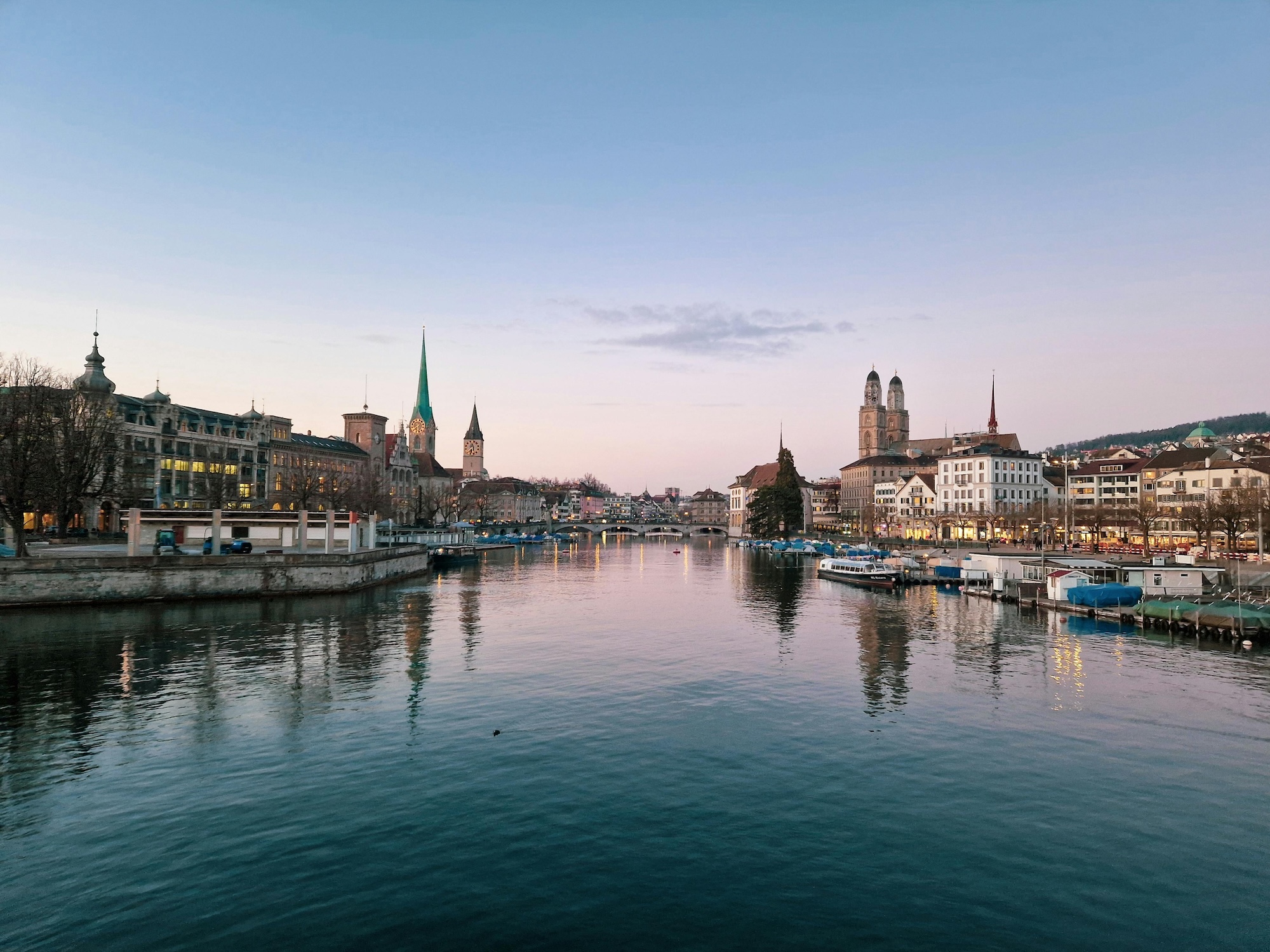
Most Swiss winter journeys begin in Zurich, and there is every reason to allow the city its proper due before departing for the mountains. Zurich is among the most liveable cities in the world, which is another way of saying that it has refined the ordinary into something quietly extraordinary: the Old Town, the Bahnhofstrasse, the long views across the lake to the Alps that arrive, on a clear December morning, with the force of a revelation.
The Baur au Lac is the correct address. Seven generations of the same family have overseen this institution since 1844 — a fact that communicates something no amount of renovation or rebranding can replicate. The hotel occupies a private park on the shores of Lake Zurich, its rooms oriented toward the water and, beyond it, the Alpine horizon. The spa and fitness offering is serious; the cuisine at Baur's and the intimate Le Pavillon among the finest in the city. Guests arriving for a winter journey through Switzerland will find no more appropriate beginning.
From Zurich, the natural progression east toward the Graubünden takes one through Bad Ragaz — a thermal spa town of considerable distinction — before arriving, eventually, in St Moritz. Those travelling via the north-east of the country will find an alternative Switzerland of wine country, golf in the lower valleys, and the Heidi Trail near Maienfeld: a pastoral counterpoint to the drama of the high Alps, and one that rewards the traveller who allows time for it.
Bad Ragaz: The Restoration
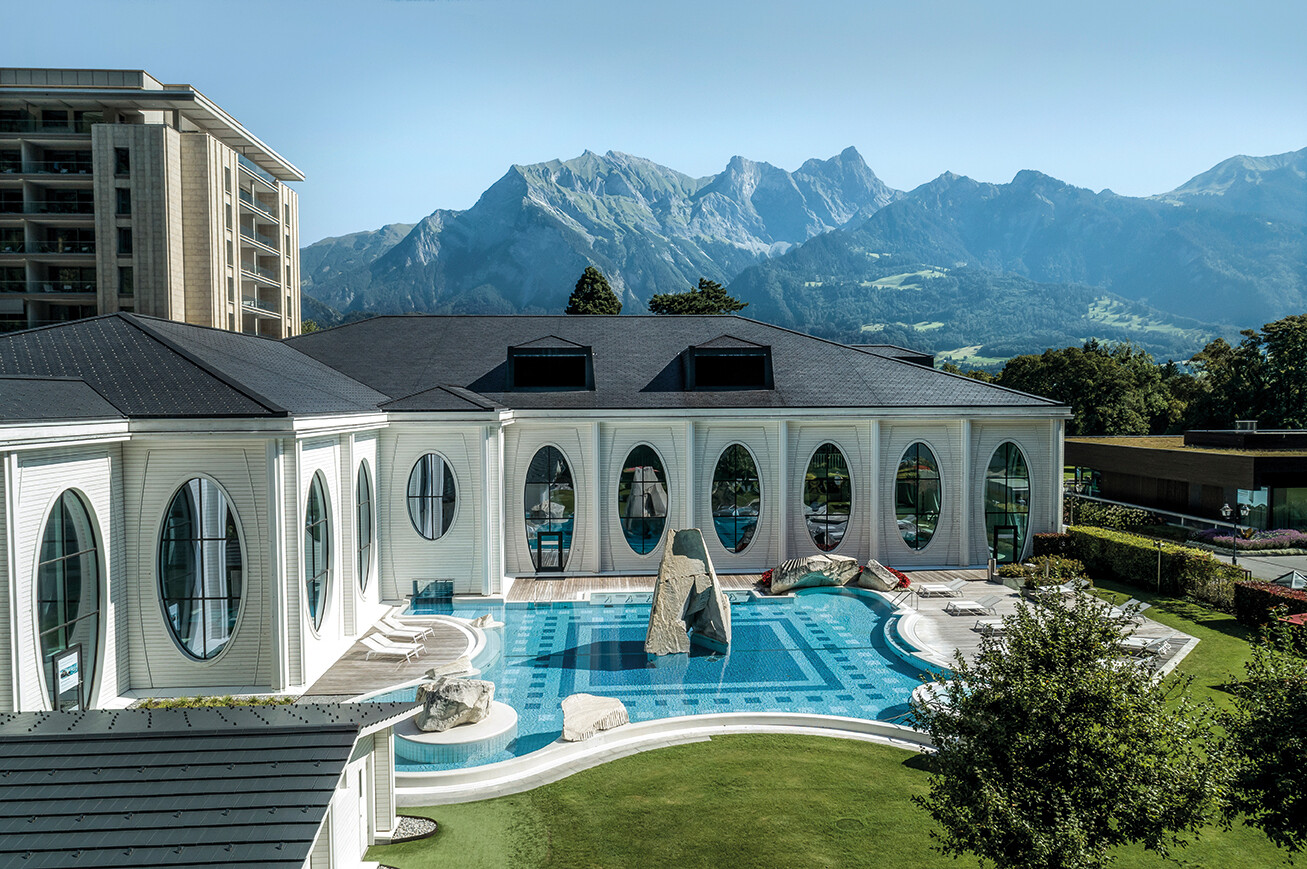
Few places in Switzerland offer as compelling an argument for unhurried travel as Bad Ragaz. Positioned in the Rhine Valley between Zurich and the Graubünden — an hour east of Zurich, en route to St Moritz — it has been a thermal destination of distinction since 1242, when the naturally warm spring in the nearby Tamina Gorge was first discovered. The waters rise at precisely 36.5 degrees: body temperature, and a quality that makes the experience of immersion feel less like treatment than recognition.
The Grand Resort Bad Ragaz comprises two five-star hotels of distinct character. The Grand Hotel Hof Ragaz embodies tradition and institutional prestige — the older of the two, its architecture rooted in the nineteenth-century spa hotel typology that made Bad Ragaz an address known to European nobility. The Grand Hotel Quellenhof & Spa Suites, completely renovated in 2019, brings a more contemporary expression to the same standards: modern interiors, spa suites, and a seamless integration of the thermal offering with the rhythms of a twenty-first century wellness stay.
Dining here is not ancillary to the stay but central to it. Six Michelin stars are distributed across the resort's restaurants — among them Memories, which holds three, and IGNIV by Andreas Caminada, which holds two. The Heidi Region that surrounds Bad Ragaz — vine-covered hillsides, medieval villages, the Heidi Trail near Maienfeld, and two championship golf courses that are among the finest in eastern Switzerland — offers a pastoral counterpoint of considerable quiet. For clients who travel to Switzerland as much for restoration as for recreation, Bad Ragaz is a destination in its own right. As a waypoint on the Zurich–St Moritz routing, it elevates a transit into an experience.
Gstaad: The Original
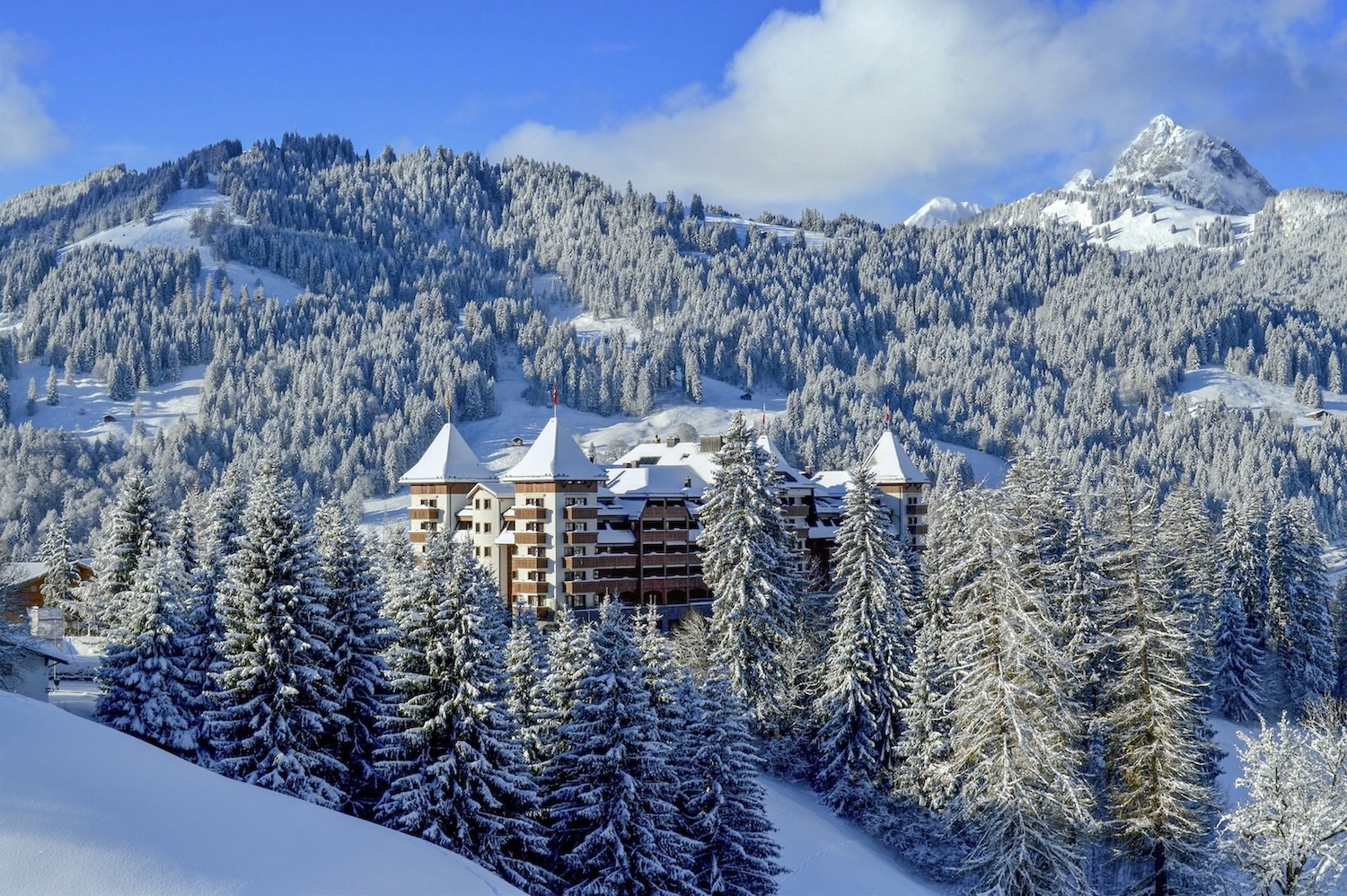
Gstaad resists definition in the way that only genuinely established places do. It is neither the highest resort in Switzerland nor the most technically demanding — its slopes, predominantly blue and red, suited to the skier who wishes to move gracefully through the landscape rather than conquer it — and yet it has held the allegiance of a remarkably consistent clientele for generations. The reason, examined honestly, is character. Gstaad has it; it cannot be acquired.
The Alpina Gstaad opens for its winter season in mid-December and remains until the end of March. It is the considered choice for guests who seek a contemporary expression of alpine luxury without the sacrifice of authentic Swiss atmosphere: the Six Senses Spa — one of the most accomplished in the Alps — offers a programme of genuine depth, from hydrotherapy and biohacking treatments to meditation and personalised wellness consultations. The outdoor pool, heated against the mountain air, with the Bernese peaks framing every horizon, is among the more memorable experiences Switzerland affords.
The village itself — its pedestrianised central lane, its galleries and independent boutiques, the particular ease with which proximity to Glacier 3000 and the Peak Walk by Tissot can be arranged — sustains the sense that Gstaad is a place curated by its residents rather than designed for its visitors. That distinction, for the right client, is everything.
St Moritz: The Legend
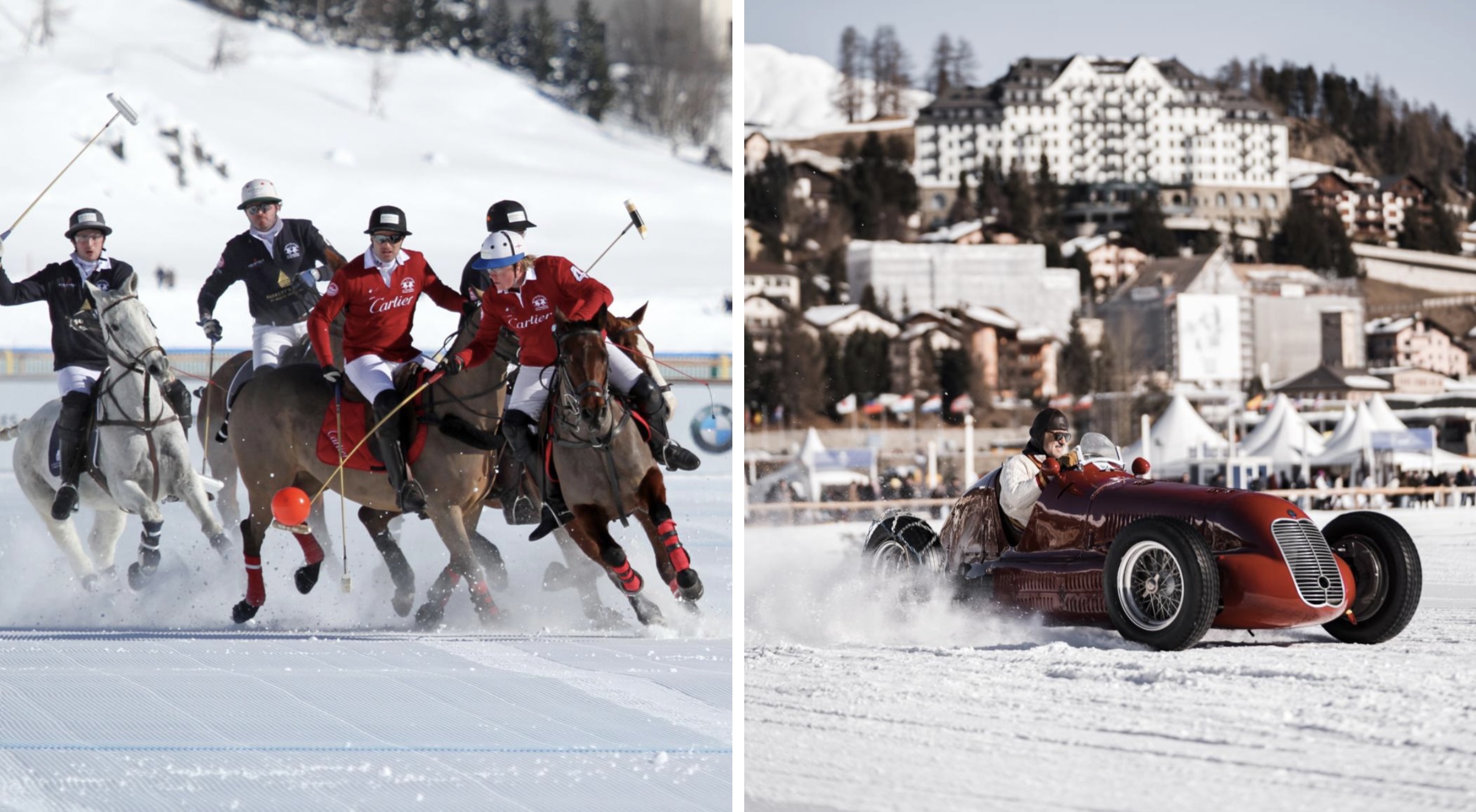
There are places that precede their reputation, and there are places that have become so completely identified with a certain idea of excellence that to discuss them requires a kind of honesty about what that excellence actually consists of. St Moritz is the latter. It invented alpine tourism as the world recognises it today. It has never, in a century and a half, relinquished the standard it set.
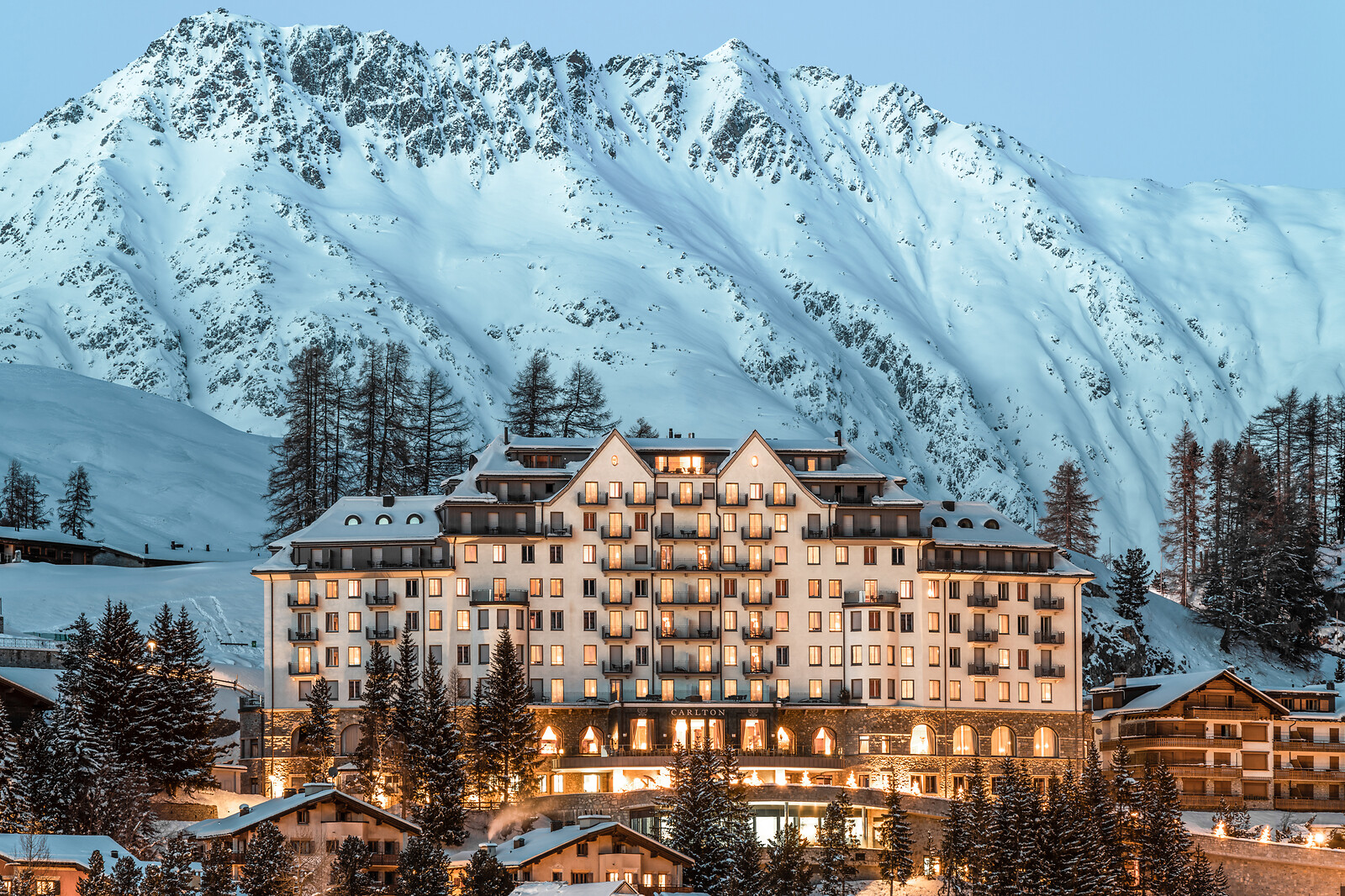
The Carlton Hotel opens for the 2026/27 winter season on 11 December 2026, closing 21 March 2027. Part of the Tschuggen Collection, it occupies an elevated position above the town — oriented toward the Corviglia ski area, its interiors warmed by the discretion that distinguishes genuinely confident luxury from its approximations. The season encompasses the White Turf polo on the frozen lake in February — an event unlike any other in winter sport — as well as the Engadine Ski Marathon, and the long, sun-drenched afternoons of March that have made the Upper Engadine a destination for those who understand that late season in St Moritz is, in many respects, the finest season of all.
Beyond the Carlton, St Moritz sustains a constellation of world-class dining, the designer boutiques of the Via Serlas, and access to over 350 kilometres of prepared pistes across the Corviglia, Corvatsch, and Diavolezza ski areas — terrain that accommodates the gentle and the demanding with equal grace. The Carlton Hotel St Moritz Returns — Winter Season Opens 11 December 2026
Crans-Montana: The Considered Alternative
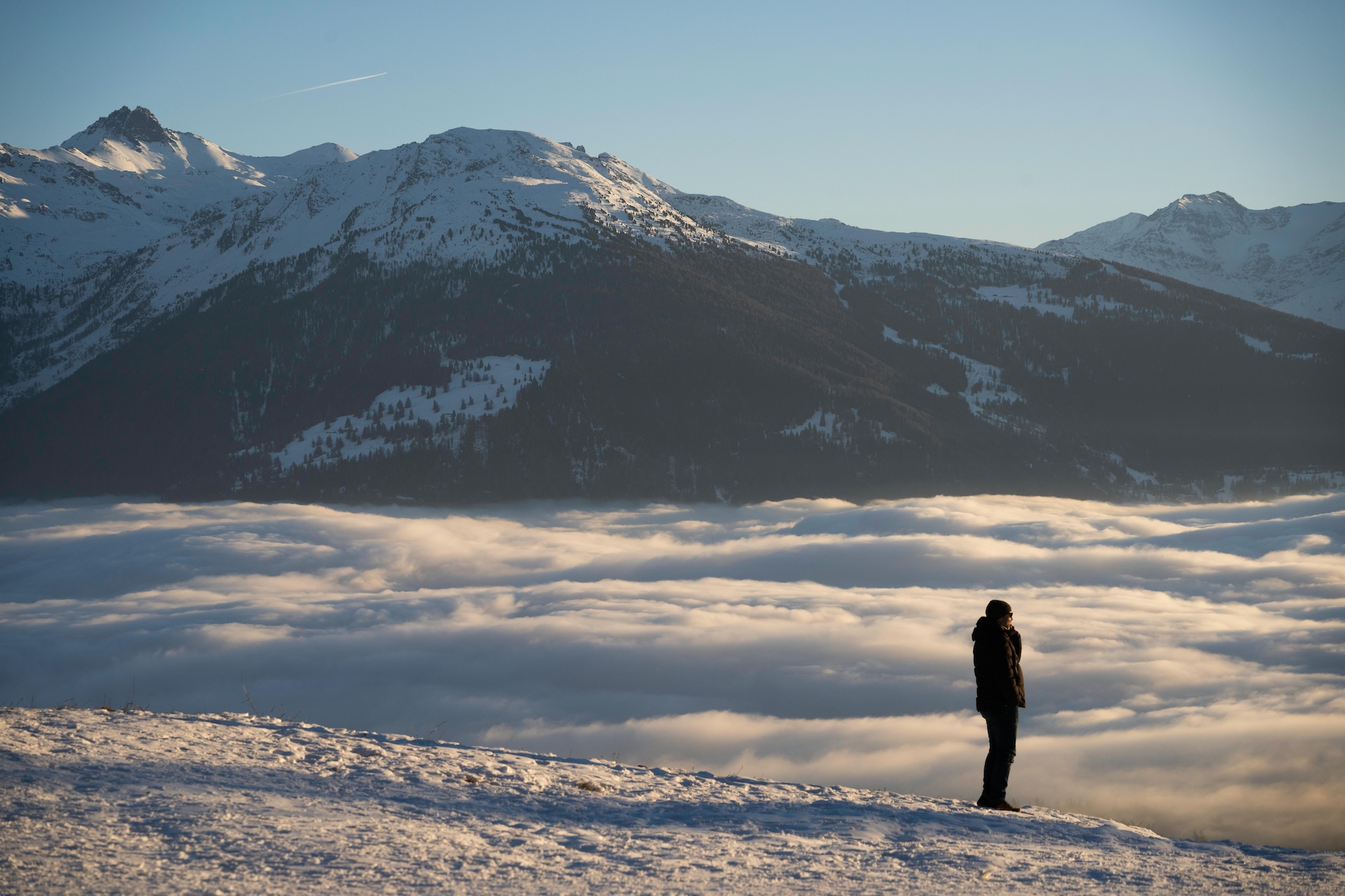
Crans-Montana has, in recent seasons, attracted the attention of a more discerning international clientele — those familiar with the canonical Swiss resorts who seek an experience that offers comparable quality with a degree of space and ease that the most celebrated addresses can no longer always guarantee. Positioned in the Valais at an altitude of 1,500 metres, with its celebrated south-facing exposure producing a quality of winter light that is, by any reasonable measure, among the finest in the Alps, it earns its growing reputation honestly.
The skiing — across some 140 kilometres of prepared pistes with views stretching to the Matterhorn and Mont Blanc — suits every level of ambition. The town retains an authenticity that the more glamorous resorts have, over time, partly exchanged for visibility. For the client who places equal weight on privacy, atmosphere, and access to genuinely exceptional terrain, Crans-Montana deserves serious consideration in the planning of any Swiss winter journey.
Lake Lucerne and Weggis: The Cure
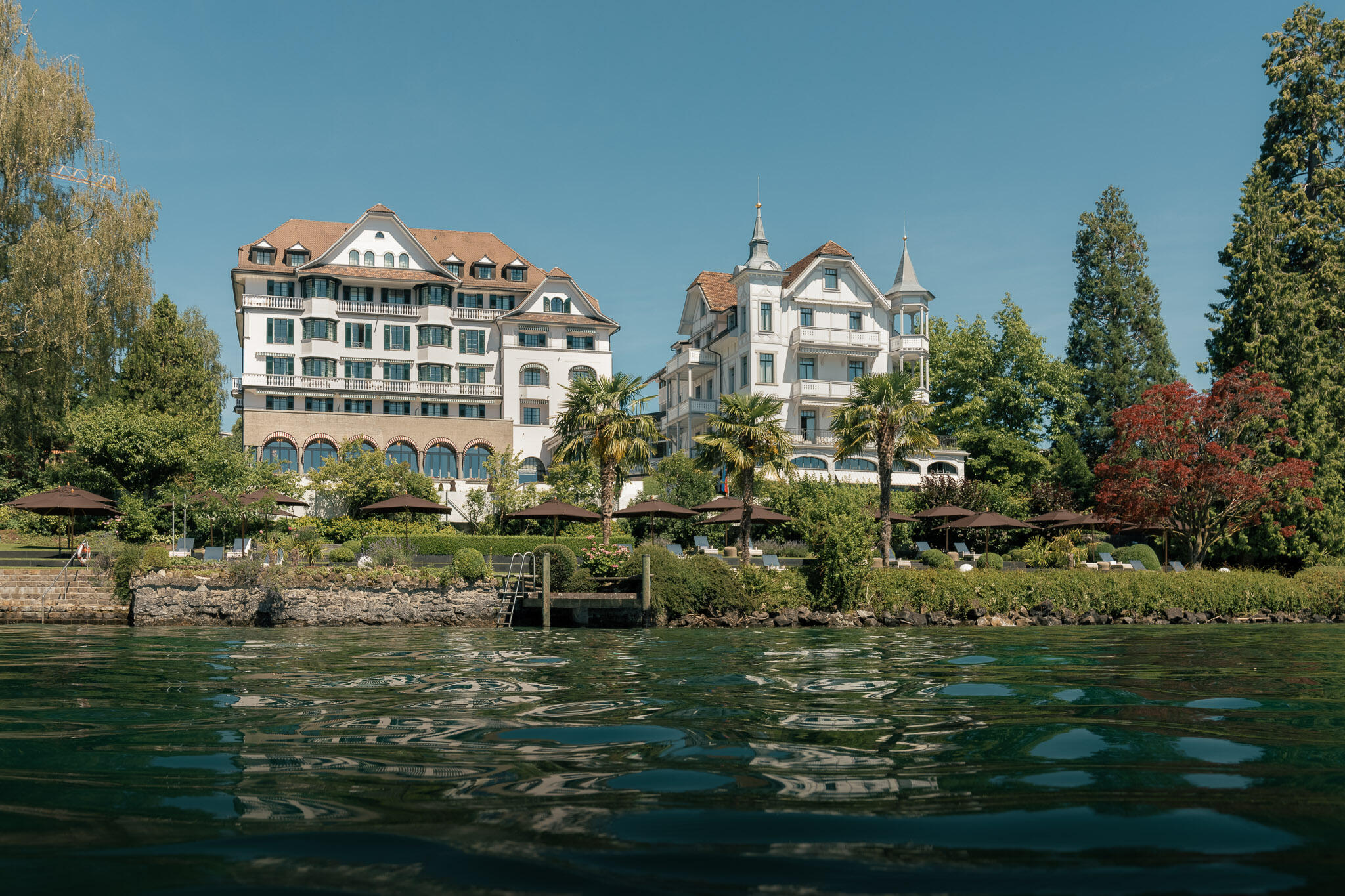
Chenot Palace Weggis occupies a category of its own. Positioned on the southern shore of Lake Lucerne at the foot of the Swiss Alps, it is not, in the ordinary sense, a hotel with a spa — it is a destination whose purpose is the measurable transformation of its guests' health, and whose methodology has been refined over more than five decades of research.
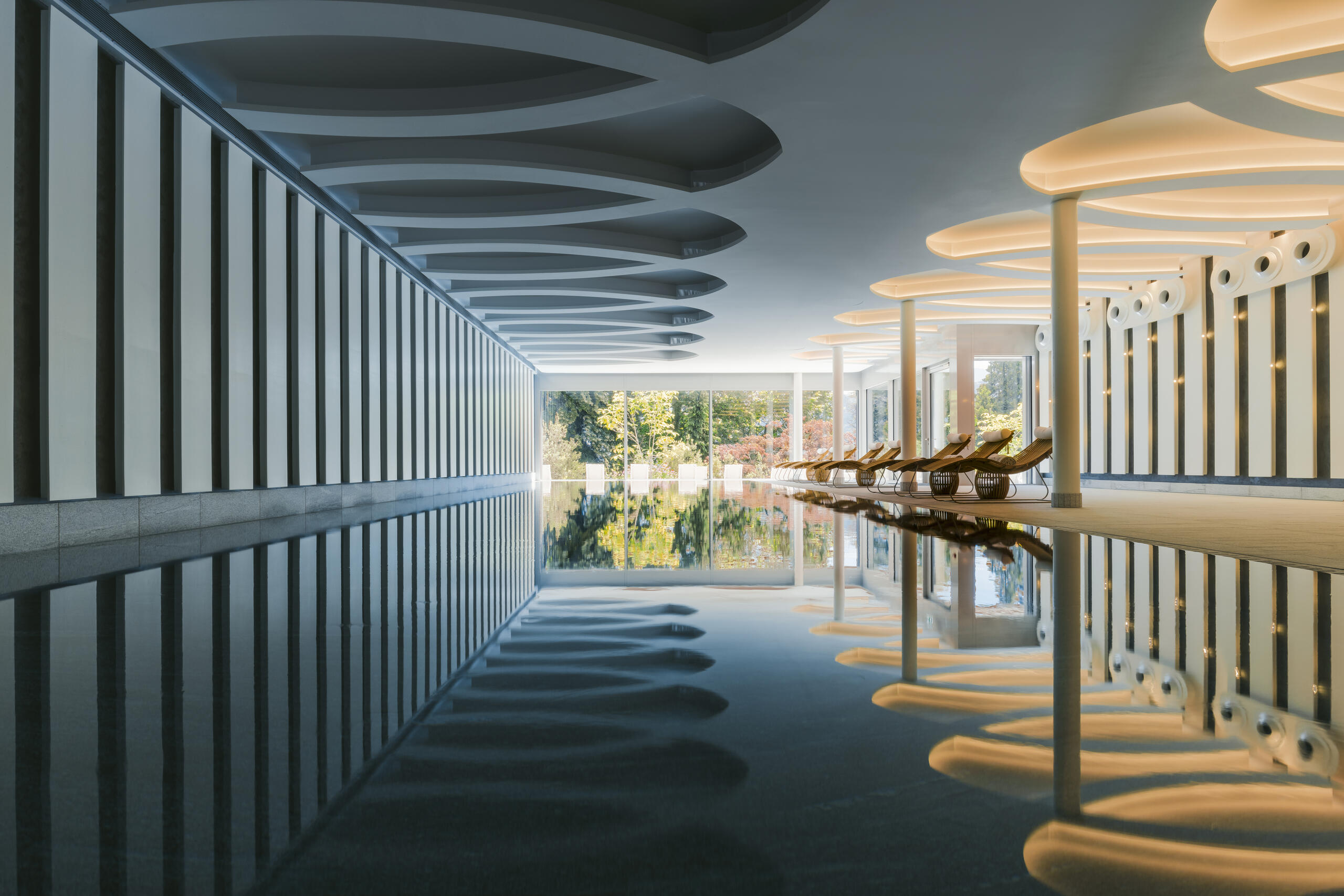
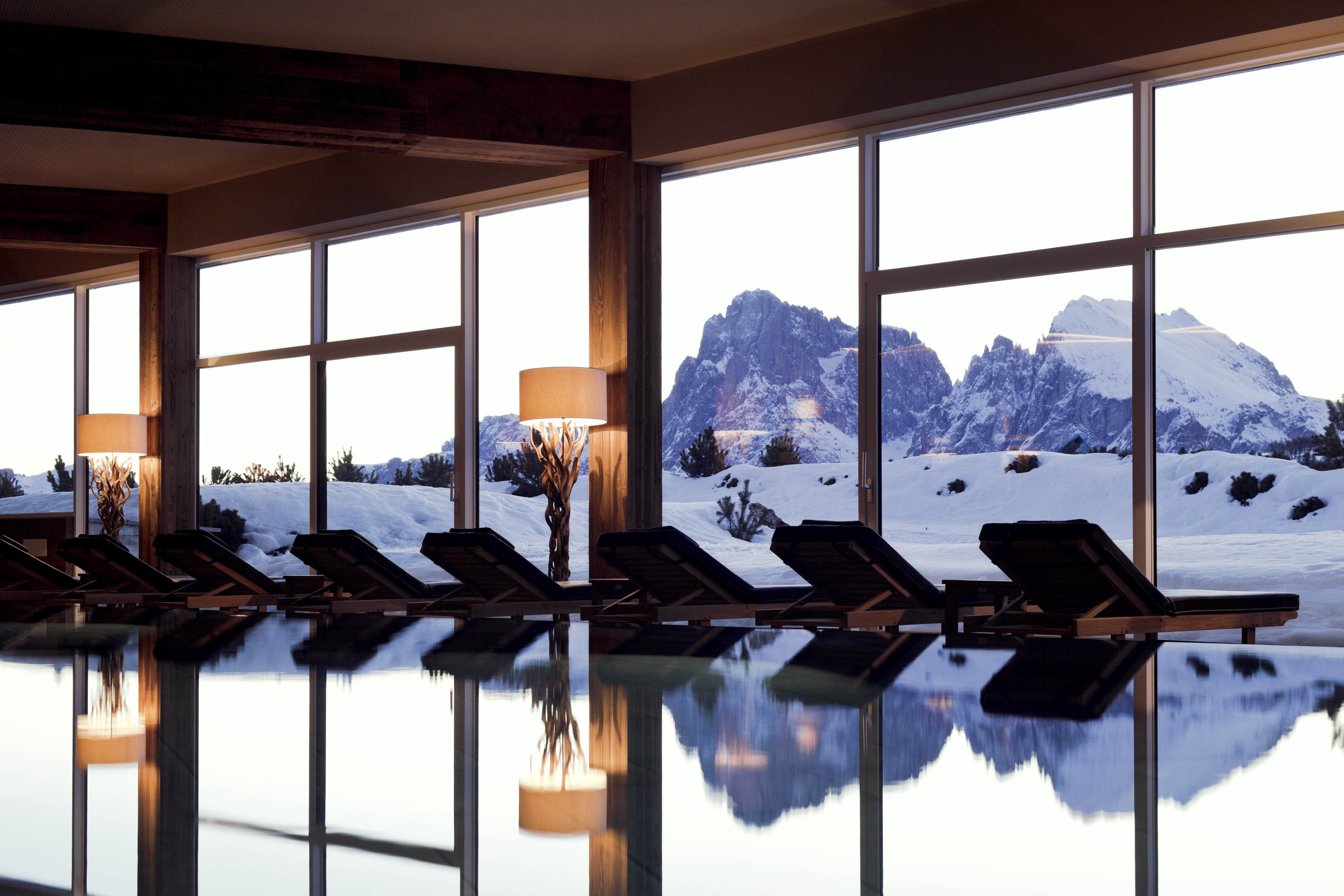
Every stay at Chenot Palace begins with an in-depth medical consultation, followed by personalised diagnostics and a programme designed around the individual's specific health goals. The Chenot Method — five pillars encompassing advanced diagnostic testing, the proprietary plant-based Chenot Diet, hydrotherapy, phytotherapy, and elements of Chinese medicine — is among the most rigorously considered approaches to longevity and cellular restoration currently available in luxury travel. The indoor pool, its panoramic windows framing the lake and the Alps beyond, offers a setting in which the relationship between environment and recovery feels self-evident rather than aspirational.
For the client who arrives in Switzerland not to ski but to restore — to address, in a medically credible and personally attentive setting, the accumulation of a demanding life — Chenot Palace Weggis is, without qualification, the correct address. A stay of seven to ten days is recommended; the results, by consistent account, endure considerably longer.
Lausanne and the Lake Geneva Shore: The Lakeside Interlude
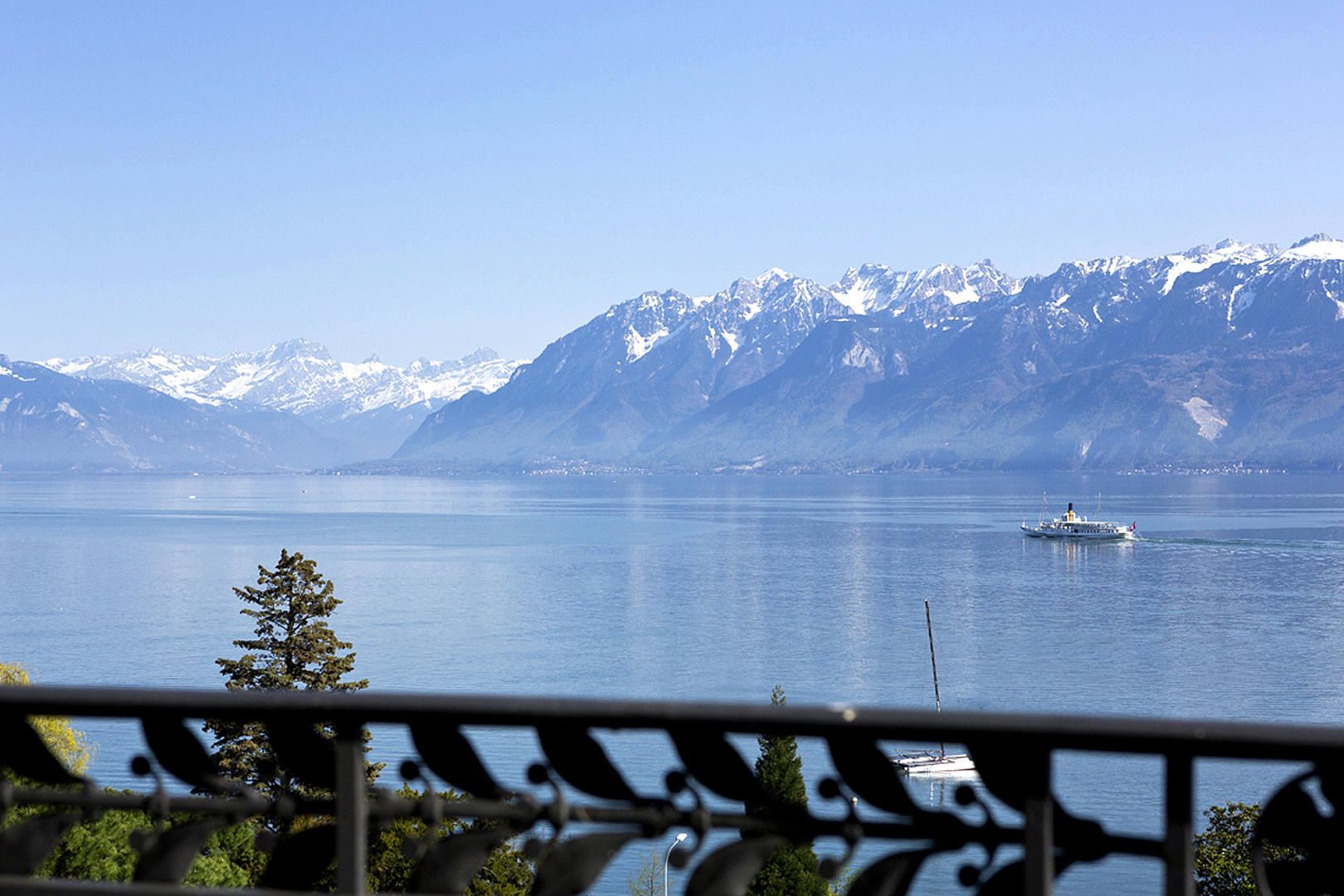
Lausanne occupies the northern shore of Lake Geneva with a composure that is entirely its own — a city of steep hills, medieval architecture, and views across the water to the French Alps that arrive, on a clear winter morning, with an ease that Geneva, for all its international allure, does not quite replicate.
The Beau Rivage Palace is the appropriate address: a palace hotel in the proper sense, its spa oriented toward the lake, its public rooms retaining the architectural confidence of an institution that has never required reinvention. Day excursions to the wine terraces of Lavaux — a UNESCO World Heritage landscape of extraordinary beauty — and to the private cellars of Montreux and the Vaud Riviera complete an itinerary that pairs the pleasures of water, wine, and stillness in a manner that is distinctly, irreducibly Swiss.
The Private Chalets: Altitude, Authenticity, Silence
For guests who require that the journey inward begin the moment the door closes, Sculptured Journeys offers access to a portfolio of private alpine chalets across the Swiss resorts — properties that combine the full-service standards of a five-star hotel with the privacy, freedom, and particular atmosphere that only a chalet above a valley can provide.
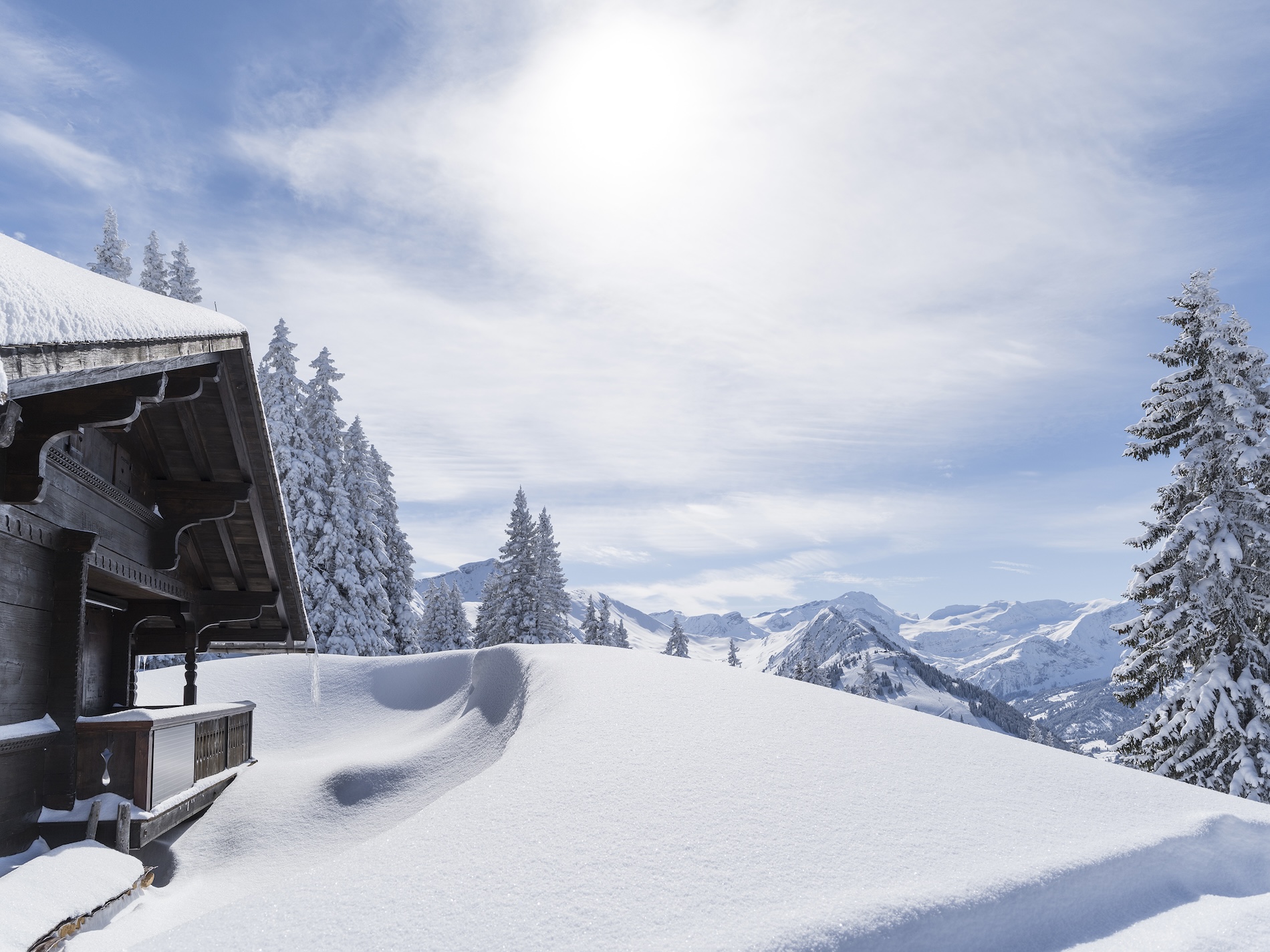
These are residences designed around the experience of altitude itself: the smell of timber and woodsmoke, the absence of noise at a particular hour of the morning, the long views across alpine pastures to peaks that have not been named for commercial purposes. The amenities are complete — private chef, dedicated house staff, spa and wellness facilities, chauffeured access to ski areas — but the defining quality is something that cannot be itemised. It is the sensation of having arrived somewhere that has been waiting precisely for you.
A Note on Timing and Planning
The Swiss winter season operates between December and March, with the finest properties and the most considered chalet rentals typically confirmed six to twelve months in advance. The period from April through May is, for purposes of Swiss travel planning, best set aside: the mountains are between seasons, and neither the skiing nor the walking is at its best. June through September opens Switzerland's summer register — hiking, wellness, and the long alpine evenings — which merits its own consideration entirely.
For the winter of 2026/27, planning is appropriately underway.
Private by nature. Extraordinary by design.
Frequently Asked Questions
When is the best time to visit Switzerland for luxury travel?
The two principal seasons are winter — December through March — for skiing, spa retreats, and the particular atmosphere of the high alpine resorts; and summer, mid-June through September, for hiking, wellness, and the extraordinary quality of the mountain landscape in full colour. April and May are transitional months that serve neither season at its best.
What are the best luxury ski resorts in Switzerland for discerning travellers?
Gstaad, St Moritz, and Crans-Montana each offer a distinct character. Gstaad prizes authenticity and an established clientele; St Moritz offers the most storied address in alpine travel and an unrivalled calendar of winter events; Crans-Montana provides comparable quality with a degree of space and ease that appeals to those seeking a more private experience. Zermatt and Verbier are also of significant merit for the serious skier.
Is Switzerland good for a wellness retreat in winter?
Switzerland is among the finest wellness destinations in the world, in any season. In winter, the combination of altitude, thermal waters, and medically rigorous spa programmes — Chenot Palace Weggis being the pre-eminent example — creates conditions for restoration that are difficult to replicate elsewhere. Bad Ragaz, with its natural thermal springs and internationally regarded medical spa, is also an exceptional address for the guest whose purpose is recovery.
What is the Carlton Hotel St Moritz and when does it open for winter 2026/27?
The Carlton Hotel St Moritz has been part of the resort since 1913, making it one of the oldest five-star hotels in St Moritz. It is a seasonal property, opening each December and closing in March. The 2026/27 winter season runs from 11 December 2026 to 21 March 2027. Part of the Tschuggen Collection, the hotel's sixty south-facing suites overlook Lake St Moritz, and its two-Michelin-starred restaurant Da Vittorio is among the most sought-after dining reservations in the Alps. It holds the Michelin Guide's highest three-Key hotel distinction — one of nine in Switzerland.
What makes Swiss spa and wellness resorts different from other luxury wellness destinations?
Switzerland's wellness tradition is distinguished by its depth: thermal waters have been used therapeutically here for centuries, and the country's medical infrastructure allows properties such as Chenot Palace Weggis and the Grand Resort Bad Ragaz to offer genuinely clinical programmes alongside their spa and accommodation offerings. The combination of natural environment — altitude, clean air, the particular quality of alpine light — and institutional rigour creates a category of wellness travel that is, properly speaking, in a class of its own.
Can Sculptured Journeys arrange private chalet rentals in Switzerland?
Yes. Sculptured Journeys maintains a portfolio of private alpine chalets across the principal Swiss winter resorts, available on a fully serviced basis for the 2026/27 season. Properties are confirmed through direct consultation with our team.




.jpg)






















-002.jpg)
