Madrid & Mallorca: A Private Founder's Guide to Spain's Most Compelling Journey
By Melissa Martin, Founder & CEO, Sculptured Journeys
There is a particular kind of traveller who has grown tired of the obvious. Who has done Tuscany beautifully, who has sailed the Aegean with discretion, and who now looks to Spain — not as a destination of noise and novelty, but as a place of genuine civilisational depth. For this traveller, we have assembled something considered.
Begin in Madrid. Three nights in one of Europe's most alive and culturally abundant capitals — a city that never quite sleeps yet somehow retains its dignity. Then move, by private jet, to Mallorca: the Balearic island that rewards those willing to look beyond the brochure. An island of dramatic mountain ranges, crystalline calas, ancient hilltop villages, and some of the most refined private experiences in the Mediterranean.
This is not a tour. It is a journey, designed around your time, your preferences, and the highest possible expression of Spanish life.
I have never experienced a city more alive than Madrid — and I have stood at many of the world's crossroads.
Part I — Madrid
Three Nights in the Capital of the World
Madrid is not a city that introduces itself gently. It arrives all at once — the hum of conversation spilling onto grand boulevards, the scent of espresso and aged jamón ibérico drifting from corner bars, the weight of five centuries of imperial art hanging in the air around the Prado. It is a city that demands full presence, and rewards it generously.
The Spanish capital sits at the geographic and cultural heart of the Iberian Peninsula. For clients arriving from long-haul, it is an ideal point of entry: a world-class airport, flawless connectivity to the rest of Spain, and a cultural offering that rivals any city on earth. Three nights is the ideal measure — enough to move slowly, to dine without rushing, to acquire the particular ease that only Madrid can bestow.
WHERE TO STAY IN MADRID
Selecting the right property in Madrid is a question of disposition. The city's finest hotels are not simply places to sleep — they are statements of aesthetic intention, each occupying a distinct position in the capital's social and cultural geography.
For clients who require consistent, unimpeachable luxury, the Four Seasons Madrid is the natural choice — occupying a landmark building at the heart of the city, its service immaculate and its architecture a seamless integration of nineteenth-century grandeur with contemporary refinement. Those who prefer a quieter authority will find it at the Rosewood Villa Magna, long a meeting point for Spain's business and cultural elite on the Paseo de la Castellana — intimate in scale, serious in its luxury, and deeply private. The Mandarin Oriental Ritz Madrid, originally opened in 1910 and restored to extraordinary standard, suits the art lover and the traveller who appreciates architecture as an experience in itself; its legendary terrace alone justifies the choice. For something altogether more singular, Santo Mauro — a nineteenth-century ducal palace within private gardens in the Almagro neighbourhood — operates on a different register entirely: quieter, more literary, architecturally irreproachable.
For those who prefer the intimacy of a boutique property, URSO Hotel & Spa in the characterful neighbourhood of Chueca is our consistent recommendation. Warm, genuinely personal, and consistently praised by our clients for its service and atmosphere. Brach, newly opened close to the Gran Vía, brings a sharp design sensibility to a central location — ideal for those who wish to be within the city's pulse, though the energy of the boulevard carries into the evenings.
Read our full guide to the finest suites in Madrid →
PRIVATE EXPERIENCES IN MADRID
Below is a selection of what we arrange in Madrid — a starting point, not a ceiling. Almost anything can be arranged on request, and we welcome the conversation about what would make your time in the capital truly your own.
An Audience with the Prado — Before the City Wakes: One hour before the Prado opens its doors to the public, your private guide — an art historian of exceptional standing — leads you through galleries that feel, in this early quiet, almost sacred. Velázquez, Goya, El Greco: encountered not in the press of a crowd but in a silence that allows the work to speak. This is, in our view, one of the finest private experiences available anywhere in Europe.
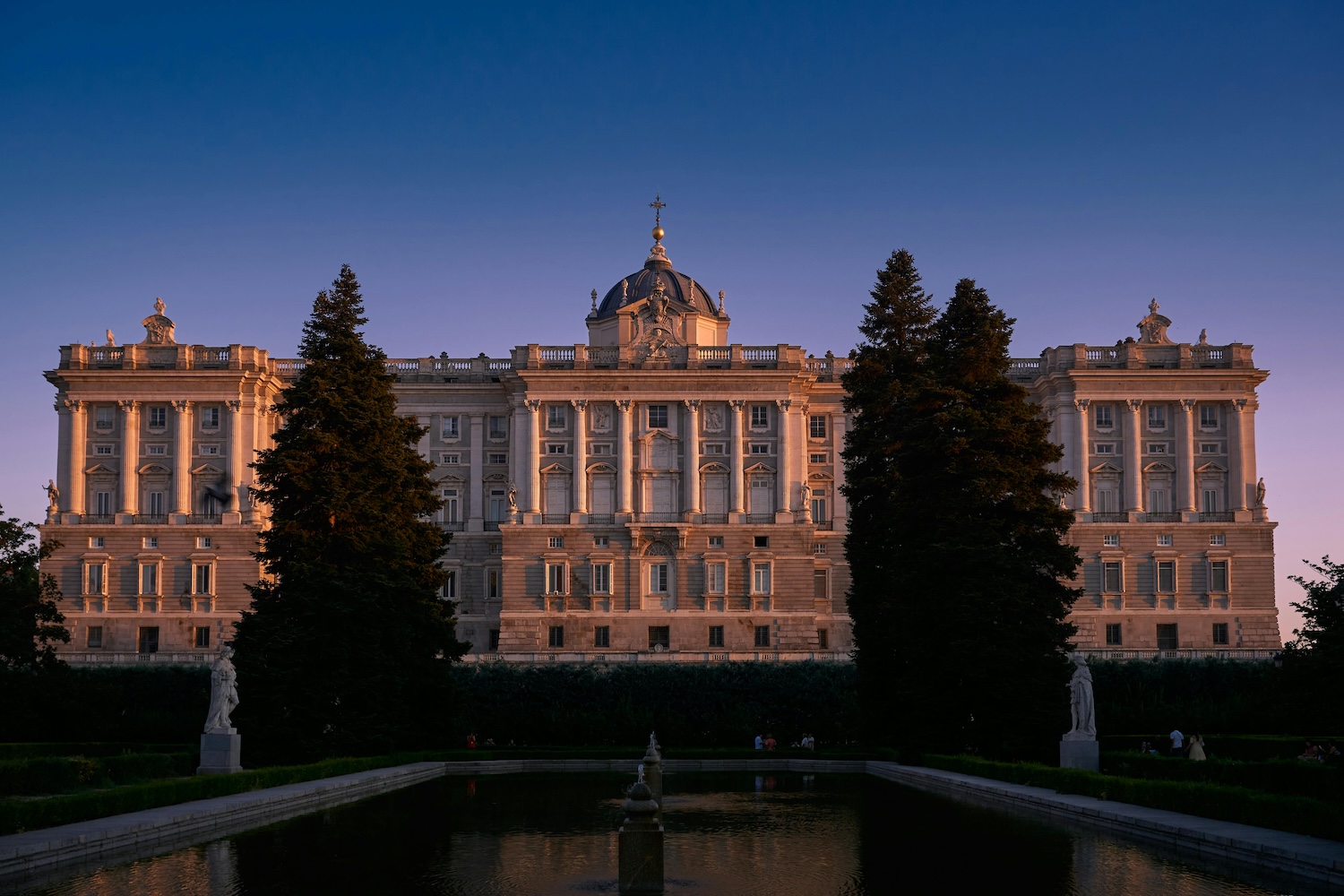
A Historical Traverse of the Old City: Madrid's historical layers — Habsburg, Bourbon, Republican, modern — reveal themselves differently when you move through them with someone who understands the stories behind the stone. Your private guide navigates the Royal Palace, the Plaza Mayor, the narrow streets of the Austrias neighbourhood and the Almudena Cathedral, building a portrait of the city that no hotel concierge can replicate. Private transportation throughout.
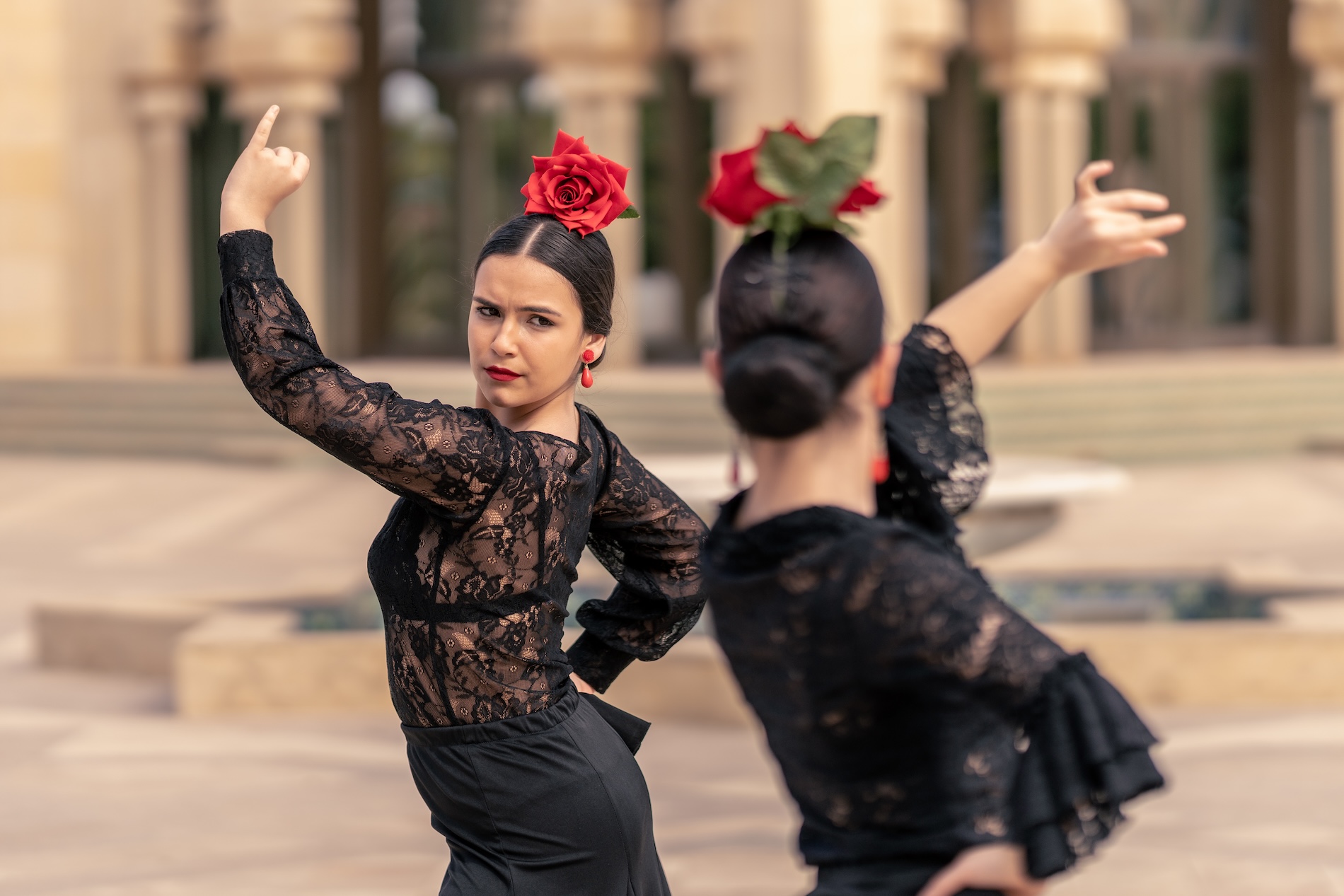
An Evening at the Tablao — Dinner and Flamenco: There are flamenco shows in Madrid, and then there is this. One of the city's oldest and most storied tablaos has received, across the decades, guests ranging from Gary Cooper and Rita Hayworth to Pablo Picasso and Salvador Dalí, from John F. Kennedy to presidents and heads of state across generations. The art form performed here is not entertainment — it is the distillation of a culture's deepest emotional vocabulary. We arrange a private table, dinner of serious quality, and an evening that will remain with you long after the journey ends.
Reina Sofía and Retiro Park — An Immersive Private Day: Picasso's Guernica, displayed at the Reina Sofía alongside works by Dalí and Miró, is among the most morally and aesthetically forceful collections of the twentieth century. Paired with a private exploration of the Retiro Park — Madrid's great green lung, with its rose gardens, glasshouse and sculpted pathways — this makes for a day of rare depth. Expert guide throughout. Private transportation.
Personal Shopping with a Leading Stylist: For those whose aesthetic sensibilities extend to how they present themselves to the world, we arrange access that the public does not have. Private showrooms, aperitifs poured while collections are brought to you, doors opened by appointment to ateliers that do not typically receive visitors. From sleek Spanish tailoring to the finest international houses with Madrid addresses.
Toledo — A Full Day in a City That Predates Spain: Approximately one hour from Madrid by private car, Toledo carries over two thousand years of continuous history. Its designation as a UNESCO World Heritage Site understates the experience of walking streets where Moorish, Jewish and Christian cultures built their places of worship within sight of one another. A full day, privately guided, with your driver at permanent disposal.

Wine, Tapas and the Art of the Spanish Table: To understand Madrid is to understand its bars — not the tourist-facing ones, but the century-old neighbourhood institutions where the wine is from Ribera del Duero and the jamón has been curing for four years. A private curated journey through the city's finest establishments, with a sommelier, wine pairings, and the particular pleasure of eating exactly as the Spanish do.
The Artisans — What to Take Home: The finest gifts from Madrid and the surrounding region are not found in department stores. Hand-woven garments in loom linen and natural silk, merino wool shawls, 100% silk scarves — and for those who appreciate ceramics, the extraordinary golden-lustre pieces from Valencia, produced by techniques dating to the Moorish period. We also arrange access to a family workshop producing the last authentically handmade and hand-painted traditional fans in Spain. These are not souvenirs. They are objects of genuine artistic heritage.
Every experience we arrange in Madrid is private, guided by experts who have been personally vetted, and shaped entirely around you.
Madrid to Mallorca
Crossing to the Island
The crossing from Madrid to Mallorca is simple, and we handle every detail on both ends. For clients travelling on their own flights, our private drivers are ready to collect you from your Madrid hotel and ensure a seamless transfer to the airport. On arrival in Palma, a dedicated driver will meet you and deliver you directly to your island hotel — no queues, no waiting, no disruption. Just the same level of discretion and service you expect throughout your journey.
Private Jet Charter
For the most seamless and elevated crossing, we arrange private jet charters from Madrid to Palma de Mallorca — approximately fifty minutes in the air, departing on your schedule from a private terminal. Your dedicated driver will be at the aircraft steps on both ends. There is no queue, no announcement, no compromised experience. For clients travelling with young children, with specific requirements, or simply for whom the journey itself is part of the standard they set for their lives, this is the natural choice.
Explore private aviation with Sculptured Journeys →
SCULPTURED JOURNEYS · A PRIVATE FOUNDER'S GUIDE
Part II — Mallorca

The Island That Rewards Those Who Look Closely
The first thing to understand about Mallorca is its scale. Travellers who have not been before consistently arrive surprised — by the breadth of the landscape, by the variation between its coasts and its mountains, by the fact that an island this size has the capacity to absorb you completely for a week and still leave you with the sense that there is more to discover.
Mallorca is the largest of the Balearic Islands — its neighbours Menorca, Ibiza and Formentera each possessing their own distinct character — and it is, frankly, a different proposition to any of them. It offers something more complete: dramatic mountain scenery, UNESCO-listed heritage, an extraordinary culinary tradition, some of the finest yacht anchorages in the western Mediterranean, and the kind of private experiences that we at Sculptured Journeys have spent over a decade curating.
This island is one I know most intimately. I have been bringing clients to Mallorca for over thirteen years, and my relationships with its property owners, winemakers, boat captains and artisans are ones that no search engine can replicate. What follows is a personal distillation of everything I would want you to know before you travel.
This island is one I know most intimately. What follows is not a guide — it is a personal distillation of everything I would want you to know before you travel.
Understanding the Island
Mallorca should be understood as a collection of distinct landscapes and atmospheres rather than a single destination. Each region has its own character, its own pace, and its own particular pleasures. The choice of where to base yourself — or how to move between areas — shapes the entire experience.
PALMA — THE CAPITAL
Palma de Mallorca is, by any reasonable measure, one of the finest small capitals in Europe. The old city — its Gothic cathedral rising directly from the harbour, its Arab baths hidden within medieval streets, its independent boutiques occupying the ground floors of fourteenth-century buildings — rewards unhurried exploration on foot. The restaurant scene has evolved considerably over the past decade and now offers genuine culinary ambition alongside the traditional Mallorcan cooking that remains its foundation. Two to three nights based in Palma allows you to absorb the city properly, and from here you can make day journeys into the surrounding landscape.
SERRA DE TRAMUNTANA — THE MOUNTAIN INTERIOR
Running along the island's north-western spine, the Serra de Tramuntana is Mallorca at its most elemental. Designated a UNESCO World Heritage Landscape, these mountains — their peaks reaching over 1,400 metres — create a dramatic counterpoint to the coastal ease of the rest of the island. The road that traces the range, the MA-10, is one of the most beautiful drives in the Mediterranean. Within the Tramuntana, the village of Deià occupies a singular place in the island's cultural imagination — Robert Graves lived and worked here for much of his life, and the village retains a bohemian authenticity that resists the passage of time. The mountain villages of Valldemossa and Sóller each carry their own distinct character, and the valley descending to Port de Sóller is among the most beautiful passages on the island.
NORTHERN COAST — CAP DE FORMENTOR
The north of Mallorca is the island's most dramatically scenic area. The Cap de Formentor — a narrow peninsula of limestone cliffs extending into the sea — has been one of the most photographed landscapes in the Mediterranean for over a century, and earns every frame. The road to the lighthouse at the cape's tip, winding through pine forest above sheer drops to the sea, is an experience in itself. The towns of Alcúdia and Pollença nearby offer some of the most authentic and architecturally intact historic town fabric on the island.

SOUTHWEST COAST — PORT D'ANDRATX AND THE BAY OF PALMA
The south-western coast, from Port d'Andratx northward toward Banyalbufar, is Mallorca's most sophisticated coastline. Port d'Andratx is a working harbour that has become a gathering point for the island's international community — its restaurants and marina carrying a particular quality of ease. This stretch of coast is also among the finest for snorkelling and boat exploration, with water clarity that makes the underwater world as compelling as the landscape above.
EAST AND SOUTHEAST COAST
The eastern coast is the quieter face of Mallorca — less travelled, more authentically local, and home to some of the island's most beautiful calas. The turquoise water of the southeast, set against limestone cliffs, offers snorkelling and swimming of the highest order. The village of Santanyí, with its honey-coloured stone and unhurried Saturday market, is one of the island's most characterful settings and a natural base for exploring this part of the coast.
THE ISLAND INTERIOR — VINEYARDS, VILLAGES AND OLIVE GROVES
Mallorca's interior is its least visited and most authentically Mallorcan face. The wine regions of Binissalem and Pla i Llevant produce wines of genuine distinction — particularly the indigenous Manto Negro and Callet varietals. The market towns of Sineu, Inca and Santa Maria del Camí operate on their own rhythms, largely untouched by tourism. A morning cycling through this landscape — past stone walls and almond groves, through villages where the church bells still set the pace of the day — is one of the quietly extraordinary pleasures Mallorca offers.
Where to Stay

Our hotel partners have been selected over many years of personal experience and client feedback. Each property occupies a distinct position on the island — in terms of location, atmosphere and the kind of guest it suits best.
Es Princep — Palma: Centrally positioned with direct sea views, Es Princep places you within the life of the city — the cathedral, the old harbour, and the independent restaurants of Santa Catalina all within comfortable reach on foot. Two to three nights here, at the start or end of the island stay, works beautifully for those who wish to experience Palma properly.
La Residencia, A Belmond Hotel — Deià: The island's most complete expression of cultural luxury. Set between the mountains and the Mediterranean, surrounded by olive groves and citrus terraces, La Residencia is defined by art, craft and exceptional cuisine — thirty-three original works in the dining room alone, an award-winning spa, three pools, and the deeply considered El Olivo restaurant. The Smile Club for younger guests is among the best-managed children's programmes we encounter anywhere. Our foremost recommendation in the Tramuntana.
Son Bunyola — Banyalbufar: A Virgin Limited Edition property set within a working estate above the sea. Intimate in atmosphere despite its extensive grounds, Son Bunyola has the quality of a very private house — unhurried, genuinely beautiful, and far removed from the feel of a conventional hotel.
Grand Hotel Son Net — Puigpunyent: A seventeenth-century olive mill estate deep within the Tramuntana, restored with architectural precision and a romantic stillness that is entirely its own. Best suited to couples seeking complete immersion in the mountain landscape.

Cap Rocat — Bay of Palma: A fifteenth-century military fortress converted into the island's most intensely private hotel. Built into the cliffs, entirely adults-oriented, and designed for those who understand that genuine luxury is principally a matter of silence, privacy and considered sensory experience. The gastronomy is exceptional. Palma is twenty minutes by car. This is not an obvious choice — it is a very good one.
Four Seasons Mallorca at Formentor — North: The most ambitious resort on the island, and its only major property with direct access to a genuine sandy beach. Immaculate service, excellent children's programming, and a setting at the foot of the Cap de Formentor that is difficult to overstate. Best suited as a dedicated base for exploring the north, and our first recommendation for families.
Hotel Can Ferrereta — Santanyí: A sixteenth-century manor house in the old town of Santanyí, restored with exceptional restraint and a genuine eye for architectural beauty. Adults-oriented, deeply unhurried, and one of our most consistently praised properties. Ideally positioned for the calas of the southeast and the quiet pleasures of the east coast.
The Calas — Mallorca by Sea
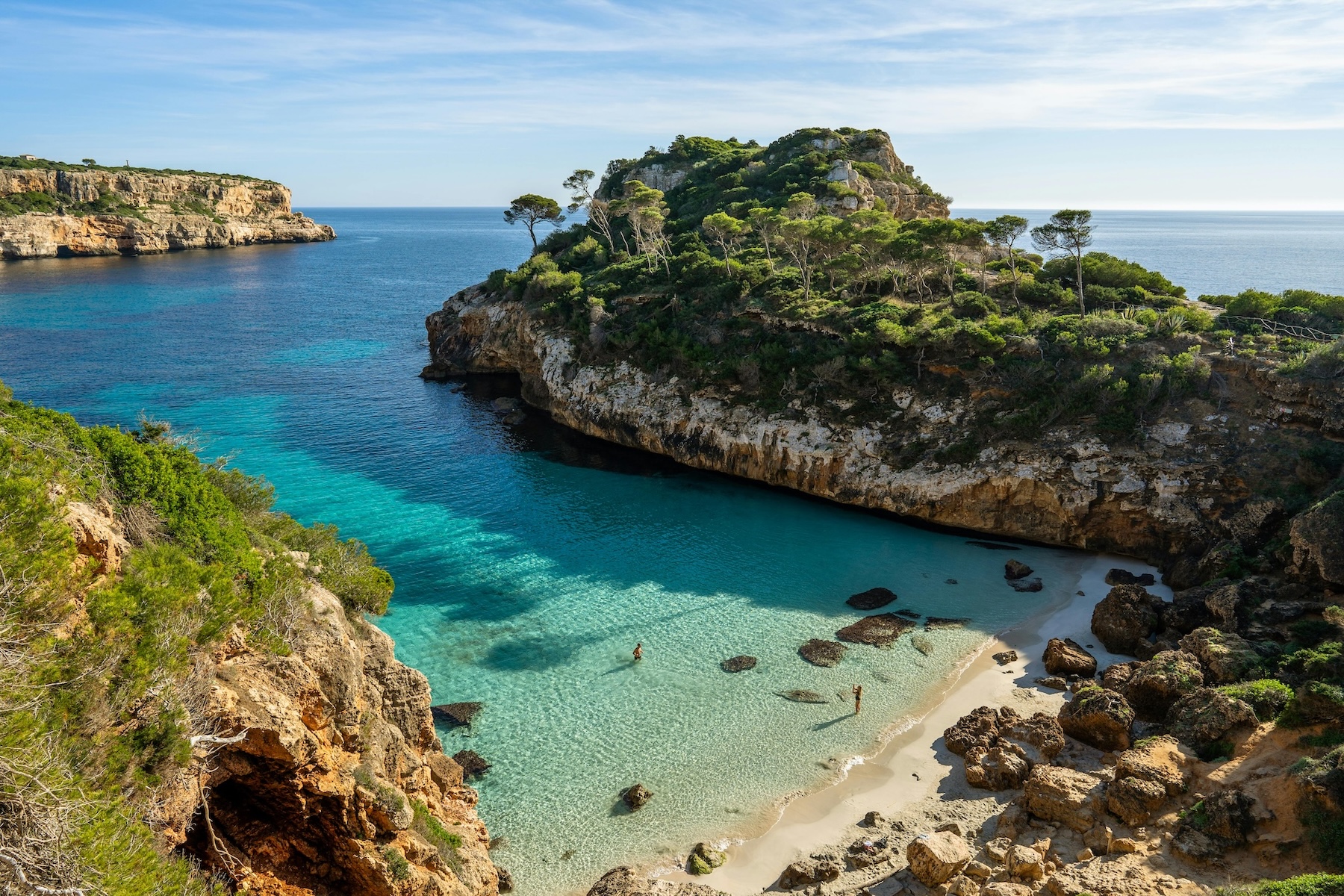
The calas of Mallorca — the island's sheltered, rock-enclosed coves — are its most irreducible treasure. Many are accessible only by boat, which makes them, by definition, an experience available only to those who plan properly. The water in the best of them is of a clarity and colour that renders the Mediterranean all over again as a source of genuine wonder.
We always recommend exploring the calas by private boat. Not only does this give you access to coves unreachable by road, but the perspective from the sea — the limestone cliffs rising from the water, the mountains behind, the extraordinary chromatic variation of the Mediterranean at midday — is one that no land-based journey can replicate.
THE FINEST CALAS FOR SNORKELLING AND SWIMMING
Cala Llamp — Southwest Coast: Among the finest snorkelling locations on the island, with an underwater landscape of considerable variety and remarkable visibility. Approximately forty-five minutes from Palma by road, or a short and beautiful passage by boat along the south-western coast.
Cala Estellencs — Northwest Coast: Dramatically enclosed, with limestone walls rising directly from the sea and water of exceptional clarity. Road access is challenging — which is precisely why the boat approach is preferable, and why this cala rewards those who make the effort.
Caló des Moro — Southeast Coast: Widely regarded as one of the most beautiful calas in the Balearic Islands, with water that moves between aquamarine and deep blue within the space of a few metres. Its reputation means it draws visitors during peak season — arrive early, or by private boat, to have it as it deserves to be experienced.
Cala s'Almunia — Southeast Coast: Adjacent to Caló des Moro, equally beautiful and slightly less visited. The pair make a natural afternoon by boat from any point on the south or east coast.
Cala Comtesa — Bay of Palma: The closest significant cala to Palma — approximately twenty to thirty minutes by car, or a short morning passage by boat. Well-suited for a half-day from the city without committing to a longer journey across the island.
Cala Blava — South: Quieter than the more photographed calas, accessible from Palma in around thirty minutes, with a landscape character that rewards those who prefer not to share their afternoon with a crowd.
Private Experiences

What follows is a selection — a starting point, not a ceiling. Every engagement is private, every guide, captain, sommelier or artisan personally selected, and almost anything can be arranged on request. We welcome the conversation about what would make your time on the island truly your own.
Private Boat Charter — The Island from the Sea
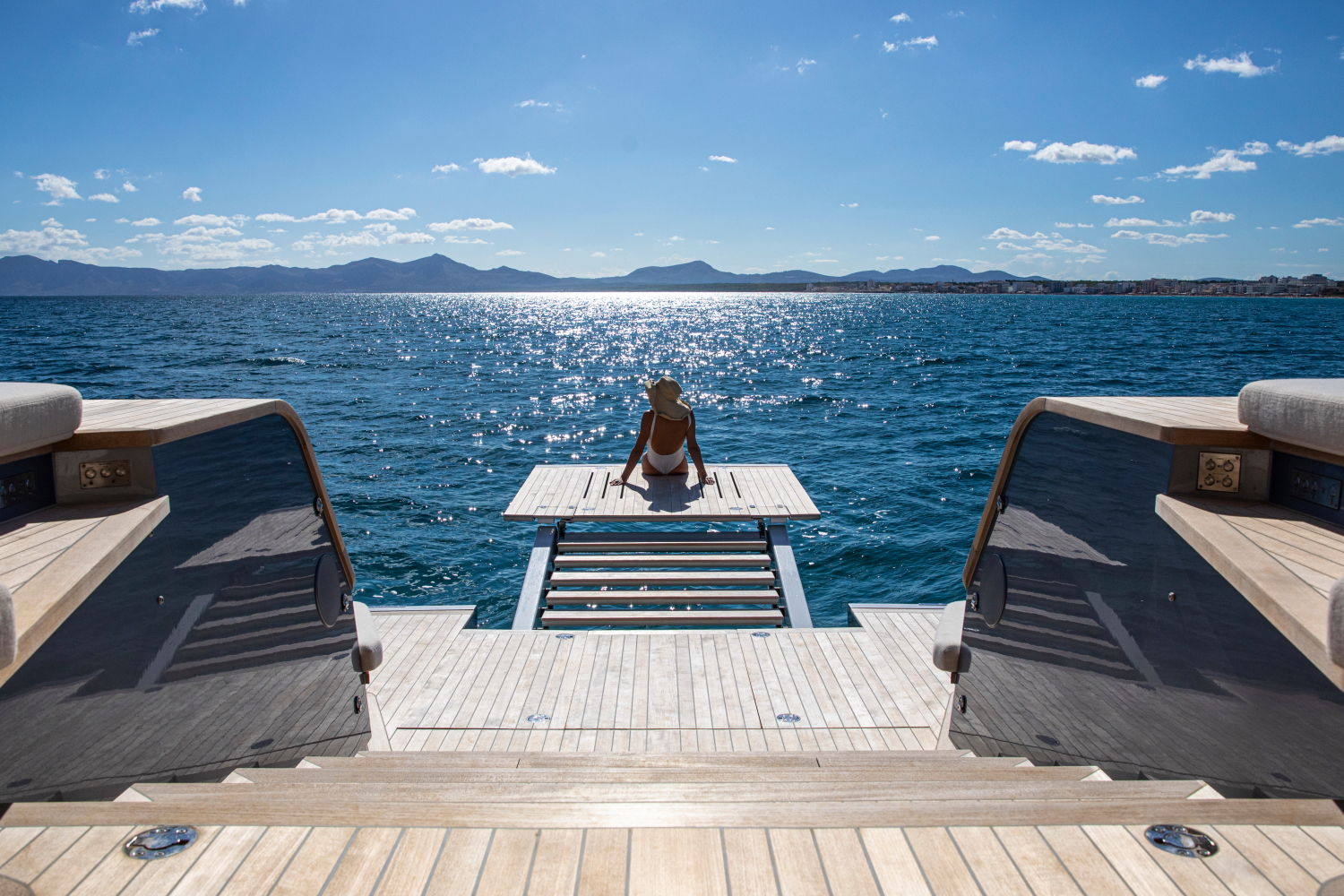
A private charter is, in our view, the single most transformative experience available on Mallorca. Departing from Palma, from Port de Sóller, from Port d'Andratx — wherever you are based — your vessel moves along a coastline that no road can fully reveal. Swimming from the anchor in a cala accessible only by water, watching the Tramuntana mountains from the sea, following the light as it changes across the limestone cliffs: this is the island as its most devoted visitors have always known it. Paddle boards, snorkelling equipment, water toys, a private crew, food and wine prepared for you on board — everything arranged.
Explore superyacht journeys from Palma →
Sunset Sailing — The Bay of Palma at Dusk: One of the most consistently beautiful experiences we offer anywhere in our portfolio. The Bay of Palma at last light, the cathedral in silhouette, the water moving from gold to bronze — an aperitif prepared and served aboard as you move through the evening. Simple, and irreplaceable.
Private Wine Experiences — Inside Mallorca's Bodegas: The island's wine culture is serious and largely unknown to the casual visitor. The indigenous Manto Negro and Callet grapes produce reds of genuine complexity, and the Malvasia de Banyalbufar — a nearly extinct white variety being revived by a small number of dedicated producers — is among the most interesting wines in Spain. We arrange private tastings within working family estates: not in a tasting room, but in a bodega, with the winemaker present and a table set among the vines.
A Private Table Among the Vines: For couples in particular, we arrange exclusive dinners on estate grounds — a table set within a working vineyard, cuisine that reflects the season and the land, wines poured by the family that produced them. Total privacy. This has, with some frequency, proved to be the defining memory of an entire journey.
Traditional Mallorcan Cooking — Learning and Dining: Mallorca's culinary tradition is rooted in the land and the sea in equal measure. A private class with a Mallorcan cook of standing, followed by lunch of what you have made in a setting of genuine beauty — sobrasada, tumbet, the freshest possible fish — is among the most pleasurable half-days the island offers.
Early Morning Hiking — Mountains, History and Silence: The Tramuntana is best experienced before the day's heat arrives. We arrange private guided hikes along ancient paths used by goatherds and monks for centuries, to viewpoints that photography cannot fully capture, sometimes to archaeological sites that remain largely unknown. A picnic breakfast at altitude, the island spread below you: this is Mallorca before anyone else has arrived.
Cycling Through the Interior: The island's interior and the Tramuntana foothills are among the finest cycling landscapes in Europe — a fact the international professional cycling community has long understood, training here throughout the spring. We arrange private guided journeys through the villages of Valldemossa, Bunyola, Deià and Sóller, at a pace that allows the landscape to be absorbed rather than conquered.
The Artisans of Mallorca: The craft traditions of Mallorca — basket weaving using ancestral techniques, hand-embroidered fabrics, the olive wood workshops that have supplied Mediterranean households for centuries — are living practices, carried by families who still use the methods of their grandparents. We arrange private atelier visits and, where appropriate, hands-on workshops. Tradition and conservation are central to how we operate, and we believe that travel should contribute to the continuation of what it encounters.
Private Picnics in Extraordinary Settings: Among the simplest and most requested experiences we arrange. A setting of particular beauty — a clifftop above the sea, a terrace within an olive grove, a mountain clearing with views across the entire south of the island — and a picnic of proper quality, prepared and laid for you. Nothing complicated; just the right place, at the right moment, with the right food.

After-Hours Access to Historical Sites: Mallorca's archaeology and history extend from prehistoric Talayotic settlements through Roman occupation to the Arab cultural inheritance still visible in the island's architecture and irrigation systems. We arrange private access to sites outside public opening hours — experienced in the particular quality of silence that ancient places deserve.
Palma's Cultural Life — Art, Architecture and Local Design: Palma has a gallery scene of genuine quality and an independent retail landscape — particularly in the old city — that rewards a morning with a knowledgeable local guide. We arrange private tours of the city's cultural sites and introductions to the artists and designers working here, making connections that the independent traveller would never discover.
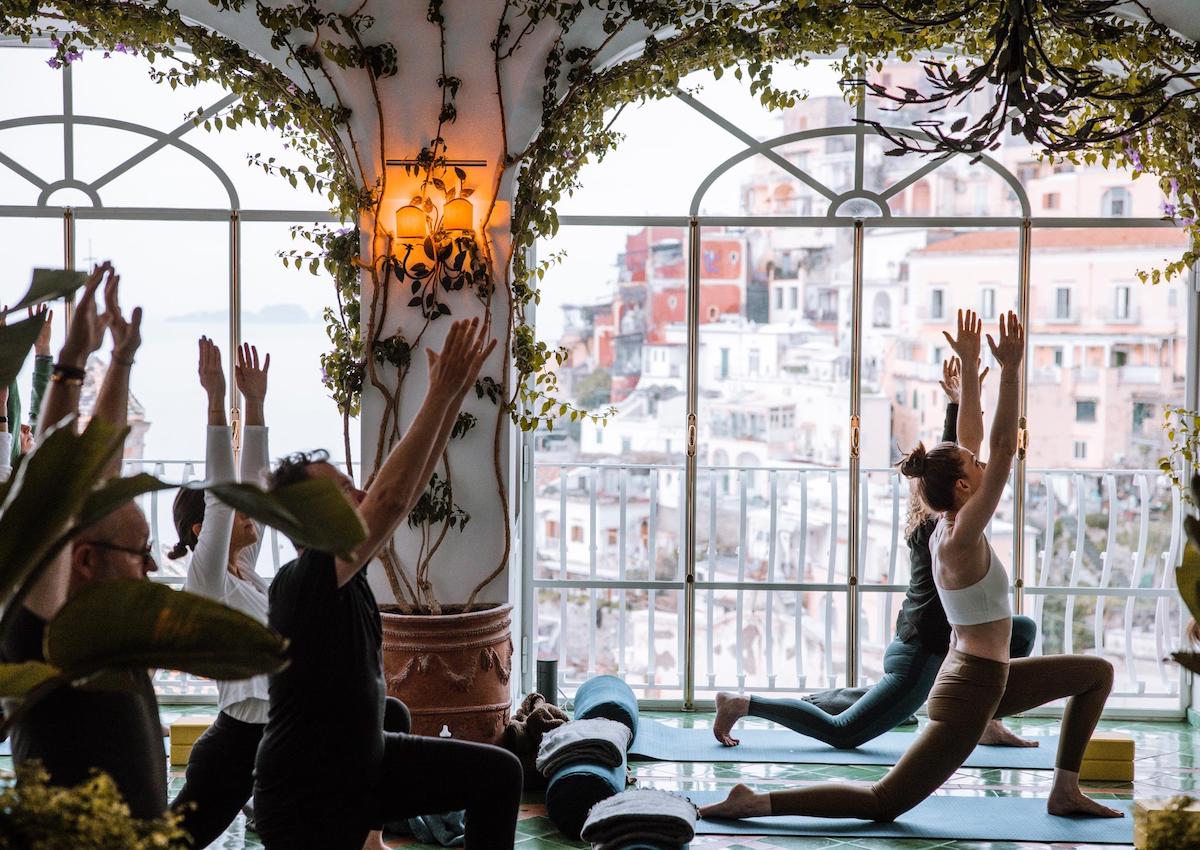
Wellness and the Island's Natural Rhythm: Mallorca offers an extraordinary context for wellness that goes beyond a spa menu. Sunrise yoga with a private instructor above the sea. Guided meditation walks in the Tramuntana. A hammam ritual in one of Palma's finest traditional establishments. The island has its own rhythm, and part of what we do is help our clients find it.
We arrange private access to the island's artisans, winemakers and mountain guides — the custodians of what Mallorca actually is, beneath the obvious surface.
Culture and Cuisine
Mallorcan cooking is one of the Mediterranean's least celebrated and most deserving culinary traditions. It is rooted in the land — in the olive oil produced from trees growing for centuries, in the black pigs raised on the island's mountain pastures, in the tomatoes and peppers that define its agricultural character — and in the sea, which provides a daily harvest of remarkable quality.
The island's signature preparations — sobrasada, pa amb oli, tumbet, ensaïmada — are not tourist constructions. They are the actual food of actual Mallorcan life, and encountering them in the right context is among the pleasures only a properly designed journey can deliver.
The restaurant landscape has evolved considerably. Among the finest dining destinations on the island: Es Vergeret and Restaurante Mirador Sa Foradada represent the Mallorcan tradition at its most thoughtful. Es Pi Restaurante brings a focused contemporary sensibility to the island's finest ingredients. Within our partner hotels, El Olivo at La Residencia operates at a level that would earn recognition in any serious culinary context. And Béns d'Avall, reopening in 2027, is among the most anticipated returns in the Balearic dining calendar.

Our Approach — Sustainability and Place
The island's natural and cultural heritage is not a backdrop. It is the reason our clients come, and the reason we are careful about how we operate within it. Our partnerships are with properties and operators who take seriously their relationship to the landscape, the water, the cultural practices and the communities that make Mallorca worth visiting in the first place.
We support the local artisans, the winemakers working with indigenous varietals, the guides who understand conservation as central to their practice. We believe that private travel, done thoughtfully, can contribute to the continuation of what it encounters rather than diminishing it. Every experience we arrange on the island reflects this principle.
Every journey begins with a conversation. We would be glad to have it with you →
YOUR QUESTIONS, ANSWERED
Q&A
Q When is the best time to visit Mallorca?
A Our consistent recommendation is April through early June, and September through October. The island in these months has something the high-season cannot offer: warmth without extremity, calm roads, and a quality of light that is, if anything, more beautiful than the height of summer. July and August bring heat and crowds — the popular calas become very busy, and the roads around the mountain passes can be slow. If high-season travel is unavoidable, early mornings become particularly important, and a private boat becomes less of a luxury and more of a strategic necessity.
Q What are the finest calas for snorkelling and boat trips?
A For snorkelling in particular, Cala Llamp and Cala Estellencs on the southwest and northwest coasts, and Caló des Moro and Cala s'Almunia on the southeast are our selections — the last two among the most beautiful enclosed coves anywhere in the Mediterranean. All are best reached by private boat, which allows you to arrive before other visitors and depart on your own terms. The Bay of Palma calas — Cala Blava, Portals Vells, Cala Comtesa — offer a different experience: more accessible, well-suited to a half-day on the water from the city.
Q What is the best way to travel from Madrid to the Balearic Islands?
A For the most seamless and elevated crossing, we arrange private jet charters from Madrid to Palma — approximately fifty minutes in the air, on your schedule, with your dedicated driver at the aircraft steps on both ends. For clients travelling on their own flights, our private drivers will collect you from your Madrid hotel and transfer you directly to the airport, and a dedicated driver will be waiting in Palma to deliver you to your island hotel. Every detail on the ground is handled — no queues, no disruption, no compromised arrival.
Q How many days should we spend in Mallorca?
A A minimum of six nights allows you to genuinely encounter the island — Palma, the Tramuntana, and one or two coastal areas. Seven nights permits a more unhurried engagement and allows for at least one full day by private boat. Combined with three nights in Madrid, ten days is the journey we find most satisfying: enough time to move slowly, to change the landscape, to arrive somewhere and feel that you have actually been there.
Q Where should we stay?
A This depends entirely on who you are and what you are looking for. For the city and its cultural life: Es Princep in Palma. For mountain landscape and artistic atmosphere: La Residencia in Deià. For absolute privacy and extraordinary gastronomy: Cap Rocat above the Bay of Palma. For families with direct beach access: Four Seasons Mallorca at Formentor. For romantic seclusion on the east coast: Hotel Can Ferrereta in Santanyí. Many of our clients move between two properties across a seven-night stay — this is, in our experience, often the most satisfying approach to the island.
Q How does Mallorca compare to the other Balearic Islands?
A Each island has a distinct identity. Ibiza is often defined by its social life and its extraordinary sunsets — and while its luxury offering has grown considerably in recent years, its energy is particular and not for everyone. What fewer people know is that Ibiza has a quieter, more beautiful side entirely: pristine waters ideal for private boat charters, hidden coves, and a stillness that reveals itself only to those with the right insider knowledge. Menorca is quieter still — architecturally protected and genuinely unspoiled, refined and intimate in a way that Mallorca, given its scale, cannot always match. Formentera is best arrived at by boat: small, unhurried, and at its most beautiful when experienced privately. Mallorca is the most complete of the four — the only one with serious mountains, the richest culinary tradition, the most substantial art and architecture, and the broadest range of private experiences. For a sophisticated traveller who wishes for depth as well as beauty, Mallorca is the island.
Q How does Sculptured Journeys approach this journey differently?
A We do not operate group experiences, scheduled itineraries, or shared programmes. Every journey begins with a conversation about who you are, how you travel, and what matters to you. At Sculptured Journeys, Mallorca is an island we have been bringing clients to for over thirteen years. The relationships we hold with the island’s winemakers, property owners, boat captains, artisans and cultural figures are personal connections built over time — not directory listings. The access we provide is a function of trust and history, and the experiences we arrange are not available on the open market. When you travel with Sculptured Journeys, you are not purchasing an itinerary. You are engaging with a depth of knowledge and relationship that takes years to build.
Q How do we get around the island?
A We arrange private drivers for all land transfers — between airports, between hotels, and for day excursions. Mallorca’s roads are generally manageable outside peak July and August hours, though certain mountain routes require both knowledge and patience. For the calas — and for the most beautiful perspectives the island offers — a private boat is not a supplement to the journey. It is, in our view, an essential part of it. If you have a particular way you would like to move through the island, speak with us — we will find the right solution.
Q What are the most elevated private experiences on the island?
A Our most quietly extraordinary experiences are the ones that require the most preparation. A private dinner table set in a working vineyard at dusk, for two, with wines poured by the family that grew them. A dawn ascent into the Tramuntana with a private mountain guide, arriving at an archaeological site in complete silence. A boat anchored in a cala reachable by no road, with a crew preparing lunch while you swim in water of impossible clarity. Private after-hours access to a site of historical significance. The common thread is not spectacle — it is access, and the particular quality of attention that comes only from knowing a place very well.
Q Is Mallorca suitable for families with young children?
A Very much so, if the base is well chosen. Four Seasons Mallorca at Formentor is the island's finest family resort — genuine sandy beach, excellent children's programming, and the facilities that families require. La Residencia in Deià runs an exceptional programme for younger guests through its Smile Club. The private boat experience, we find, is universally successful with children of any age. We always take the ages and particular interests of younger travellers into account when designing an itinerary — the island has enormous range for families who wish to travel properly.
The right journey takes time to design. That conversation starts here.




.jpg)




















-002.jpg)