Where the River Carries the Wine
A portrait of the Douro Valley and Porto — two chapters of one continuous story
The river has always known the way.
Long before roads were cut along the valley's edges, before the quintas acquired their names and their reputations, the Douro was the logic that held everything together. Wine was made high on the terraces — in soil the colour of dark slate, on the steep pre-phylloxera schist slopes where the gradient makes mechanisation impossible and every vine is still reached by hand — and when it was ready, it came down to the water. Loaded onto rabelo boats, barrels of Port wine made their passage westward toward the city and the sea. The river carried them. The river carries the story still.
It is this throughline — valley to city, vine to glass, labour to pleasure — that gives a journey between the Douro and Porto its particular coherence. They are two chapters of a single narrative, written in wine and water and stone, and best understood in the order the river suggests: beginning among the terraces, ending at the estuary.

Chapter One — The Valley
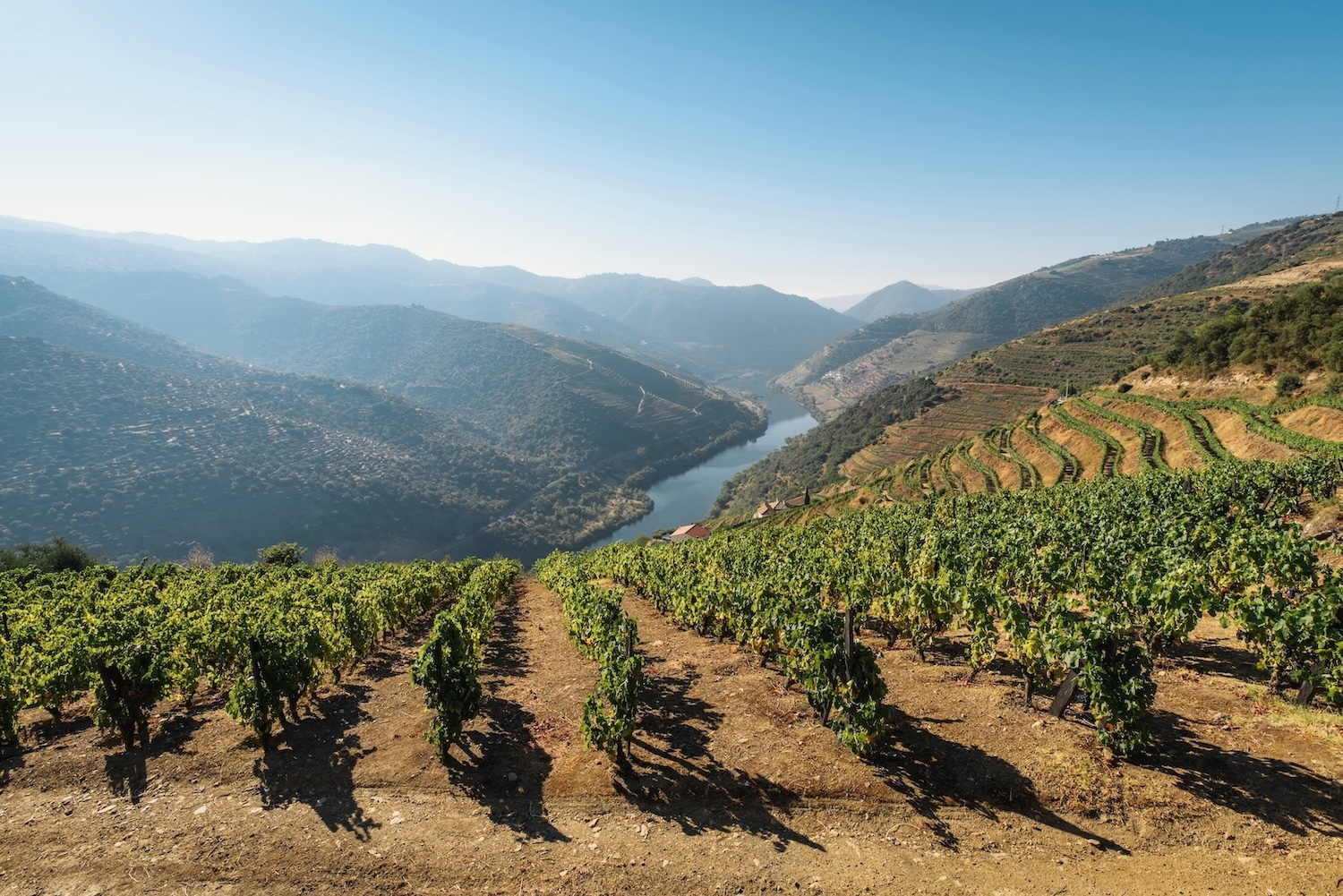
To arrive in the Douro Valley, in the north of Portugal, is to step into a landscape that has been continuously and deliberately shaped for more than two thousand years. The terraces are not a feature of the scenery; they are the scenery — broad stone shelves cut into schist hillsides at angles that would defeat any agricultural logic other than necessity and accumulated knowledge. They hold the heat of the day, channel rainfall into the parched summer soil, and make possible the cultivation of vines in conditions that most of Europe's wine regions would consider hostile.
UNESCO inscribed the Alto Douro Wine Region onto its World Heritage List because of this landscape — not merely for what grows here, but for what human effort has made possible over centuries. The terraces are not archaeological. They are worked, year after year, by hand. On the steepest traditional schist terraces — the ones cut without access roads — harvest still requires people on slopes, cutting by eye and feel, the gradient making any other approach impossible.
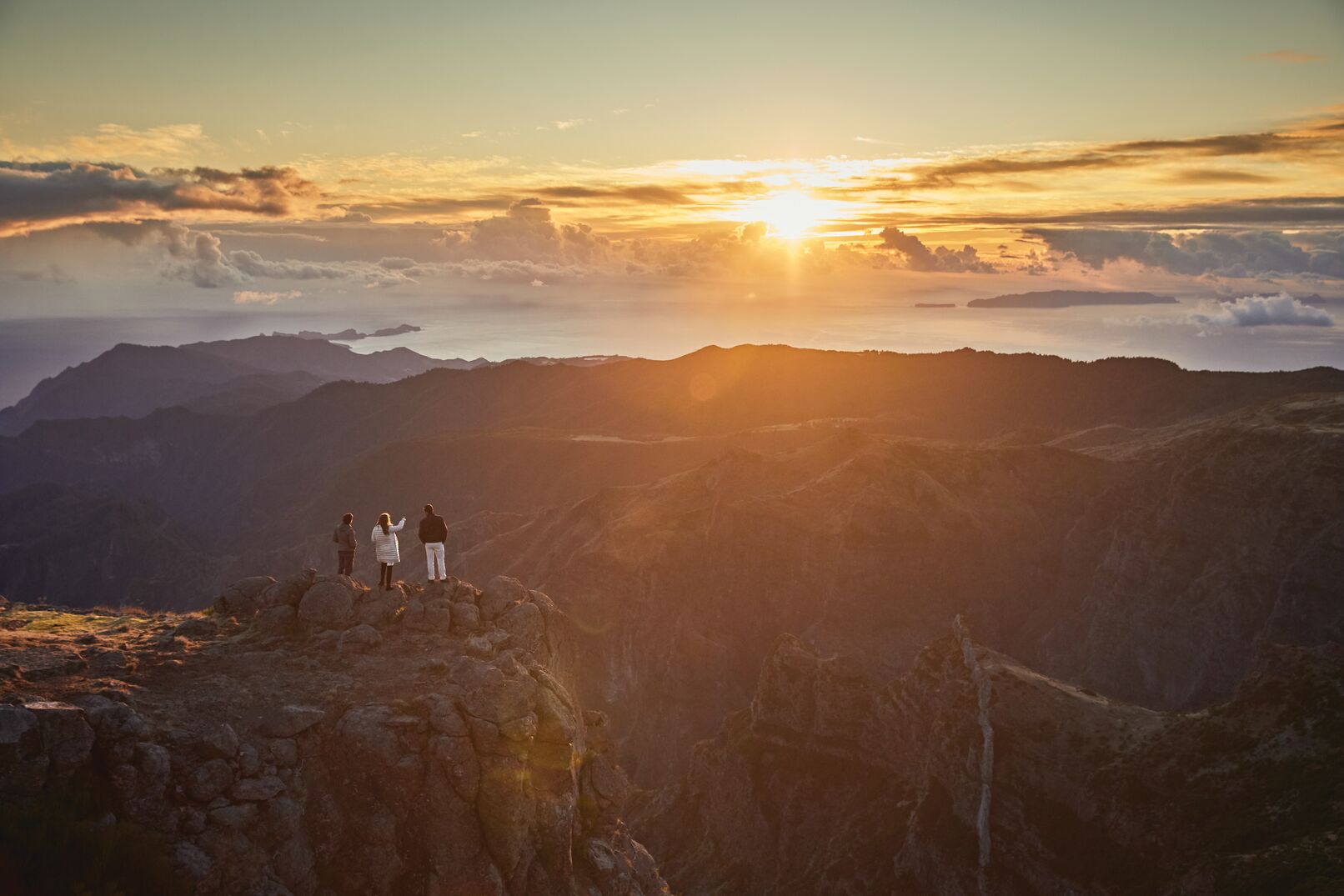
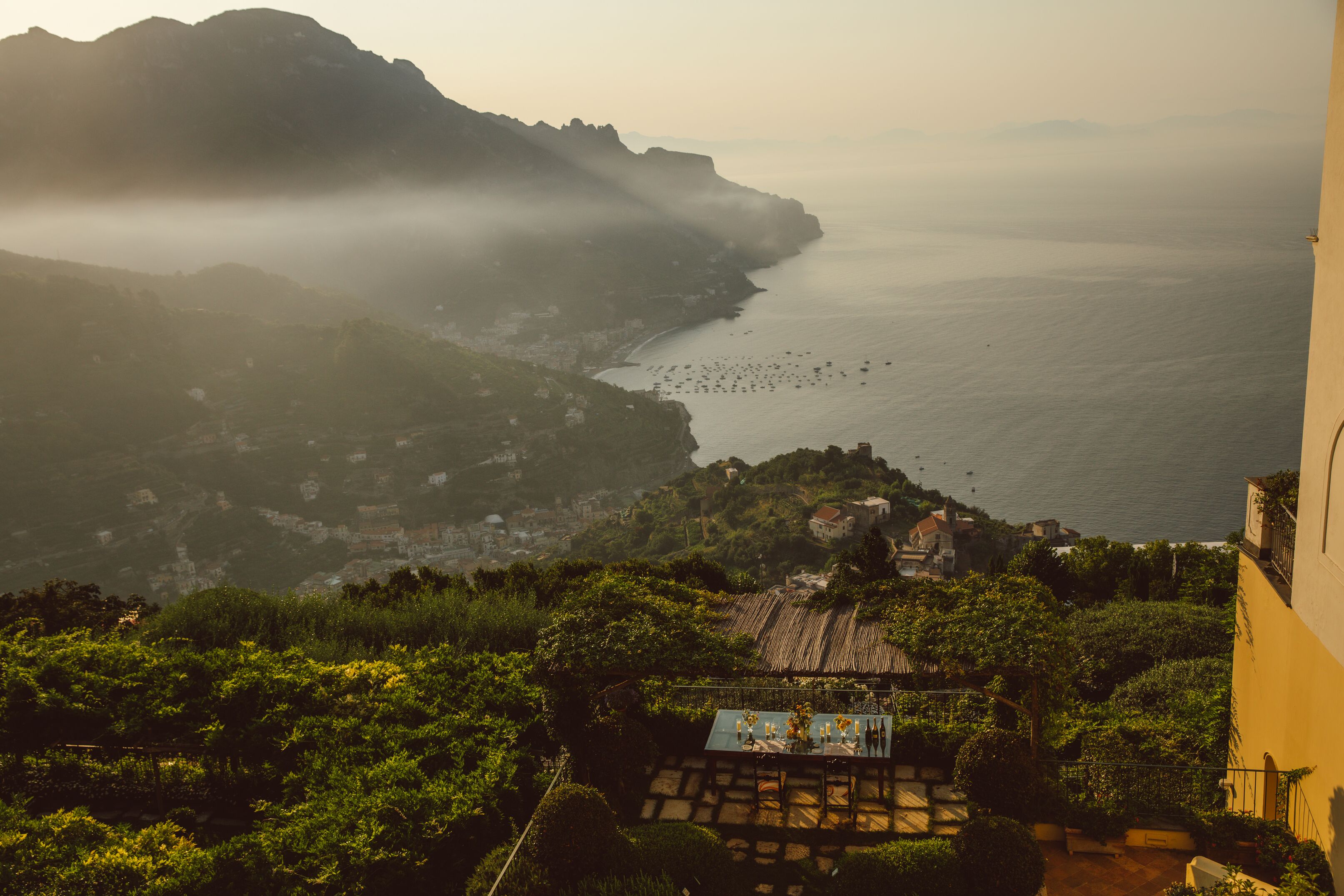
Waymarked trails thread through the terraced vineyards, descending into valley folds and climbing again to ridgelines where the Douro appears as a silver thread far below. Walking at this pace — unhurried, following the contours the vines follow — is the most honest way to understand what the region is. The landscape does not yield its character to speed.
The wines of the Douro have moved well beyond the fortified Port that made the region's international reputation. Still reds and whites of serious depth now come from these same terraces — wines that carry the particular mineral quality of schist soil, a quality that registers first as texture rather than flavour and lingers long after the glass is set down. An evening spent at a working quinta, the valley quieting as the light fails and the temperature drops sharply, gives these wines their proper context. They are not background accompaniment. They are the point.

SCULPTURED JOURNEYS arranges access to the valley on an entirely private basis — exclusively for the travelling party, shaped around the interests and pace of the guests rather than any fixed programme. Those with a serious interest in the craft of winemaking can go further into a quinta's working life than the standard cellar visit would permit. Those who come primarily for the landscape and the stillness are given the conditions in which that stillness becomes genuinely available.
Six Senses Douro Valley occupies a 19th-century manor estate on a vine-covered hillside above Lamego. The property's relationship to the surrounding landscape is one of attentiveness rather than intervention — spa rituals drawing on local botanicals, a kitchen working closely with the valley's produce, terraces from which the valley's full depth becomes visible.
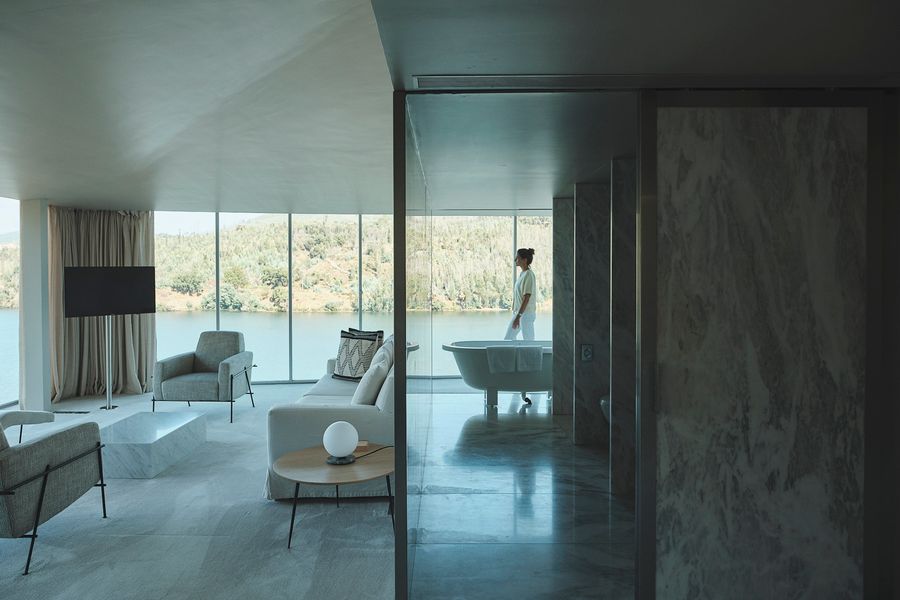
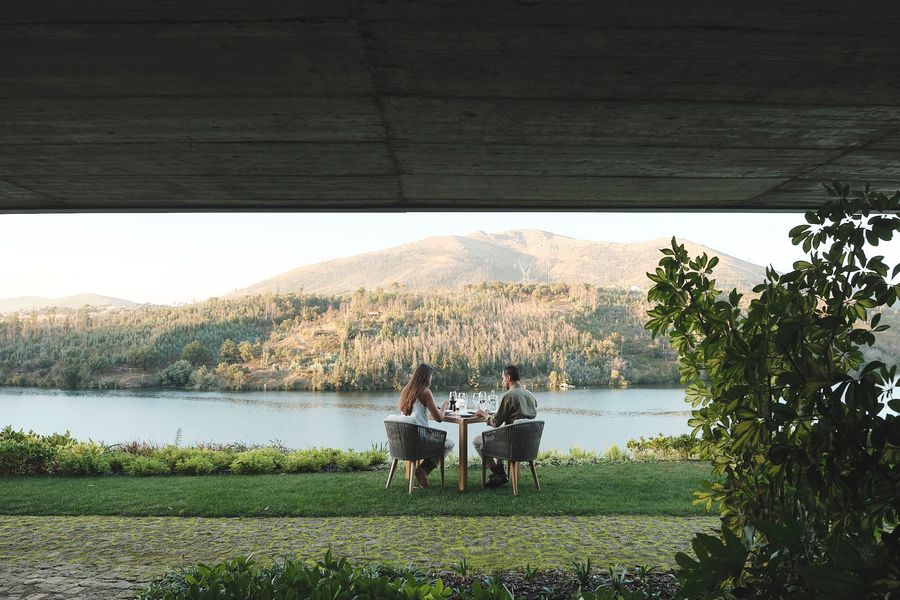
Octant Douro, river-facing at Castelo de Paiva, takes a different register — design-led, spare, oriented toward the water rather than the vine-covered hillside. Its restaurant Raiva is listed in the Michelin Guide, and the food shares the valley's instinct for restraint: ingredients that speak for themselves, technique that does not announce itself.
Schistó, in Peso da Régua, holds a Michelin star and offers a tasting menu of singular focus. The name itself — schist, the dark metamorphic rock that underlies the entire valley — announces the kitchen's intent: this is food that belongs to this place, not cuisine that happens to have landed here. The journey to Régua along the valley road is itself part of the evening.
Further east, where the valley widens and the landscape becomes drier and more austere, the Douro hinterland opens into territory of a different kind. Near the Spanish border, the Côa Valley holds what the Côa Parque describes as the most important collection of Palaeolithic open-air figurations known today — engravings that exist not behind glass but in the open landscape, in schist outcrop and riverbank, made by people who moved through this valley perhaps twenty thousand years before the first vine was planted. The Portuguese inscription dates to 1998; Siega Verde, the Spanish extension across the border, was added in 2010. A privately arranged visit to the Côa is a departure from the wine country proper — a longer excursion eastward — but for those whose curiosity extends beyond the strictly vinous, it changes the scale at which the entire landscape is understood.

What the valley asks of its visitors is the same thing it has always asked of those who work it: patience, attention, a willingness to move at the pace the land sets.
Chapter Two — The City
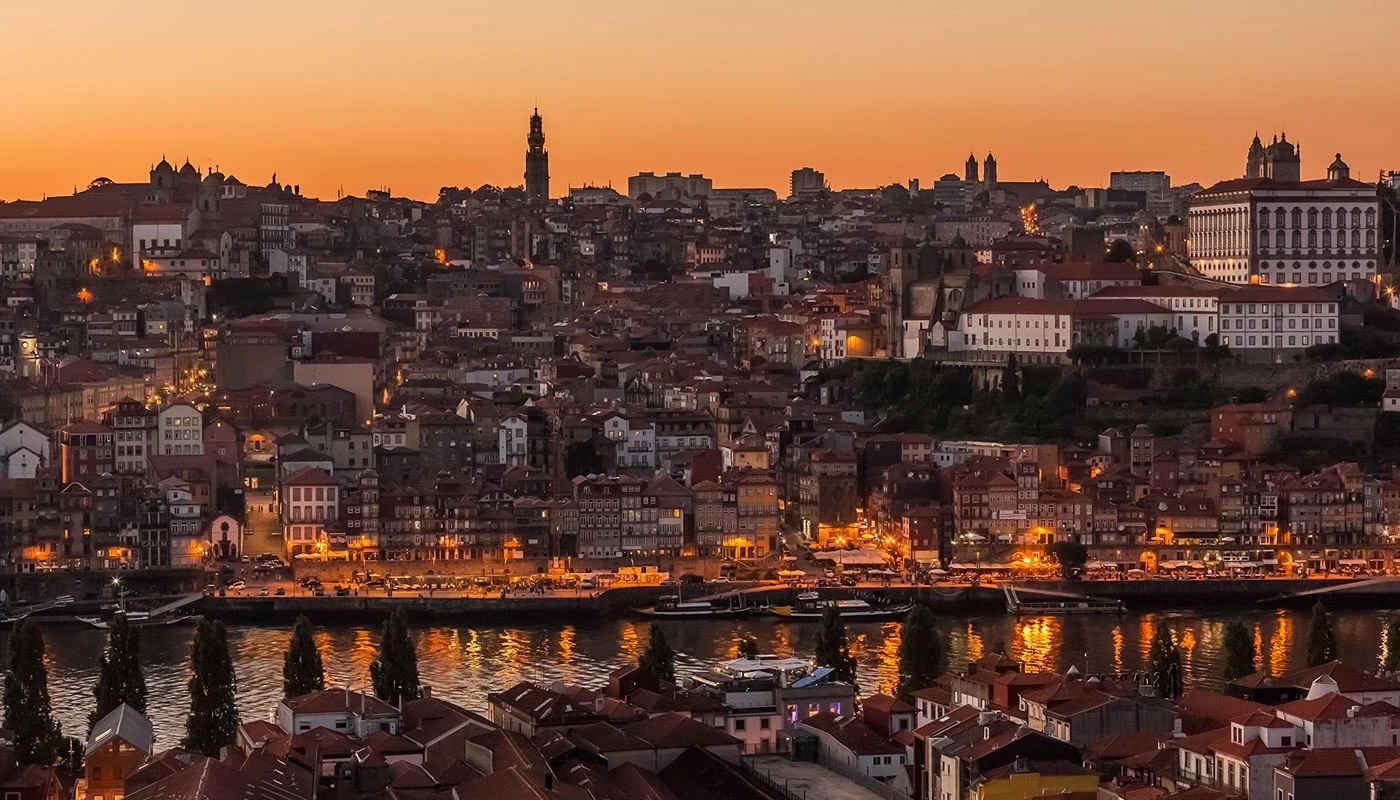
The Douro reaches the sea at Porto, and the city has the character of a place that has always known itself to be at the end of a long journey. Porto is not a city that performs for visitors. Its pleasures are those of the lived and layered: granite churches blackened to the colour of old iron, azulejo tile-work on façades that catch the Atlantic morning light, steep streets descending to a riverside quarter where the activity of centuries has left its particular density of atmosphere. The Ribeira district, Porto's historic waterfront, holds its UNESCO World Heritage status as a working place first and a destination second — which is precisely what makes it worth the attention.
Directly across the river, connected to Porto by the soaring double-deck ironwork of the Dom Luís I Bridge, lies Vila Nova de Gaia — and it is here, not in Porto proper, that the Port wine trade found its permanent address. The lodge district on the Gaia waterfront is the downstream conclusion of the journey that began on the valley terraces: vast stone cellars running back from the riverbank, where barrels brought by rabelo from the quintas were laid down to mature in the cool dark, before being shipped from the estuary to the world. The geography of this arrangement — wine country upriver, city and cellar at the mouth — is not accidental. It is the architecture of a trade that moved with the river's logic.
Origine Porto Gaia occupies the Gaia waterfront at five-star level, positioned between the historic lodge district and the river itself. The views across the Douro to Porto's old city are among the most complete in the region. To be on the Gaia side of the river is to hold Porto in perspective: the city visible as a whole, its roofline of towers and tilework laid out across the opposite bank.

The Yeatman, set above the lodge quarter in Gaia, holds two Michelin stars. Its terrace looks out over Porto's roofline and the river below, framing the city with the precision of a painting — a view that earns its own attention before the food arrives. The food matches the setting without competing with it. The wine list is, predictably, definitive.
Antiqvvm, in Porto itself, holds two Michelin stars and operates from a historic manor on a hillside garden, its terrace angled to take the Douro valley views. The kitchen draws on the deep pantry of Portuguese culinary history with sufficient confidence to be spare and precise rather than reverential. A meal at Antiqvvm moves at the pace the valley has established: unhurried, absorbed in the specific.
Porto's neighbourhood restaurants and tascas offer their own argument. The Portuguese tradition of petiscos — small, shared dishes eaten slowly, a practice the verb petiscar names with the economy that Portuguese usually brings to its most important things — is most comfortably alive in the city's older quarters, where a tasca may carry four generations of the same family's presence in its walls and its menu. An evening spent this way follows no fixed shape. The experience is one of being received by the city rather than moving through it.
SCULPTURED JOURNEYS arranges time in Porto as it arranges everything: entirely privately, with no shared elements and no group components — each experience arranged exclusively for the travelling party. The rhythm between the two chapters — valley and city — can be adjusted in both direction and duration. Some guests find that the Douro's stillness makes the city's density welcome when it arrives; others prefer to hold longer in the valley before Porto's pace accelerates around them. Both are right.
The rabelo boats that once worked the Douro no longer carry wine. The river is dammed now, its old rapids tamed, and a privately chartered river cruise moves through a quieter landscape than the one the boats knew. But the journey they made — from the high quintas to the lodges of Gaia — remains the grammar of the place.
The wine remembers the way. The river carries the story still.
Private by nature. Extraordinary by design.
Frequently Asked Questions
What is the best time of year to visit the Douro Valley?
Harvest season — broadly September through October — is the most vivid time to be in the Douro, when the quintas fill with activity and the terraces carry the particular warmth of late-season sun. Timing varies by estate and year, so the rhythm shifts slightly depending on where in the valley you are. Spring offers a quieter landscape of green and blossom, before the summer heat sets in.
What is the historic connection between the Douro Valley and Porto?
For centuries, the wine produced on the high terraces of the Douro Valley made its journey to the coast aboard shallow-hulled rabelo boats, navigating the river to the lodges of Vila Nova de Gaia — directly across the water from Porto's old city. There, the wine matured in vast cellars before being shipped from the estuary to the world.
What does a privately arranged SCULPTURED JOURNEYS experience in Portugal include?
Every SCULPTURED JOURNEYS journey to Portugal is arranged exclusively for the travelling party — no shared elements, no group components. Depending on the specific journey and properties involved, this can include a privately chartered river cruise along the Douro, arranged access to working quintas, dining at Michelin-recognised restaurants on a reserved basis, and accommodation at carefully selected properties in both the valley and Porto. Each journey is shaped around the travelling party's particular interests and pace.
Is the Douro Valley a UNESCO World Heritage Site?
Yes. The Alto Douro Wine Region — a defined area of the upper valley encompassing Baixo Corgo, Cima Corgo, and Douro Superior — holds UNESCO World Heritage status, recognised for a landscape continuously cultivated for over two millennia, its terraced vineyards shaped by hand in schist and stone against steep riverine slopes. The wider hinterland also contains the Côa Valley, inscribed separately by UNESCO for what the Côa Parque's own documentation describes as the most important collection of Palaeolithic open-air figurations known today — a designation first inscribed in 1998.
How do you travel between Porto and the Douro Valley?
The primary transfer between Porto and the Douro Valley is a private road journey — a drive of roughly two hours depending on destination within the valley, through terrain that changes markedly as the river gorge deepens. A privately chartered river cruise along the Douro is a different kind of experience: an unhurried passage through the landscape at the pace of the water, suited to a day or segment of the journey rather than a point-to-point transfer. SCULPTURED JOURNEYS arranges both, and the choice between them depends on how guests want to meet the valley.




.jpg)