Snow Country
A Private Winter Journey Through Tokyo and Japan's Mountains
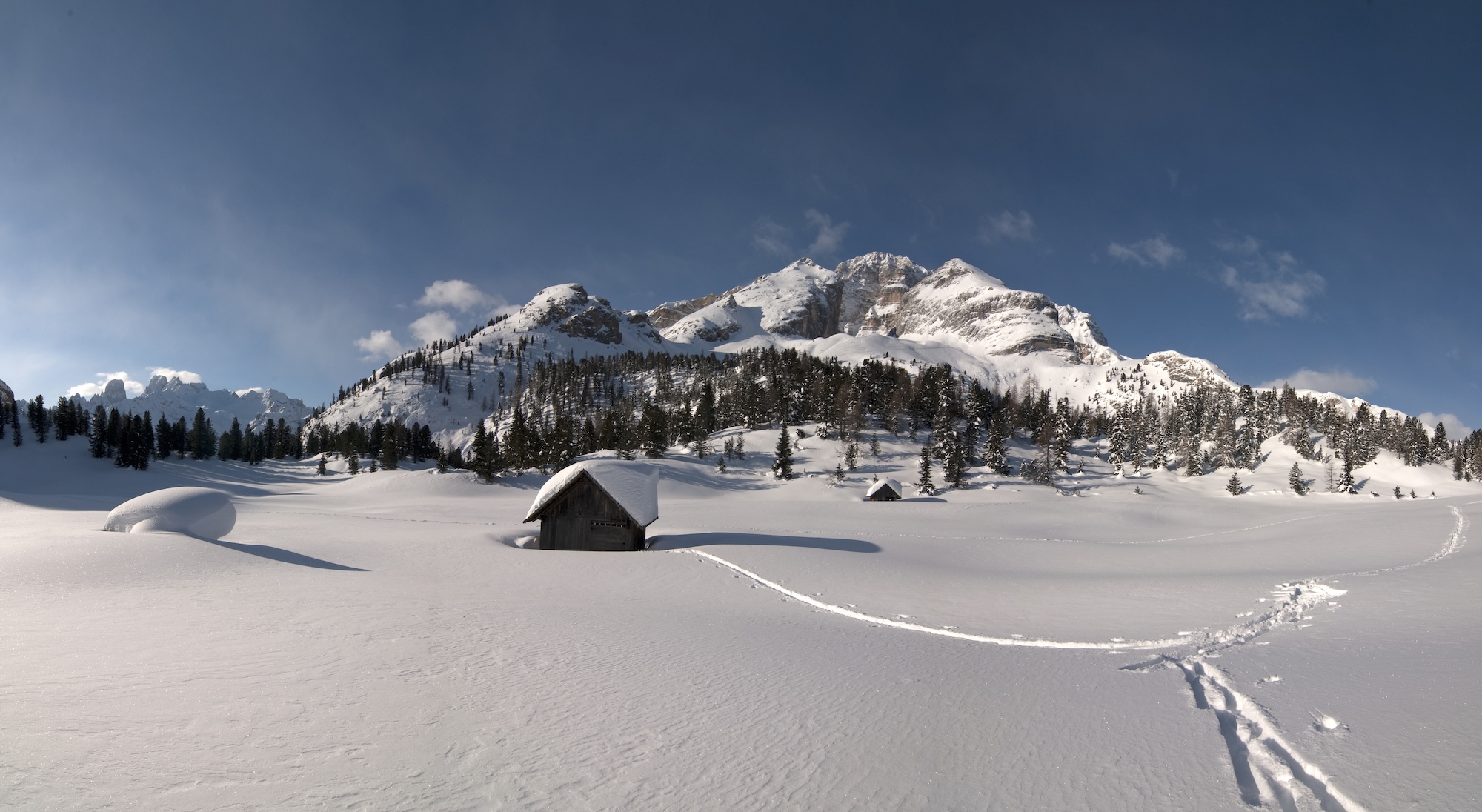
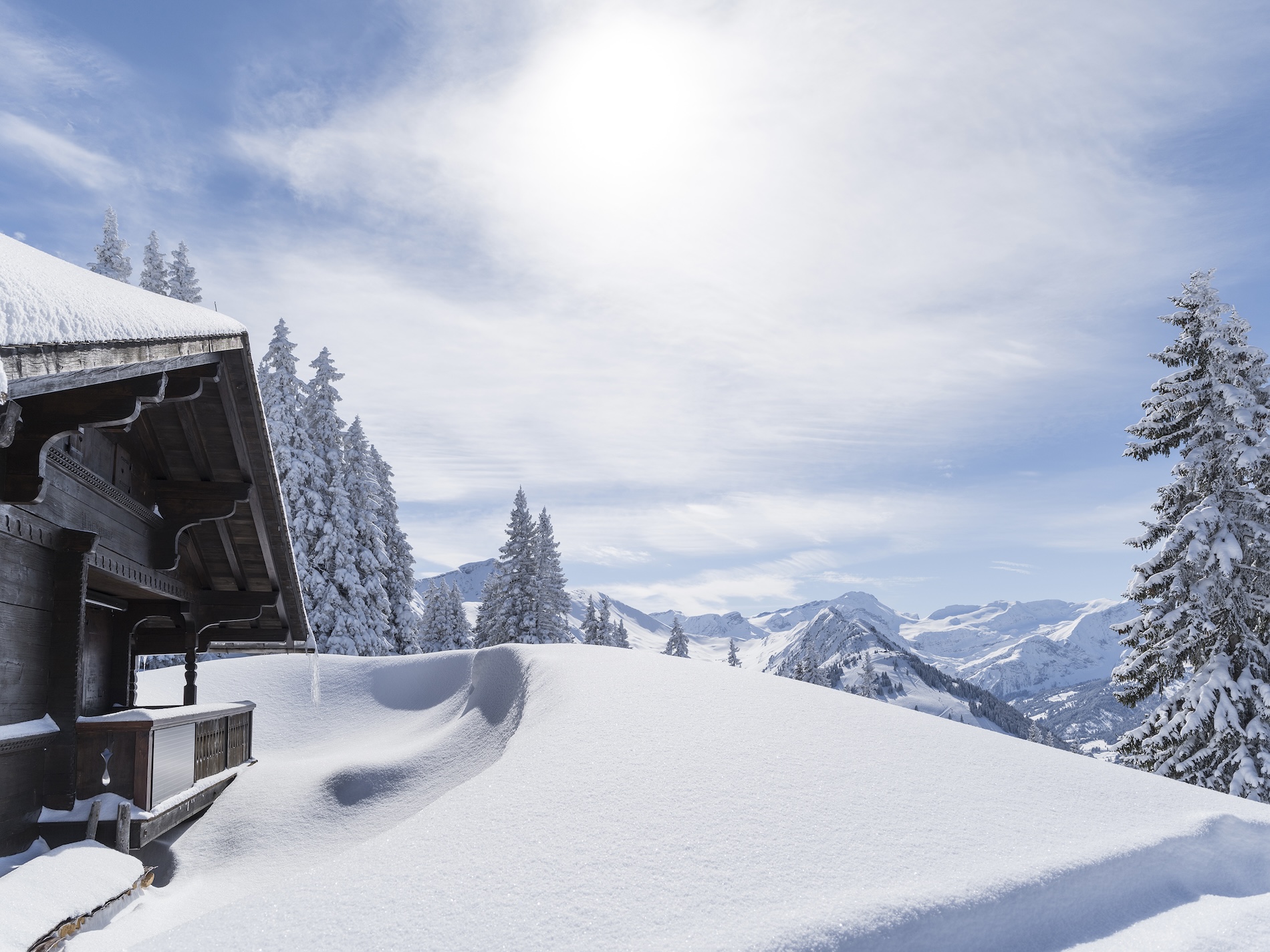
There is a particular quality of silence that arrives with the first serious snowfall — not the silence of absence, but of the world reconsidering itself. In Japan, that transformation can be extraordinary. Mountains disappear beneath successive layers of snow, forests become almost monochrome, and winter ceases to be something observed from indoors. It becomes the reason for the journey.
But we begin somewhere entirely different.
Tokyo.
For a few days, before the mountains, the pace is deliberately urban. A private winter journey through Japan is richer for the contrast: the precision and energy of the capital before the stillness of snow country; contemporary architecture and centuries-old ritual; extraordinary restaurants, galleries, neighbourhoods and quiet gardens before skis replace city shoes.
SCULPTURED JOURNEYS designs these opening days individually. One journey might move from a private cultural encounter to the ateliers and architecture of Aoyama, followed by an intimate omakase counter chosen for the evening. Another might favour contemporary art, Ginza, an evening on the water or simply enough unstructured time to absorb the city properly. Restaurants are reserved, private transportation is waiting, and each day is shaped around the traveller rather than a predetermined programme.
Aman Tokyo is among the exceptional properties we work with in the capital, and for the right journey its extraordinary position above Otemachi offers a compelling place from which to experience the city. But the hotel is not the destination.
Tokyo is.
And after several days, the journey changes register completely.
The city falls away. The temperature drops. The landscape begins to whiten.
Tokyo — The Opening Chapter
Tokyo in winter has its own distinct character. The air is cold and unusually clear; on the best mornings, Mount Fuji is visible from certain heights above the city, sitting at its improbable distance on the western horizon. The light is low and precise, giving the capital's architecture — its constant conversation between old and new, between restraint and spectacle — a quality that the softer months do not produce.
A private journey through Japan begins here not because Tokyo is a convenient entry point, but because it is, in the most genuine sense, the cultural key to everything that follows. The country's relationship between metropolitan refinement and elemental landscape, between ceremony and informality, between the ancient and the aggressively contemporary — these do not declare themselves on a mountain. They declare themselves in a city, and they require time.
SCULPTURED JOURNEYS shapes these opening days around the specific traveller. The city's possibilities are extensive enough that no two Tokyo chapters are identical: the question is always what kind of attention a particular traveller brings, and what the city might offer them in return.
Ginza remains one of the most layered districts in the world for those who know where to look. The great Japanese department stores — Mitsukoshi, which has occupied Ginza's main intersection since well before the Second World War, and Matsuya, whose food halls alone merit serious time — sit alongside contemporary fashion, specialist galleries and, at the district's cultural heart, the Kabukiza Theatre. A privately arranged evening performance of Kabuki, with a specialist present to situate what one is watching, is not the slightly baffling spectacle that an uninitiated first encounter can be. It is, with context, one of the more formally arresting evenings available anywhere in the world: the deliberate pace of Edo-period drama, the extraordinary visual language of kumadori makeup, the wooden architecture of the theatre itself.
The Omotesando and Aoyama districts occupy a different register entirely. The long zelkova-lined boulevard of Omotesando — Tokyo's answer to a Parisian grand avenue, though the comparison ultimately flattens it — carries a sequence of architectural commissions from some of the most significant practices of the past three decades: Ando, Toyo Ito, SANAA, Herzog and de Meuron, each building a considered statement about what it means to construct something in the middle of an existing civic fabric. The fashion houses of Aoyama sit within this same streetscape; the neighbourhood's galleries and ateliers reward time on foot, at a pace that allows the architecture to be read rather than merely passed. Omotesando and Aoyama lie in a separate district from Otemachi and Ginza, and SCULPTURED JOURNEYS arranges private transportation between each part of the programme as standard.
For the right traveller, SCULPTURED JOURNEYS arranges a private encounter with Japanese craft or design practice — a morning with a textile atelier, a ceramicist's studio, a lacquerware workshop where the successive layers of urushi require months between applications. These are not performances organised for visitors; they are introductions, facilitated by relationships built over years.
Winter adds its own quality to the city's evenings. The seasonal illumination of Omotesando — zelkova trees strung with light from December through February, the avenue taking on a quality almost nave-like in its processional scale — draws the city's residents as much as its visitors. Dinner reservations in Tokyo require the kind of forward planning that no amount of general travel experience prepares you for; SCULPTURED JOURNEYS secures reservations at restaurants selected for the particular journey, including omakase counters where the chef's selection is calibrated to a particular evening's produce and the team knows, well in advance, precisely who will be sitting down.
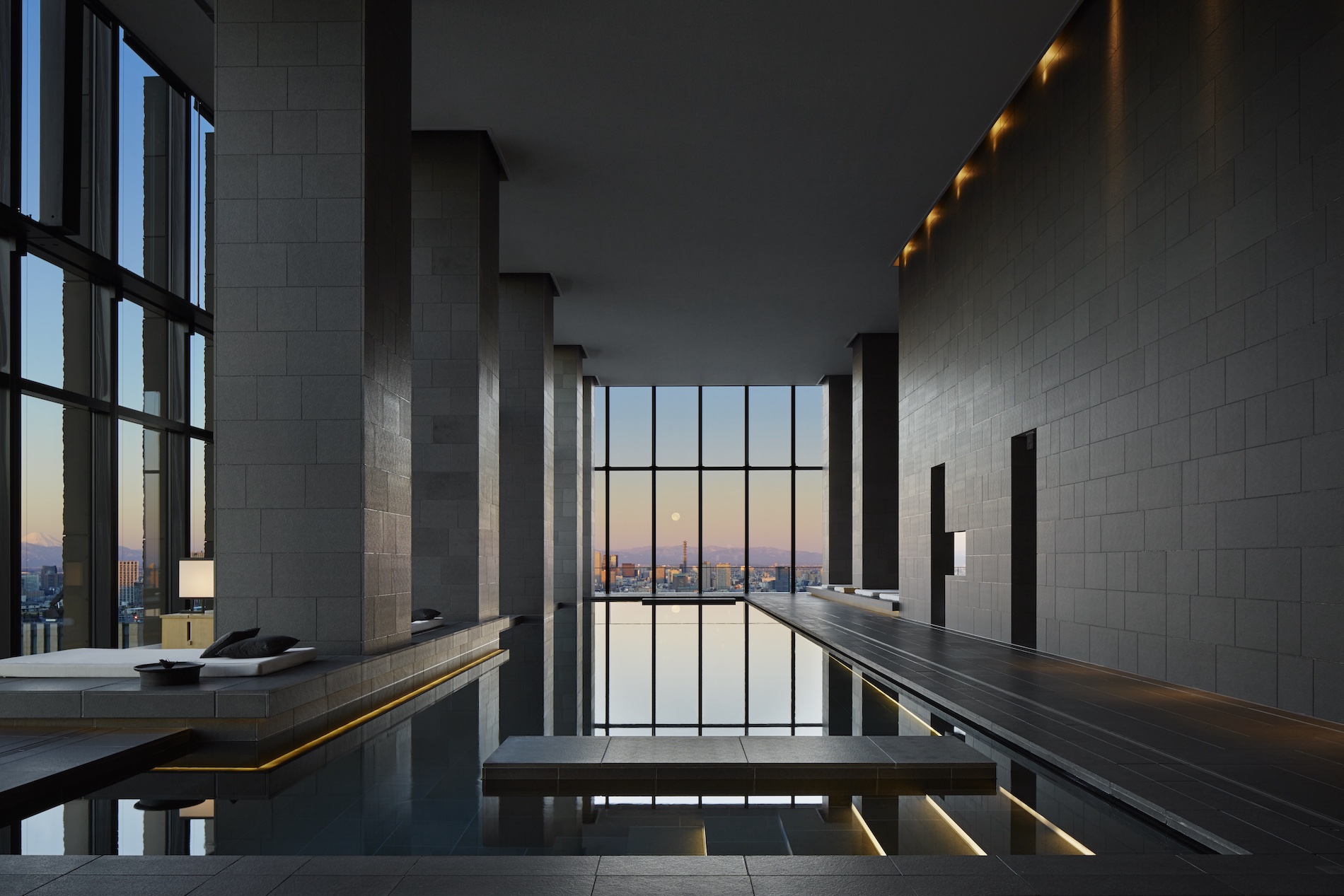
Aman Tokyo is among the exceptional properties SCULPTURED JOURNEYS works with in the capital. Its position on the upper floors of Otemachi Tower — the same district from which the Imperial Palace Gardens extend their remarkable stillness into the centre of the city — gives it a particular usefulness for travellers who want the city visible but held at a certain remove. The hotel's design reads Japanese without illustration: washi paper ceilings, the proportions of a ryokan translated into the upper floors of a tower, rooms of a scale that is genuinely unusual for a capital city. For journeys where Aman Tokyo is the right fit, SCULPTURED JOURNEYS positions it accordingly. It is one point of quality within a larger programme, not the programme itself.
Walking the Imperial Palace Gardens in winter, when the crowds of other seasons thin considerably and the paths through pine and cedar carry a quality close to silence, is one of Tokyo’s quieter pleasures. It asks only attention.
The Journey North — City to Snow Country
The morning of departure from Tokyo has its own texture. The city is still in its early rhythm — the precisely timed trains, the breakfast counters, the particular stillness of Otemachi at seven in the morning — and then the private transfer to the domestic terminal begins the transition. SCULPTURED JOURNEYS coordinates every element of this progression: airport transfers, check-in, the domestic flight, private jets, and what happens at the other end.
The flight north takes approximately ninety minutes — a crossing so contained it feels less like travel than like turning a page. Below, the country changes character; the urban density of the Kanto plain gives way to the wider geometries of the north, and by the time the aircraft begins its descent over Hokkaido's interior, the landscape reads entirely differently. Agricultural plains. Long straight roads with their windbreak tree-lines. And then, as the aircraft turns, the first sight of the mountains.
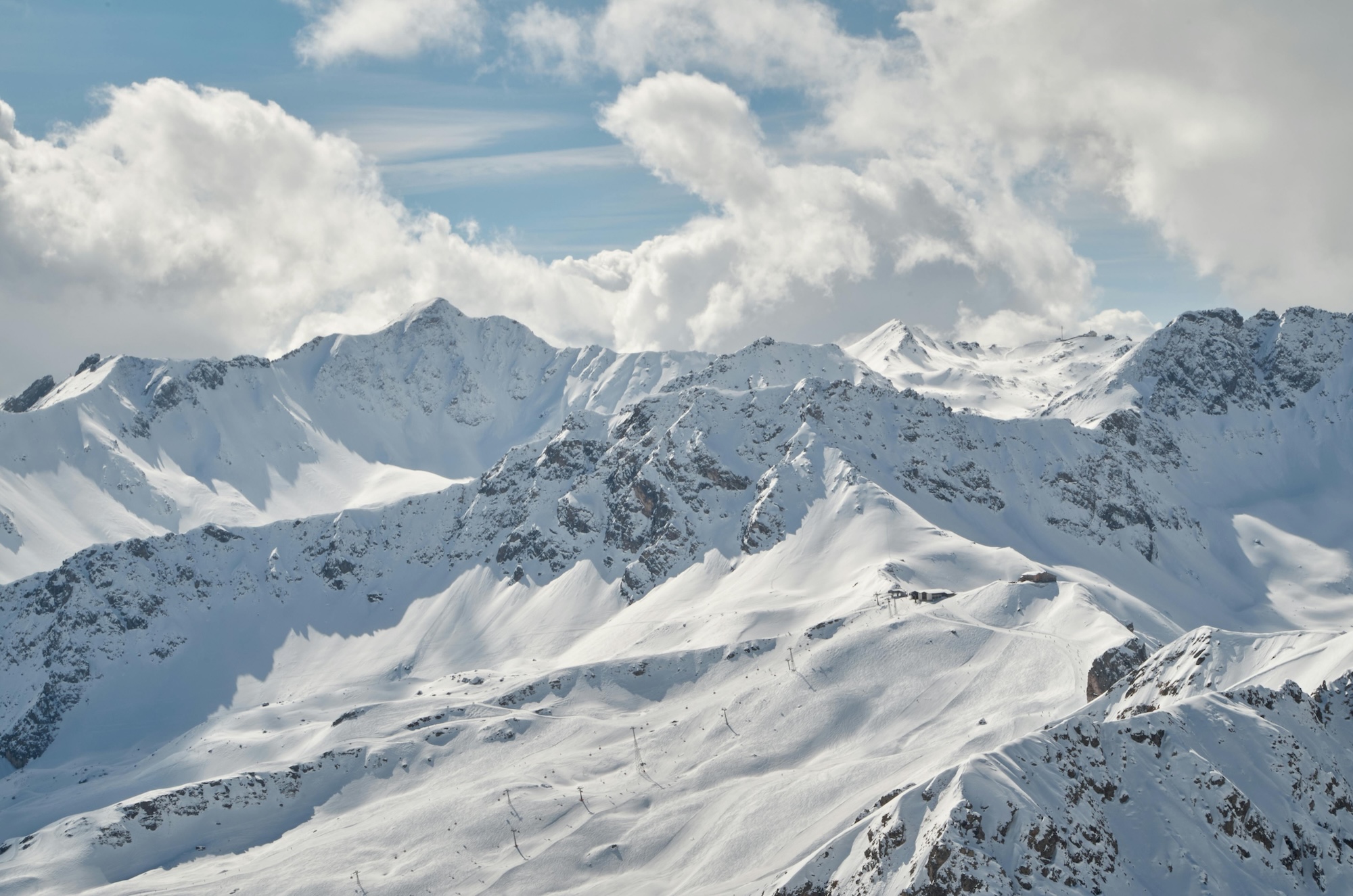
From the airport at New Chitose, a private vehicle moves north and west through approximately two hours of Hokkaido's interior. This is not dead time. The road passes through a landscape that rewards attention: the wide, flat farmland of Hokkaido's agricultural heartland, the temperature visible in the way the mist sits in low ground, the incremental shift from flat to folded as the terrain begins to climb. The mountains appear first as a silhouette, then as detail — individual ridgelines, tree-lines at altitude, the first sign of the snowfields above the treeline.
By the time the vehicle reaches the mountain, the pace has already changed. This is deliberate. SCULPTURED JOURNEYS designs the transfer as the opening movement of the mountain chapter, not as a logistical necessity to be endured — the private vehicle, the unrushed pace, the landscape unreeling through the window, is the reorientation that the city chapter's energy required.

Into Snow Country
There is no single correct Japanese ski destination, and part of what SCULPTURED JOURNEYS designs when it designs a private winter journey through Japan is precisely this: the selection of the mountain that fits the traveller, the season, and the kind of experience they are seeking. Japan's winter mountains are a collection of distinct worlds, each with its own character, its own snow culture, its own relationship between the ski terrain and the human landscape surrounding it.
Niseko, on Hokkaido, is where many international skiers encounter Japan's mountains for the first time, and the encounter tends to be decisive. JNTO names this region the powder snow capital of Hokkaido — a designation borne out by the particular mechanics of the Japan Sea weather system, which deposits cold, light, extraordinarily dry powder at volumes that European and North American resorts rarely approach. The terrain is expansive, the village atmosphere sophisticated in the way that arrives when serious skiers from multiple countries converge on a place over decades and build an infrastructure of restaurants, accommodation, and après culture around it. The onsen culture runs through all of it: an evening in a proper mountain bath after a full day on powder is a particular kind of Japanese experience that has no straightforward equivalent elsewhere. Higashiyama Niseko Village, a Ritz-Carlton Reserve, is one of the properties SCULPTURED JOURNEYS works with in this region.
Hakuba, in Nagano's Japanese Alps, is set within a more dramatic landscape of high, steep peaks — the Japan Alps rising above the valley with an authority that the Hokkaido mountains, for all their appeal, do not quite match. The atmosphere is quieter and more serious than Niseko's international village energy, and for skiers who prioritise technical challenge and extensive on-piste coverage, Hakuba makes a compelling centre for a private mountain programme.
Nozawa Onsen, also in Nagano, combines two of Japan's most distinctive traditions in a way that has been developing since before most of the world's ski resorts existed. The village's communal baths, known as sotoyu, have been public since the eighteenth century, and the village layout — wooden structures, covered arcades, the steep lanes between them — has changed less than almost any inhabited mountain settlement in the country. To ski here is to ski beside a living village rather than a purpose-built resort. The backcountry and off-piste terrain is serious; so is the izakaya culture of the evenings.
Shiga Kogen — an interconnected network of eighteen ski fields that ranks among the most extensive ski terrain in Japan — offers something different again. The atmosphere is quieter, the landscape more remote, the sense of being genuinely in the mountains rather than in a mountain-adjacent resort more pronounced. For travellers who want depth over variety, who want to spend a week exploring a single mountain system rather than sampling several, Shiga Kogen has few rivals in Japan. SCULPTURED JOURNEYS designs extended private programmes here for guests who know what they are looking for and have found that no single other resort quite delivers it.
The selection of which mountain anchors a particular journey depends on ability, on what the traveller has skied before, on whether the priority is powder consistency or technical terrain or onsen culture or the texture of the mountain town. These are not interchangeable destinations. Each is its own answer to the question of what Japan's winter means.

The Mountain, Privately
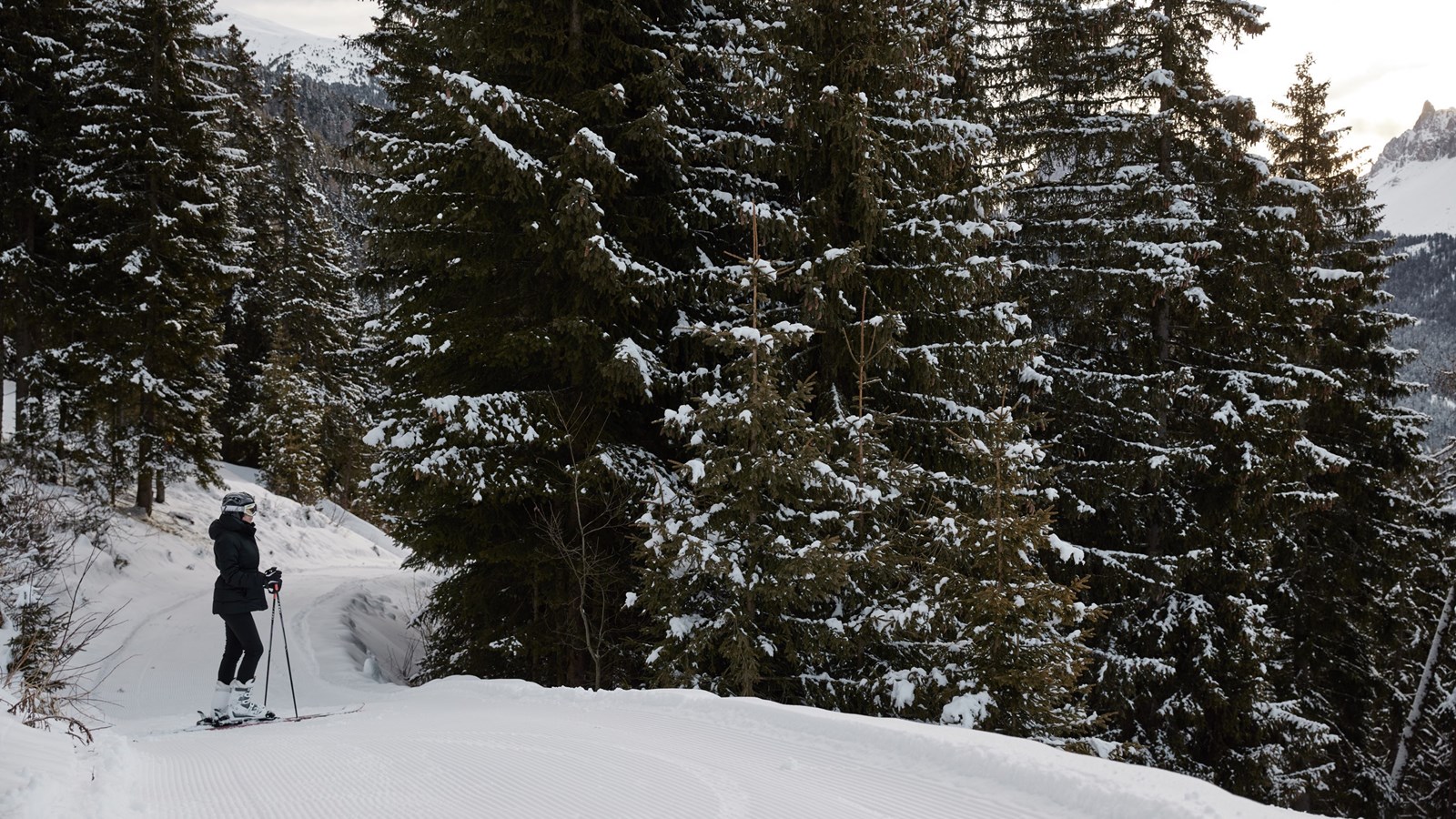
The ski day on a SCULPTURED JOURNEYS winter journey through Japan does not begin with a queue. It begins with a private ski instructor or mountain guide whose engagement is entirely exclusive to the group — whose knowledge of the mountain, of where the powder has held overnight, of which aspect is skiing best after three days of cold and sun, is deployed solely in the service of the traveller standing in front of them.
SCULPTURED JOURNEYS selects and engages these guides directly, as part of each journey's design. This distinction matters: the guide is not an amenity offered by accommodation. They are part of the journey's architecture, chosen for their specific expertise — whether that is on-piste technical instruction, powder-specific freeride guiding, backcountry navigation, or the particular demands of heli-accessed terrain where conditions and ability permit. These conversations happen before departure. SCULPTURED JOURNEYS assesses each traveller's experience and objectives and designs the mountain programme accordingly.
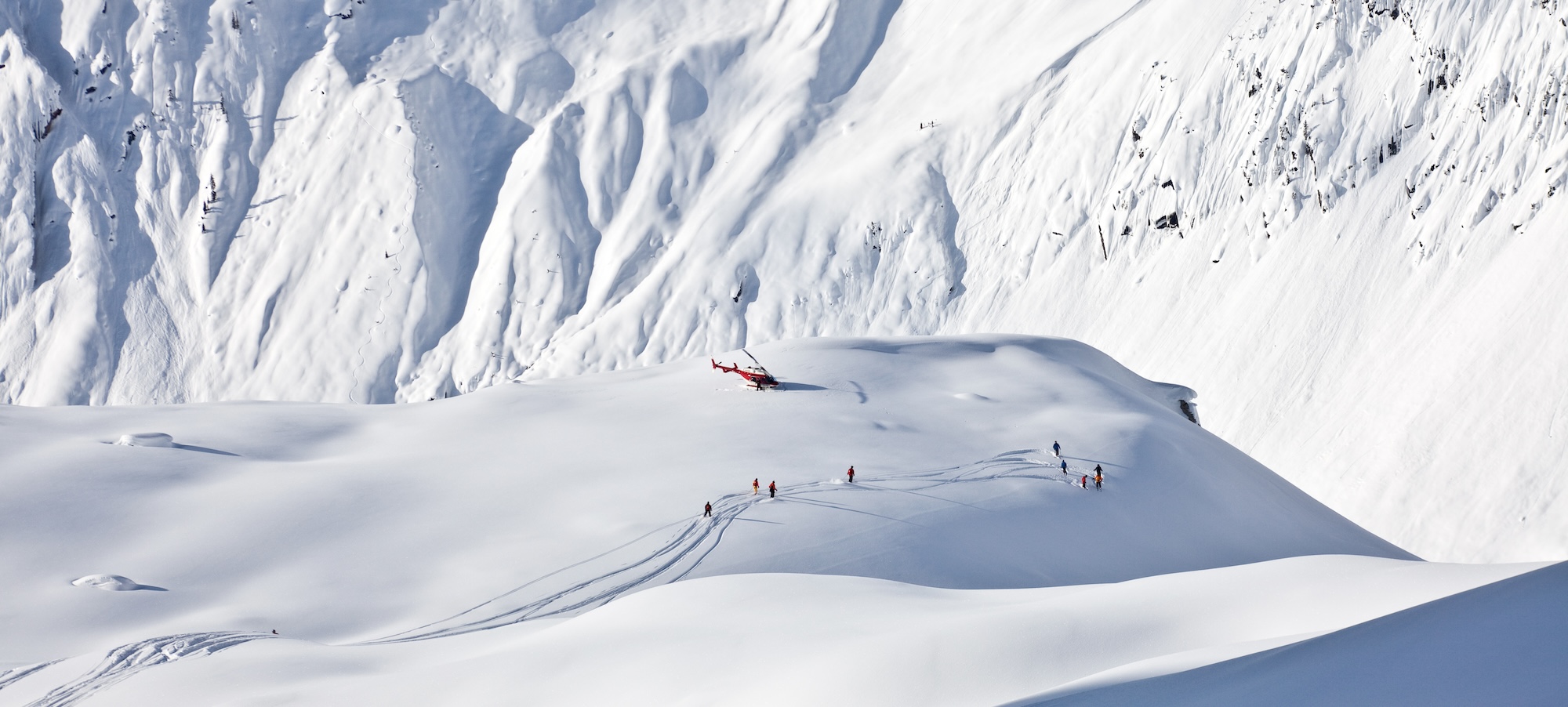
For those whose abilities and ambitions reach above the marked terrain, Japan's mountains offer backcountry access of genuine seriousness. Cat skiing — travelling by a privately engaged snow cat to terrain otherwise inaccessible from the lifts — is available in certain areas and conditions, delivering a quality of isolation and untracked snow that even the best resort terrain, on the best powder days, cannot fully replicate. Heli-accessed runs, where the mountain and the season allow, extend this further: the silence of a ridgeline that no other group has skied that day, the particular quality of snow that has settled without disturbance.
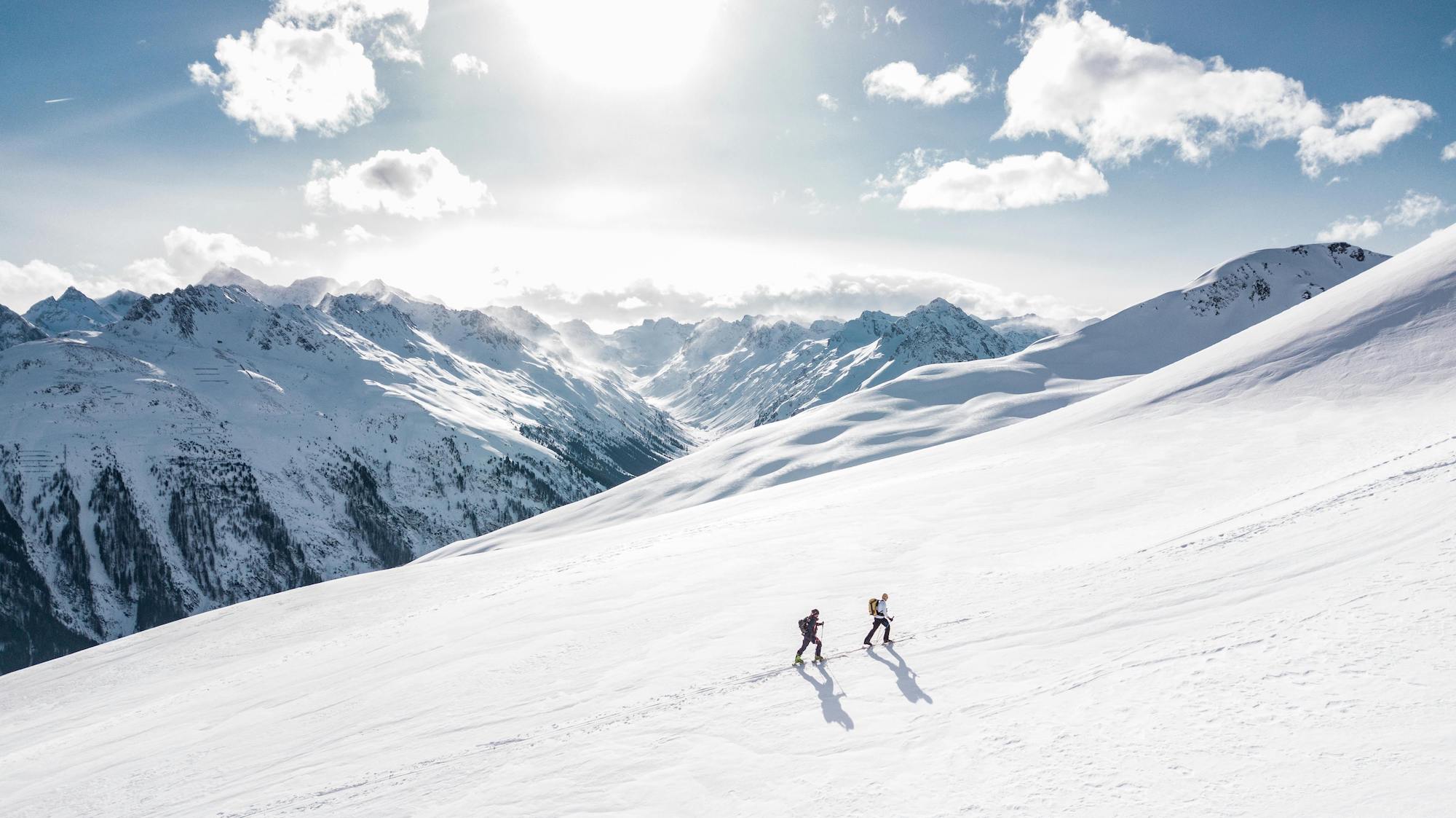
Not every day is a ski day. SCULPTURED JOURNEYS builds deliberate rest into the mountain programme — and the mountains offer considerable resources for those days. Snowshoeing through the forests above the treeline, where the silence that opens this piece can be experienced at its most literal — the muffled compression underfoot, the weight of snow on branches, the almost complete absence of sound — is a quite different encounter with the mountain than the descent. Private guides lead these excursions as they lead the ski days: the same care, the same exclusive engagement, a different pace.
In the regions around Nagano — Nozawa Onsen and Shiga Kogen particularly — the snow monkeys of Jigokudani are reachable from a mountain base. The macaques of the Joshinetsu Kogen National Park that descend to the thermal pools at Jigokudani in winter are one of those things that photographs have made familiar without quite conveying: the reality of a group of primates, unhurried in the rising steam, indifferent to the cold and to the human observers, is stranger and more affecting than any image prepares you for. SCULPTURED JOURNEYS arranges the journey from the mountain base — a private vehicle, the approach through the forest on foot, the timing calibrated to arrive early in the day for the quieter early hours — as part of a wider mountain programme.
Restaurants in Japan's mountain towns are not an afterthought to the ski day. In Niseko's village, the restaurant culture has evolved over decades into something serious and varied; in Nozawa Onsen, the izakaya tradition produces small, warm, precisely specific places where the menu reflects what the surrounding region grows and processes — Nagano's local sake, vegetables pickled in the mountain way, mountain pork prepared with the kind of attention that is not unusual in Japan but still manages to be surprising. Reservations are made well in advance at restaurants selected for each programme, and a private vehicle is waiting at the end of the evening so that no part of the day ends in the logistical uncertainty that most resort travel accepts as normal.

Beyond the Ski Day
Skiing Japan is not skiing Europe or North America. The mountain is, of course, the mountain — the physics of powder and gradient do not change by geography. But what surrounds the ski day is where Japan's winter travel establishes itself as a distinct category of experience, and where SCULPTURED JOURNEYS pays as much attention to the hours away from the slopes as to the hours on them.
The onsen is the foundation of this. Japan's thermal bathing culture is not a hotel amenity — it is a practice, centuries old, embedded in the architecture and social life of every mountain town. After a full day on the mountain, to move from the cold of the ski boots into the heat of mineral water, in a bath house where the design has been considered as carefully as the water itself, is an experience that recalibrates the body in a way that a hotel spa cannot fully replicate. SCULPTURED JOURNEYS identifies the onsen experiences that suit each programme — private outdoor baths where the steam rises against the snowfield, traditional communal facilities where the etiquette is part of the experience — and integrates them into the programme as naturally as the ski day itself.
The evening meal in Japan's mountain country can operate at several registers, and SCULPTURED JOURNEYS curates across all of them. A kaiseki dinner — the multi-course formal dining tradition, present in the mountain towns in adapted forms — moves through seasonal produce in a succession of small dishes, each calibrated to a particular cooking method and a particular moment in the meal's progression. An omakase counter in a mountain town operates on different terms: more intimate, the chef's choices ungoverned by a written menu, the exchange between kitchen and guest immediate and specific. A small restaurant serving a single regional speciality — Nagano's oyaki dumplings, Hokkaido's lamb jingisukan on a cast-iron grill — makes no claim to formality and needs none.
A private vehicle is always waiting. This is a detail that becomes a foundation only once its absence has been experienced: the difference between ending an evening in a mountain restaurant knowing that transport is outside, at the time agreed, exclusively for your party, and negotiating resort shuttle systems or waiting in the cold for a taxi that may or may not arrive — the difference is not trivial. It is the difference between a journey that flows and one that periodically stalls.
A rest day, deliberately scheduled, is part of what SCULPTURED JOURNEYS considers essential in a programme of ten days or more. Not a day of nothing — a day of different things: a slow morning at an onsen, a late breakfast, a walk into the mountain town rather than onto the mountain, an afternoon watching snow fall from a heated room with Japanese whisky and no particular obligation. These days do not waste the journey. They are the reason the journey is remembered as something other than a sequence of ski runs.
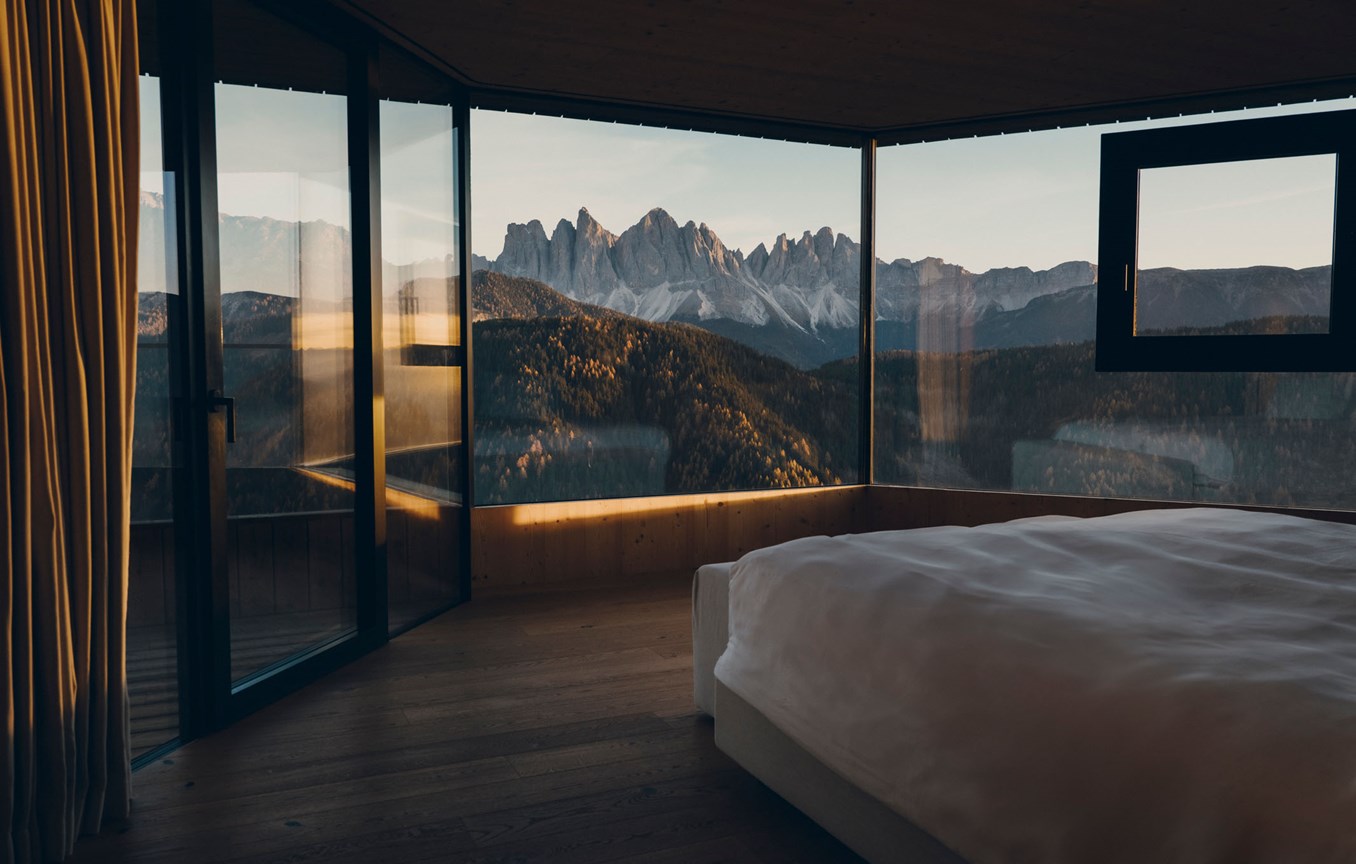
In the quieter moments of the mountain stay — the evenings after dinner, the hour before the day begins — there is a quality to Japan's mountain accommodation that is unlike what the European resort tradition produces. The ryokan tradition, even in its contemporary expressions, insists on a certain slowness: the low furniture, the materials chosen for their tactile as well as visual qualities, the arrangement of a room that manages to be entirely minimal and entirely complete at the same time. Snow falling outside a window, in a room that has been designed for exactly this kind of attention, is not the same experience in every country.

Designed From Beginning to End
A private winter journey through Japan — from the opening days in Tokyo to the mountain chapter in snow country — involves an architecture of decisions more considered than it might appear from the outside. SCULPTURED JOURNEYS designs and operates the entire programme: not the accommodation element, or the ski element, or the Tokyo element in isolation, but the complete thing, from the first conversation to the last transfer home. The planning begins before the journey does, in a conversation about the specific traveller — which mountain suits their skiing, what the Tokyo chapter should contain, how the days should balance movement against stillness, which onsen experiences sit within reach of the mountain base, which dining reservations need to be placed months in advance. International arrangements, private vehicles at every point of transition, the domestic flight north and what awaits at the other end: all of it is coordinated, so that the journey itself requires nothing from the traveller except the capacity to be present.
At the mountain, the ski programme — private guides, backcountry and heli arrangements where appropriate, equipment organised in advance — is engaged by SCULPTURED JOURNEYS independently of any accommodation. Where special experiences are available through direct access — early arrivals ahead of the general public, introductions to craft practitioners, cultural encounters that require more than a booking form — SCULPTURED JOURNEYS arranges them. Throughout, the team is reachable in-country at every hour. Disruptions — weather, flight changes, the particular unpredictability of mountain travel in winter — are managed from the programme's centre, not by the traveller standing in an airport in a country where they may not speak the language.
The point of all this is not to make travel frictionless in the way that a smooth hotel stay is frictionless. It is to make Japan fully accessible — its specific mountains, its cuisine, its cultural depth, its onsen tradition, its winter landscapes — to travellers who want to encounter the country seriously rather than approximately. The traveller who finishes a SCULPTURED JOURNEYS winter journey through Japan does not need to have worked anything out. They need only have been paying attention.
Private by nature. Extraordinary by design.
Planning Your Private Winter Journey to Japan
Q: When is the best time to plan a private ski journey to Japan?
A: Japan's peak powder season runs from late December through February across the principal mountain regions, with March offering longer daylight and still-excellent conditions in higher terrain. SCULPTURED JOURNEYS designs private winter journeys across the full season and advises on timing based on each traveller's skiing objectives, preferred mountain region, and how the Tokyo chapter is weighted within the wider programme.
Q: Does SCULPTURED JOURNEYS work only with Niseko, or across Japan's ski regions?
A: SCULPTURED JOURNEYS designs private journeys across Japan's major ski regions — Niseko in Hokkaido, and the Nagano resorts including Hakuba, Nozawa Onsen, and Shiga Kogen. The selection of mountain is part of the curation: each region has a distinct character, terrain profile, and off-mountain culture, and SCULPTURED JOURNEYS matches the destination to the traveller rather than proposing a single standard programme.
Q: Can SCULPTURED JOURNEYS arrange private ski instruction and backcountry guiding in Japan?
A: Yes. Private ski instructors and mountain guides are engaged directly by SCULPTURED JOURNEYS as part of each journey's design — not through any hotel programme. The level of guiding, whether on-piste instruction, off-piste powder guiding, backcountry navigation, cat skiing, or heli-accessed terrain, is established in conversation with each traveller before departure.
Q: Is the Tokyo chapter integral to a private winter journey, or can the journey begin at the mountain?
A: SCULPTURED JOURNEYS designs both. For travellers experiencing Japan for the first time — or returning after an extended absence — the Tokyo chapter is, in our view, the cultural foundation that makes the mountain chapter fully legible. For travellers who know the city well and whose priority is the mountain, a programme that begins directly in snow country is equally possible. The right structure is determined by the traveller, not by a fixed format.
Q: What does 'private' mean across the full Japan winter journey?
A: Every element of the journey — transfers, accommodation, ski guiding, cultural experiences, restaurant reservations, mountain logistics, and twenty-four-hour in-country support — is arranged exclusively for the travelling party. Nothing is shared with other groups. The journey is designed for one set of travellers and operated entirely in their service.




.jpg)




















-002.jpg)