The Diamond Beneath the Leaves: A Truffle Season Through Tuscany and Piedmont
A Truffle Season Through Tuscany and Piedmont
There is a moment, somewhere between the oak groves of the Val d'Orcia and the poplar-lined riverbanks of the Langhe, when Italy stops being a destination and becomes an education. It happens underfoot, quite literally — beneath the roots of oak, hazel, and poplar, where a fungus with no fixed season and no predictable yield has shaped economies, festivals, and family dynasties for centuries. SCULPTURED JOURNEYS has spent close to fourteen years moving through these two regions, learning their producers, their cellars, and their unspoken rules — a depth of knowledge that traces back to our foundation as Italian Allure Travel, the origin from which SCULPTURED JOURNEYS grew. This is a story about the truffle — but more precisely, it is a story about what the truffle reveals of Tuscany and Piedmont themselves: their soil, their patience, and their refusal to hurry anything worth doing properly.
Three Truffles, One Tuscan Calendar
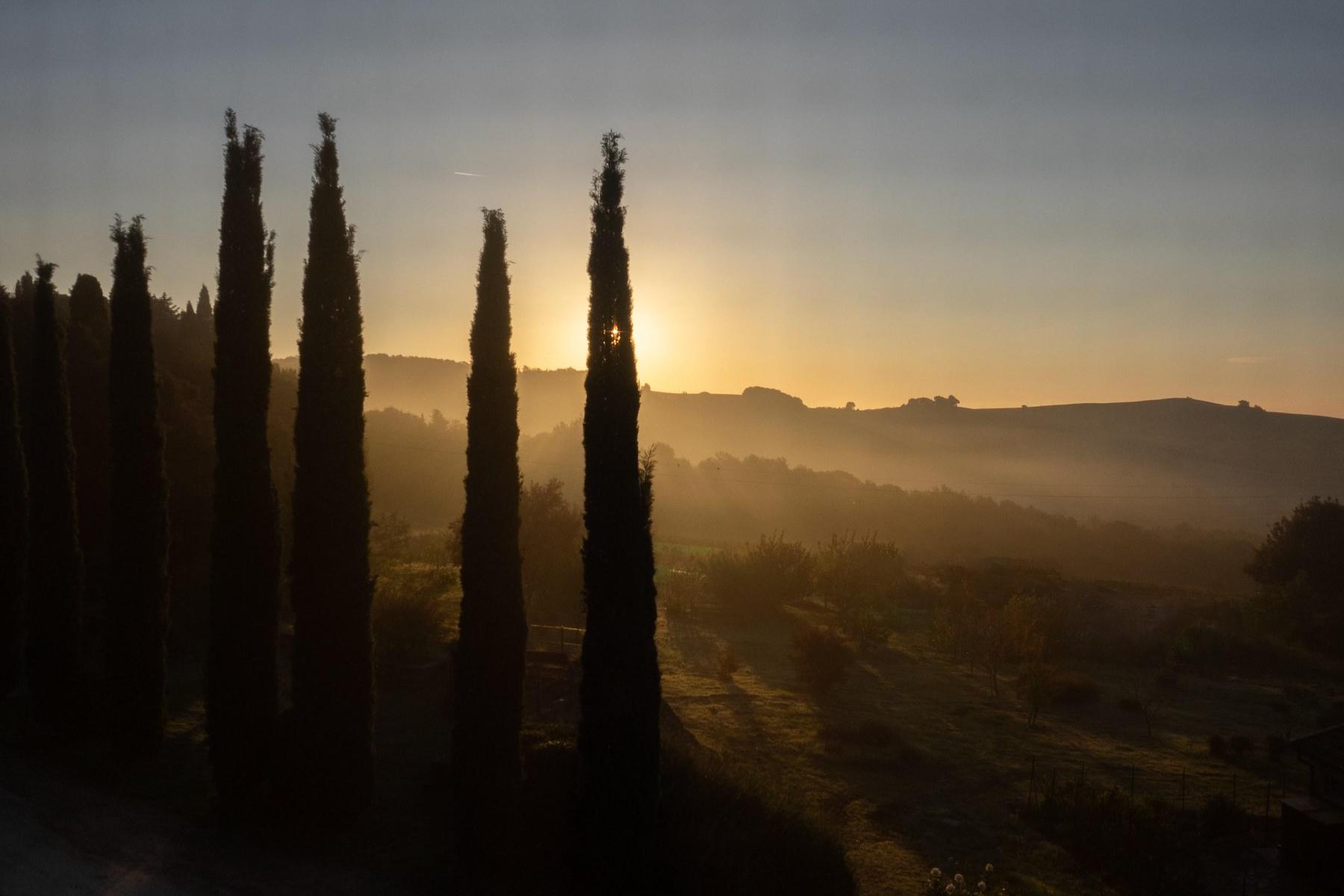
Tuscany does not offer a single truffle season so much as a rolling calendar of them, each with its own character and its own devotees. The Marzuolo, or Marzolino, breaks ground first, typically from January or February through April — a lighter, more delicate tuber that announces the end of winter before the landscape has caught up. By May, the Scorzone, the black summer truffle, takes over through July, milder and more forgiving, prized as much for its versatility in the kitchen as for the hunt itself. Then comes the truffle Tuscany is best known for beyond its borders: the rare white truffle, emerging from September into December, its scent unmistakable, its price reflecting both scarcity and reputation. Understanding this rhythm is not incidental to the experience — it is the experience. A truffle found in March tastes nothing like one found in November, and the forest itself looks entirely different in each season.
The Trifulau and the Myth of the Pig
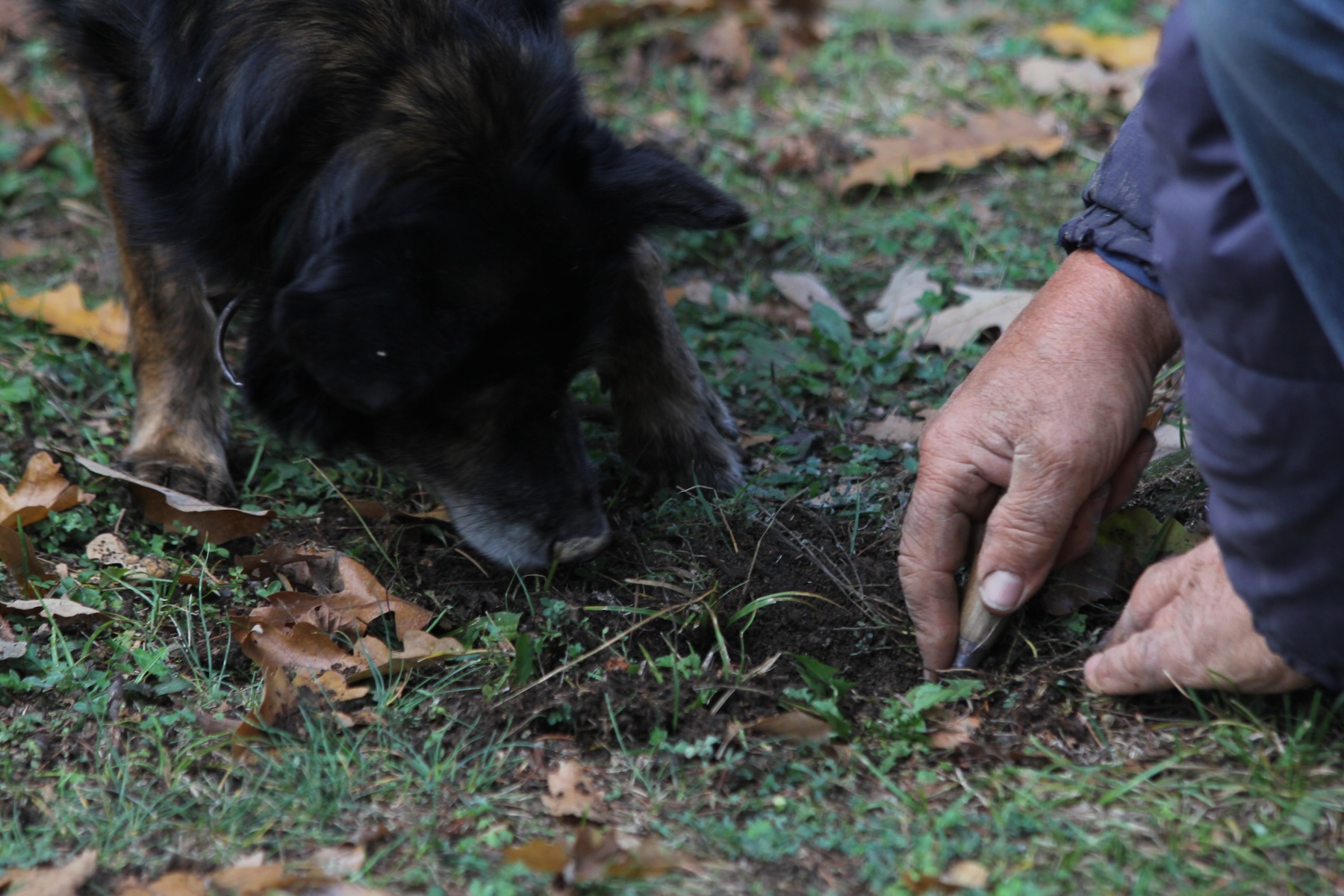
Ask most first-time visitors how a truffle is found and they will mention a pig. It is one of Italy's more persistent misconceptions. In both Tuscany and Piedmont, the search has for generations belonged to the dog and the trifulau — the truffle hunter, a role passed down within families as much as any vineyard or cellar. The reasoning is practical rather than romantic: a pig's appetite for truffles makes it an unreliable partner, inclined to eat the very thing it has found. The dog most often at a trifulau's side is the Lagotto Romagnolo, a curly-coated breed that began its working life not in the forest but in the wetlands of Romagna, retrieving waterfowl for hunters. When those marshes were drained for agriculture in the nineteenth century, the same dogs proved to have an extraordinary aptitude for a different kind of retrieval entirely, and the breed was gradually redirected toward the forest floor. Training still begins early and never through force: a puppy is introduced to the scent of truffle paired consistently with play and reward, long before it is ever taken into a working wood, so that the association between that particular smell and a good outcome is fixed before instinct has the chance to wander toward game or other distractions. What separates an exceptional truffle dog from an adequate one is less raw nose than temperament — the discipline to stay locked onto one scent among hundreds in a working forest, and the trust between dog and handler that only builds over years side by side. The biology beneath the soil is its own quiet marvel — a mycorrhizal relationship in which the fungus lives in symbiosis with the root system of a specific host tree, each depending entirely on the other. Reserves are managed with real horticultural intention, with the right host species planted deliberately to encourage the fungus to establish and spread naturally over years, sometimes decades. Walking these woods with a trifulau and his dog is to witness a craft that resists shortcuts entirely.

Crossing into Piedmont
Head north and west, and the landscape softens into the rolling vineyards and fog-laced hills of the Langhe, Roero and Monferrato, where the truffle takes on near-mythical status. Here, black truffles can be found across most of the year, but it is the white truffle of Alba — found only between October and January — that has earned Piedmont its reputation as home to what chefs the world over call il diamante della cucina, the diamond of the kitchen. The character of that white truffle is not simply a matter of terroir romance; it is a genuine biological difference from its Tuscan black cousins. The Alba white truffle can only form in soil laid down some fifteen million years ago, during the Miocene, a specific geological window that produced the calcareous, marl-rich clay this fungus requires, typically between four hundred and eight hundred metres above sea level. It forms its partnership with oak, poplar, willow, hazel and lime trees, and depends on a wet, largely dry-summer-free climate to develop at all. Unlike the region's black truffles, which can be cultivated by mycorrhizing saplings and left to mature for roughly seven years, the white truffle of Alba has never been successfully farmed: its spores lack the structure that would let them attach reliably to a young tree's roots, which means every white truffle found here has grown entirely on the forest's own terms. The tradition around finding it runs just as deep as the forest itself: Piedmontese trifulau guard their hunting grounds with a discretion bordering on secrecy, and a hunt through these woods, along the streams and through the meadows, is as much a lesson in regional identity as it is a search for something rare. The reverence is well earned. Nowhere else in the world does the white truffle command quite the same mystique, or quite the same price at auction.

Beneath the Surface: The Cellars
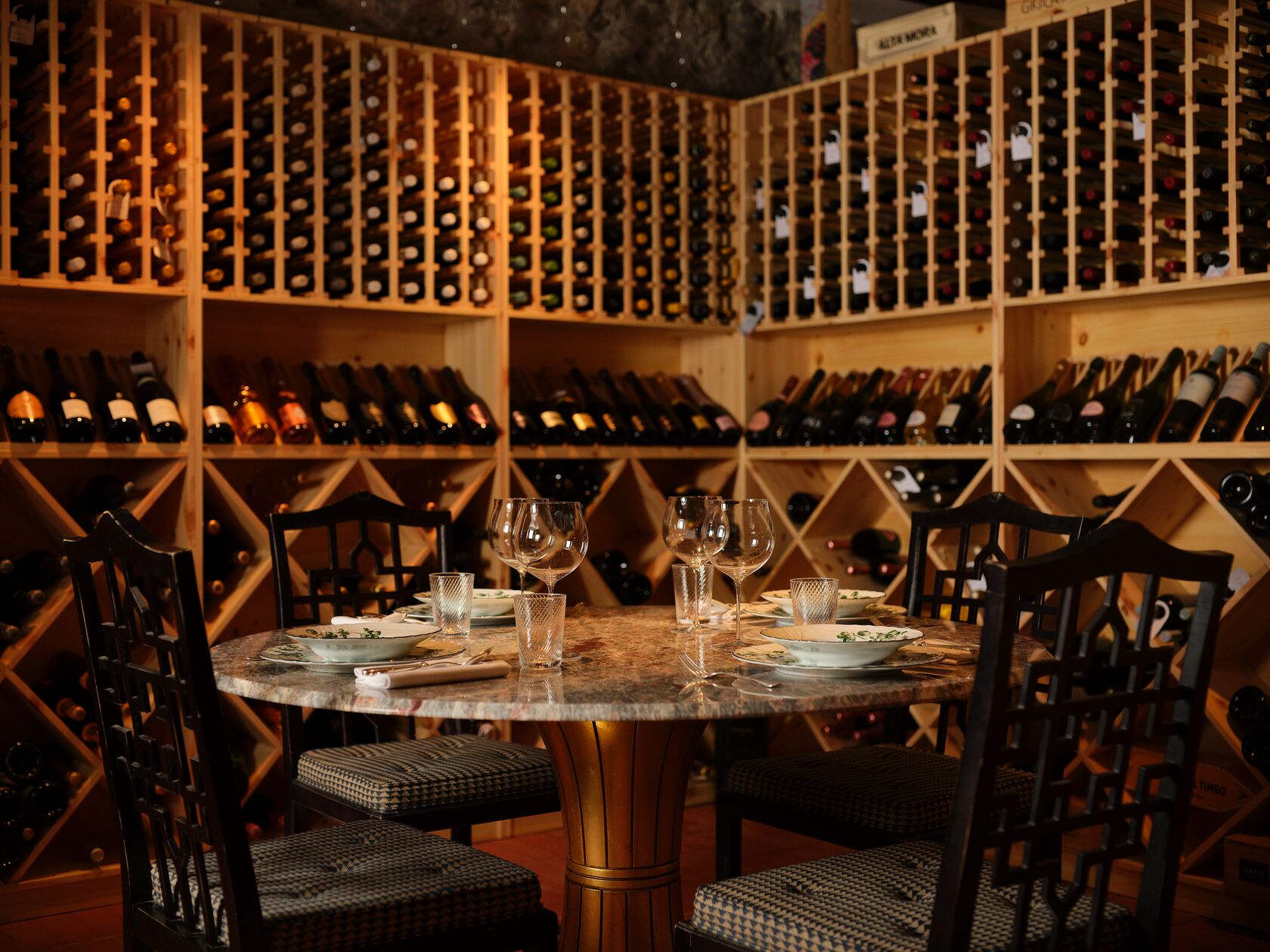
No exploration of this territory is complete without descending into it — literally. Both regions conceal an extraordinary architecture of underground cellars, carved into hillsides and tufa rock, where wine has been aged in darkness and constant temperature for generations. These are not simply storage spaces but working archives of technique: the transition from large Slavonian oak botti to smaller French barrique tells its own story of a region's evolving relationship with tradition and innovation. Time spent in these cellars, tasting directly from barrel alongside a winemaker or cellar master, offers a far more intimate understanding of a wine's evolution than any tasting room ever could.
Brunello di Montalcino: The Pinnacle of Tuscan Craftsmanship
If Tuscany has a single wine that defines its ambition, it is Brunello di Montalcino. It is grown from a single, specific clone of Sangiovese — Sangiovese Grosso, thicker-skinned and later-ripening than the Sangiovese used elsewhere in Tuscany — and Italy's strictest DOCG regulations permit no blending with any other grape whatsoever. In the hills skirting Siena, where a rare microclimate produces fruit of exceptional structure, Brunello is bound by law to a minimum of five years' maturation before release, including at least two years in oak, a discipline that has become central to its identity. What happens inside that oak is where the real division in Montalcino lies: producers working in the traditional style age the wine in large, neutral Slavonian oak casks that impart almost no flavour of their own, allowing the fruit and the soil to speak for decades, while a more contemporary contingent uses smaller French barriques, whose greater surface-to-volume ratio softens the tannins faster and layers in notes of vanilla and spice the traditional style deliberately avoids. Neither approach is correct in absolute terms; the difference is a genuine philosophical fork in how a producer believes Sangiovese should age. The result, in either style, is a wine of remarkable longevity; a well-stored bottle can evolve gracefully for decades, occasionally a century, a claim few wines anywhere can credibly make. It is also, perhaps unsurprisingly, one of the most sought-after Italian wines among American collectors, who purchase it by the tens of thousands of cases annually. What makes a Montalcino visit worthwhile is not simply tasting the finished wine but standing inside that divide — a small, family-run cellar committed to the old Slavonian botti beside a larger estate experimenting with barrique, both drawing from the same grape and the same soil, yet arriving at strikingly different expressions. Beyond the cellar door, Montalcino itself remains one of Tuscany's most beautifully preserved medieval hill towns, its UNESCO-listed lanes offering their own quiet counterpoint to the wine.

Bolgheri and the Super Tuscans
Further south and west, toward the coast and the wild expanse of the Maremma, lies Bolgheri — a region that rewrote the rules of Italian winemaking within a single generation. It was here, along the Viale dei Cipressi immortalised by Nobel laureate Giosuè Carducci, that estates such as Sassicaia and Ornellaia pioneered what the world now calls the Super Tuscan: wines built on Bordeaux varietals, aged in French oak, and classified outside the traditional DOCG hierarchy precisely because they answered to no established category. What began as a household-scale tradition in a modest seaside town became, within decades, one of the most closely watched developments in the modern wine world — proof that Tuscany's relationship with its own rules is rather more sophisticated than reverence alone.
Nebbiolo's Answer
Piedmont's own wine tradition offers a compelling counterpoint, and one with its own history of genuine ideological conflict. Where Tuscany built its reputation on Sangiovese, Piedmont's identity rests almost entirely on Nebbiolo — the grape behind Barolo and Barbaresco, wines of notoriously high tannin and pale colour that belie extraordinary ageing potential. For much of the twentieth century, Barolo was made in only one way: grapes macerated on their skins for thirty to fifty days to extract maximum structure, then aged for years in large, old Slavonian oak casks that added almost nothing of their own flavour, producing a wine so austere in youth that it demanded a decade or more of patience before it was ready to drink. In the 1970s and 80s, a group of producers — since nicknamed the Barolo Boys, with figures like Elio Altare among their number — broke from that model entirely: shorter macerations of a week or so, fermentation in smaller French barriques that softened the tannins and added their own spice and vanilla, and wines that were approachable within a few years rather than a decade. The rift between the two camps became known, without much exaggeration, as the Barolo Wars, and traces of that argument are still visible on a producer's own back label today. Tasted alongside a Piedmontese white truffle dish, a mature, traditionally made Barolo becomes something closer to a philosophical argument than a beverage: both wine and truffle demanding patience, both rewarding those willing to wait for full expression. It is this pairing — Nebbiolo and tartufo bianco — that many consider the single finest gastronomic marriage in all of Italy.
Beyond the Glass
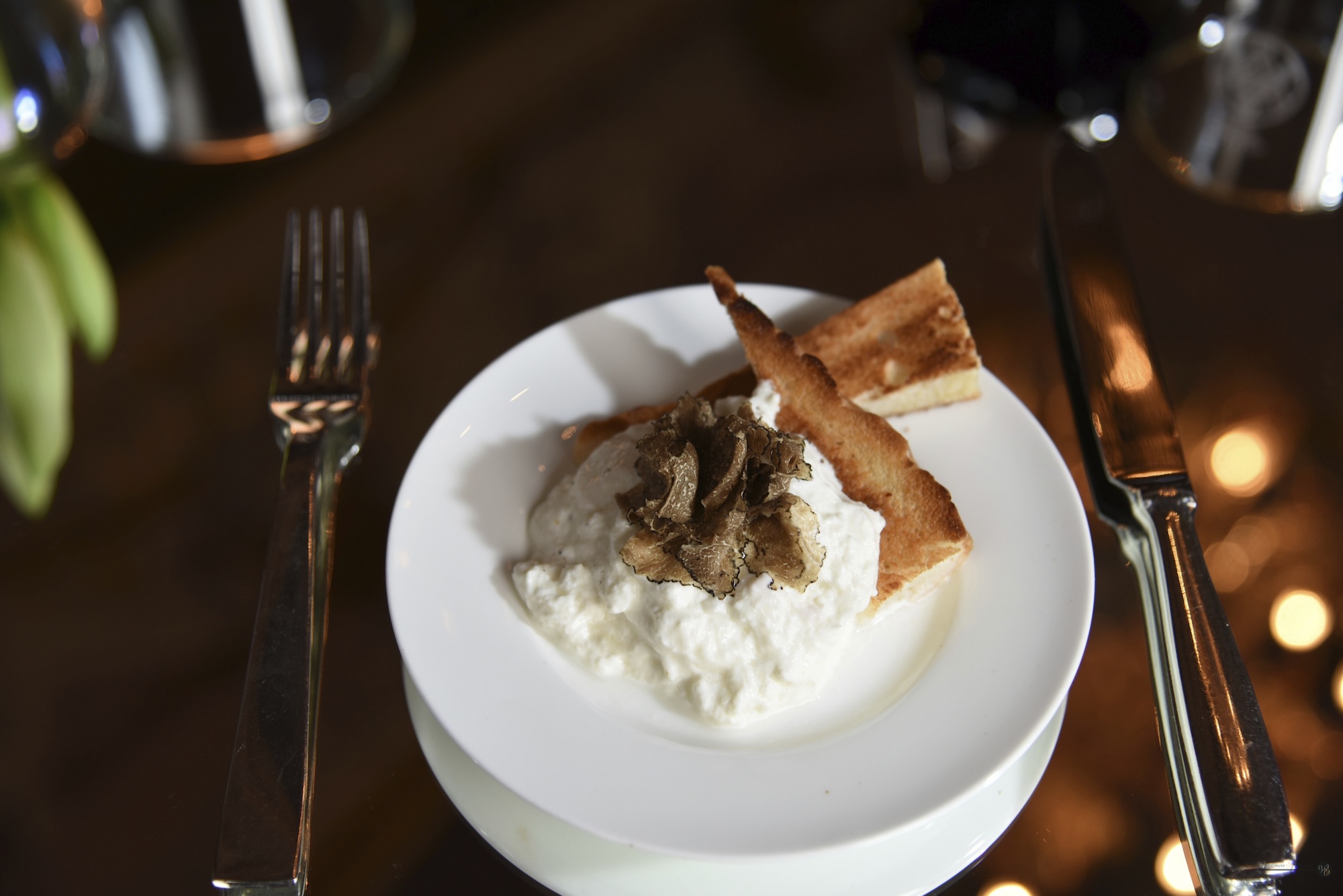
The truffle rarely travels alone. Across both regions, it shares the table with an equally serious cheese tradition — aged Pecorino from the hills around Siena, and the softer, younger cheeses of the Langhe farmhouses, both built specifically to carry the truffle's aroma without competing with it. Hands-on cooking sessions built around the day's find, working directly with a chef to shave, grate, or infuse a truffle found only hours earlier, remain among the most memorable moments we build into a journey — not staged demonstrations, but a genuine extension of the hunt itself, carried from forest to kitchen to table in the space of a single afternoon.
The Sculptured Journeys Perspective
We have walked these forests, sat in these cellars, and shared these tables for the better part of fourteen years — long enough to know the difference between a trifulau who performs for visitors and one who simply does his work, long enough to know which cellar door opens onto genuine mastery rather than polished theatre. This depth of relationship, built patiently across both regions, is what allows us to move beyond the expected itinerary and into the territory itself — its seasons, its families, its centuries-old rhythm of forest, vine, and cellar.
Continue Reading: The Soul of Tuscany | The Florence I Know | Discover Italy
Private by nature. Extraordinary by design.
Questions & Answers
When is the best time to plan a truffle-focused journey through Tuscany and Piedmont?
It depends entirely on which truffle you wish to encounter. Tuscany's Marzuolo appears from January or February into April, its black Scorzone runs May to July, and its prized white truffle emerges September through December. Piedmont's black truffles are found across much of the year, while its celebrated white truffle is strictly an October-to-January event. Late autumn — October and November — offers the rare overlap of Tuscan and Piedmontese white truffle season alongside grape harvest and cellar activity, making it the single richest window for a combined journey.
Is it true that pigs are traditionally used to hunt truffles in Italy?
Not in Tuscany or Piedmont, and not for a very long time. Both regions rely on trained dogs, whose acute sense of smell is refined over months of patient work with a trifulau. Dogs hunt for the reward of praise rather than appetite, making them a far more reliable partner than a pig, which is inclined to eat what it finds before anyone else has the chance.
Can the truffle found during a hunt actually be eaten afterwards?
Yes. A truffle uncovered during a private hunt can typically be prepared the same day — shaved over a simple pasta, folded into a risotto, or worked into a dish alongside a chef in a hands-on cooking session. It is one of the most immediate forest-to-table experiences either region has to offer.
What is the real difference between a Tuscan and a Piedmontese truffle experience?
Tuscany offers a rolling calendar of three distinct truffle varieties and a landscape shaped by Renaissance towns and Sangiovese vineyards. Piedmont, by contrast, centres almost entirely on its exceptional white truffle tradition, set within fog-laced hills devoted to Nebbiolo. The two regions complement rather than duplicate one another, which is precisely why we consider them together as a single seasonal journey rather than two separate excursions.
Which wine is considered the finest pairing for a white truffle?
In Piedmont, a mature Barolo or Barbaresco — both built on Nebbiolo — is widely regarded as the definitive match, its structure and patience mirroring the truffle itself. In Tuscany, a well-aged Brunello di Montalcino offers a comparably serious counterpart, particularly alongside dishes built around the autumn white truffle.
Do the underground cellar visits require advance arrangement?
Yes. Access to the smaller family cellars in particular is arranged well ahead of time and depends on personal relationships built with the producers over many years — this is very much where our long-standing presence in both regions makes the difference between a standard tasting room and a genuine cellar-level encounter.
Planning Your Own Truffle Season
Each journey we design through Tuscany and Piedmont is built around a single traveller's calendar, curiosity, and pace — matched to the truffle season, the cellars, and the producers best suited to them. Correspondence begins, as it always has, with a conversation.







.jpg)





















-002.jpg)