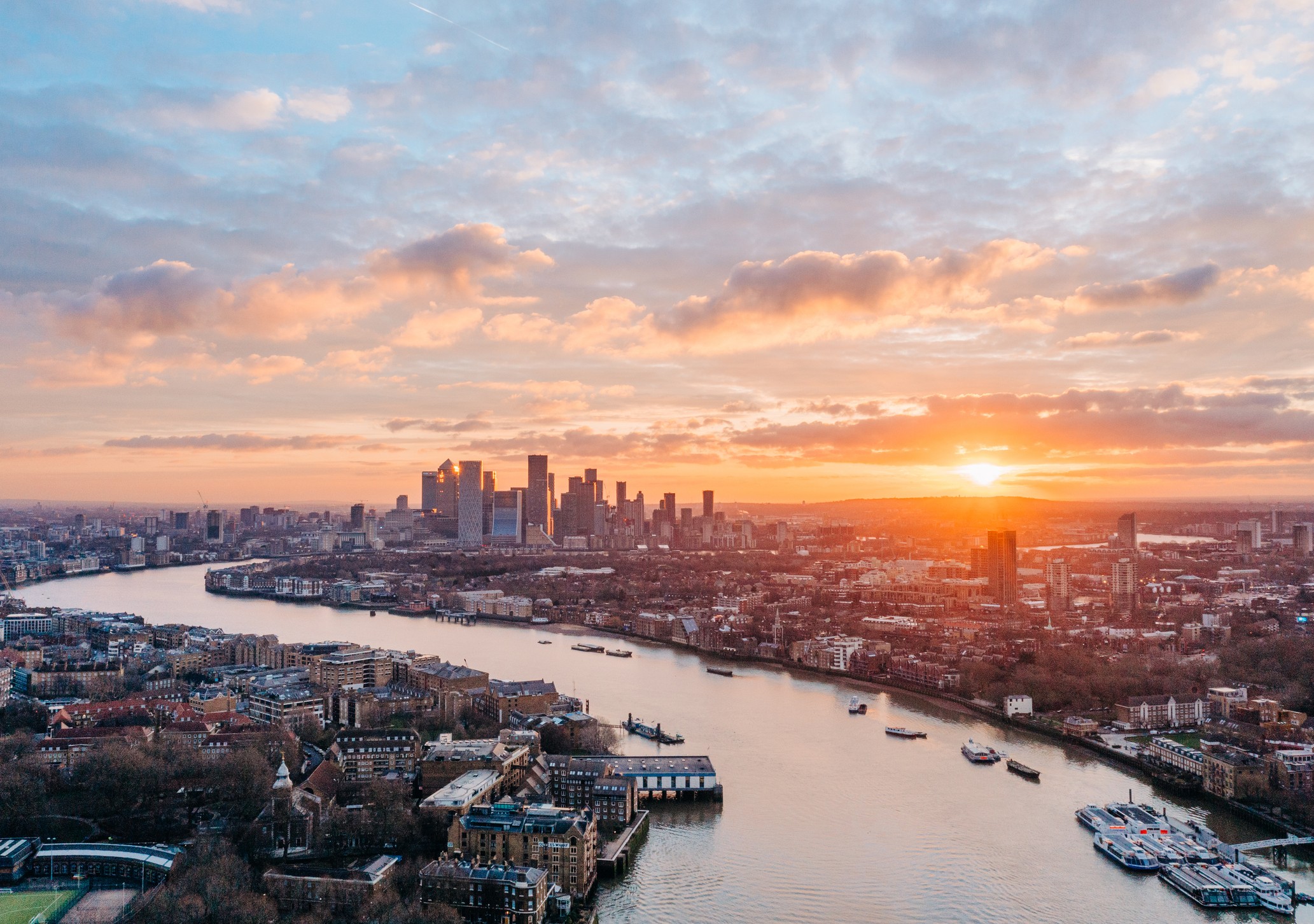
London to the English Countryside
A portrait of arrival, transition, pastoral depth, and return — tracing one continuous journey from the capital to the Cotswolds and back.
London arrives in layers. There is the city most travellers believe they already know — the landmarks, the museums, the red buses crossing Waterloo Bridge — and then there is the city that reveals itself once you stop moving fast enough to see it. The first is a backdrop. The second is one of the most genuinely plural, historically dense, and culinarily serious cities on earth, and it rewards the kind of attention that only a considered stay can provide.
What follows is a journey in four movements: arrival and immersion in the capital; a designed transition through Oxford; a sustained slowdown in the Cotswolds National Landscape; and a return to London before departure. Each movement asks something different — density, then contemplation, then pastoral stillness, then a closing reprise. Taken together, they trace something closer to a complete portrait of a particular strand of English life than any single destination could provide alone.
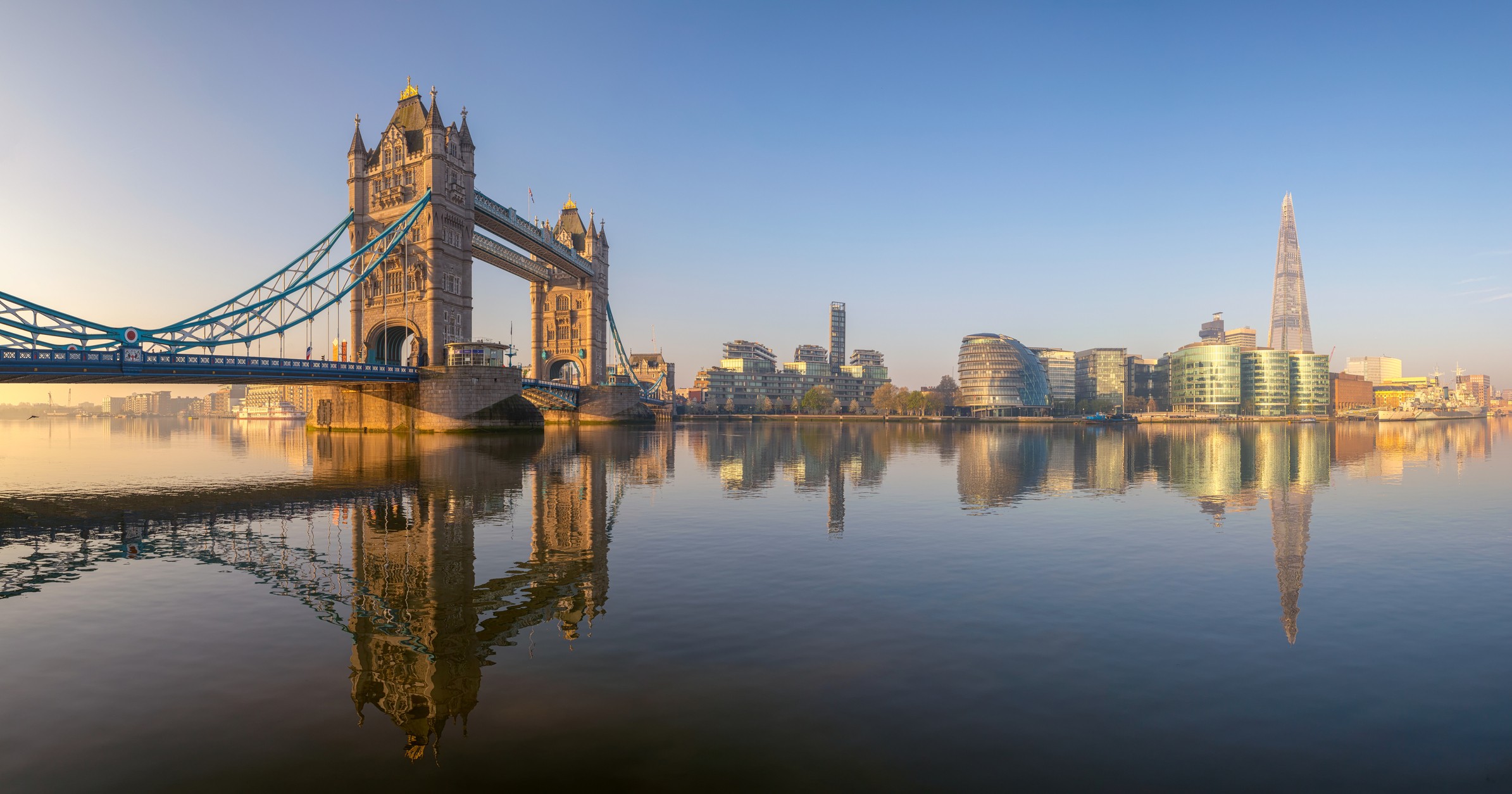
The Capital, Properly Inhabited
London's culinary identity is not, and has not been for some time, a variation on British tradition. It is something stranger and more interesting: a city where the most significant cooking often arrives freighted with multiple national inheritances, where a chef's biography is inseparable from the food on the plate. Two restaurants make this argument with particular force.
In Notting Hill, Clare Smyth's Core holds three Michelin stars — she is the first British woman to hold that number, a distinction that carries its full weight in a profession in which it has rarely been uncomplicated to be both. Smyth grew up on a farm near Bushmills, County Antrim, trained under Gordon Ramsay and at Alain Ducasse's Le Louis XV in Monaco, and opened a restaurant that is, at its most essential, a reimagining of what she ate and understood as a child on the northern Irish coast. Her signature dish, 'Potato and Roe,' takes roughly twenty-five hours to prepare: a sous-vide potato finished with kombu and dulse seaweed, trout and herring roe, salt and vinegar crisps, and a dulse beurre blanc. It is not an abstract technical exercise. It is a precise and personal act of memory, transplanted to one of the most technically sophisticated dining rooms in Europe.
The counterpoint is Angelo Sato's Humble Chicken: a thirteen-seat counter in Soho offering a sixteen-course omakase, two Michelin stars, and an active pursuit of a third. Sato is of Japanese-German heritage, trained at RyuGin and NARISAWA in Tokyo, Eleven Madison Park in New York, and Restaurant Gordon Ramsay and Restaurant Story in London — a formation that exists nowhere else in the same combination. He moved to London at seventeen. The counter format is Japanese in spirit: direct, sequential, offering the cook's full attention to a room small enough to receive it. The cooking is harder to categorise, which is precisely the point. London has always been a city where the most original voices arrive from elsewhere.
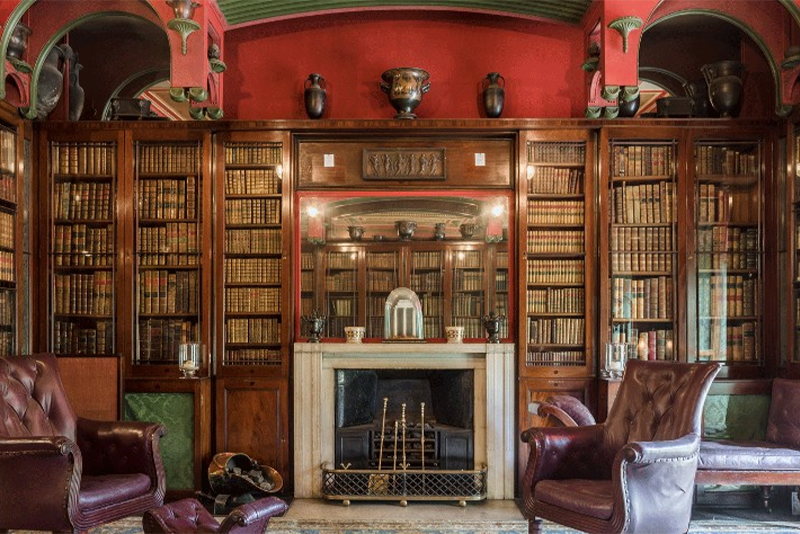
Sir John Soane's Museum in Lincoln's Inn Fields is preserved by Act of Parliament exactly as it was at Soane's death in 1837 — not restored, not re-interpreted, but kept. The rooms are dense with antiquities, architectural fragments, and paintings in an arrangement Soane himself designed with deliberate spatial drama. The standout object is the Egyptian sarcophagus of Seti I: Soane paid £2,000 for it in 1824, and an opening was made through the rear wall of his own house to receive it; the sarcophagus was installed in May 1824, after which he threw a three-day party — attended by approximately a thousand guests, among them Turner and Coleridge — to celebrate its arrival. Hogarth's 'A Rake's Progress' hangs here on hinged panels that swing open to reveal further paintings concealed behind them, a layering consistent with the building's wider logic: there is always more than what is immediately visible. Pre-dinner drinks in the Drawing Rooms followed by a candlelit tour of the museum's most spectacular spaces are genuinely available to book, and moving through those rooms by candlelight — the sarcophagus at the centre — is an experience with no equivalent in London.
Dennis Severs' House in Spitalfields operates on a different register entirely. Severs called what he created 'a still life drama': a house arranged as though a fictional Huguenot silk-weaving family had just stepped away. Across ten rooms tracing a span from 1724 to 1914, food is left on tables, coats draped over chairs, fires smoulder in grates, clocks tick in adjacent rooms. Nothing is labelled. Evening visits by candlelight are a public ticketed experience, and the house is rightly famous for what it manages in the dark — what one account memorably characterised as 'the quality of its silence enlivened by ticking clocks and crackling fires.' It sits in Spitalfields, a neighbourhood whose layered history of Huguenot, Jewish, and Bangladeshi settlement is not incidental to the family Severs chose to imagine.
For those who wish to move through the city rather than simply within it: Hyde Park's Rotten Row — a corruption of 'Route du Roi,' the road created by William III in the late seventeenth century as a safe passage between Kensington and St James's Palaces, and in 1690 the first artificially lit road in Britain — was the fashionable aristocratic promenade of the capital through the eighteenth century. Private and semi-private escorted rides along the Row are currently available, and the experience of moving through the park on horseback at an early hour belongs to a London that most visitors never encounter. London also has a quiet tradition of bespoke private theatrical evenings — immersive storytelling and live performance staged in intimate historic settings: Georgian townhouses, private members' clubs, buildings that carry their own history in every room. The format is particularly well suited to private travel, and the possibilities are more various than most travellers realise.
Where to Stay in London
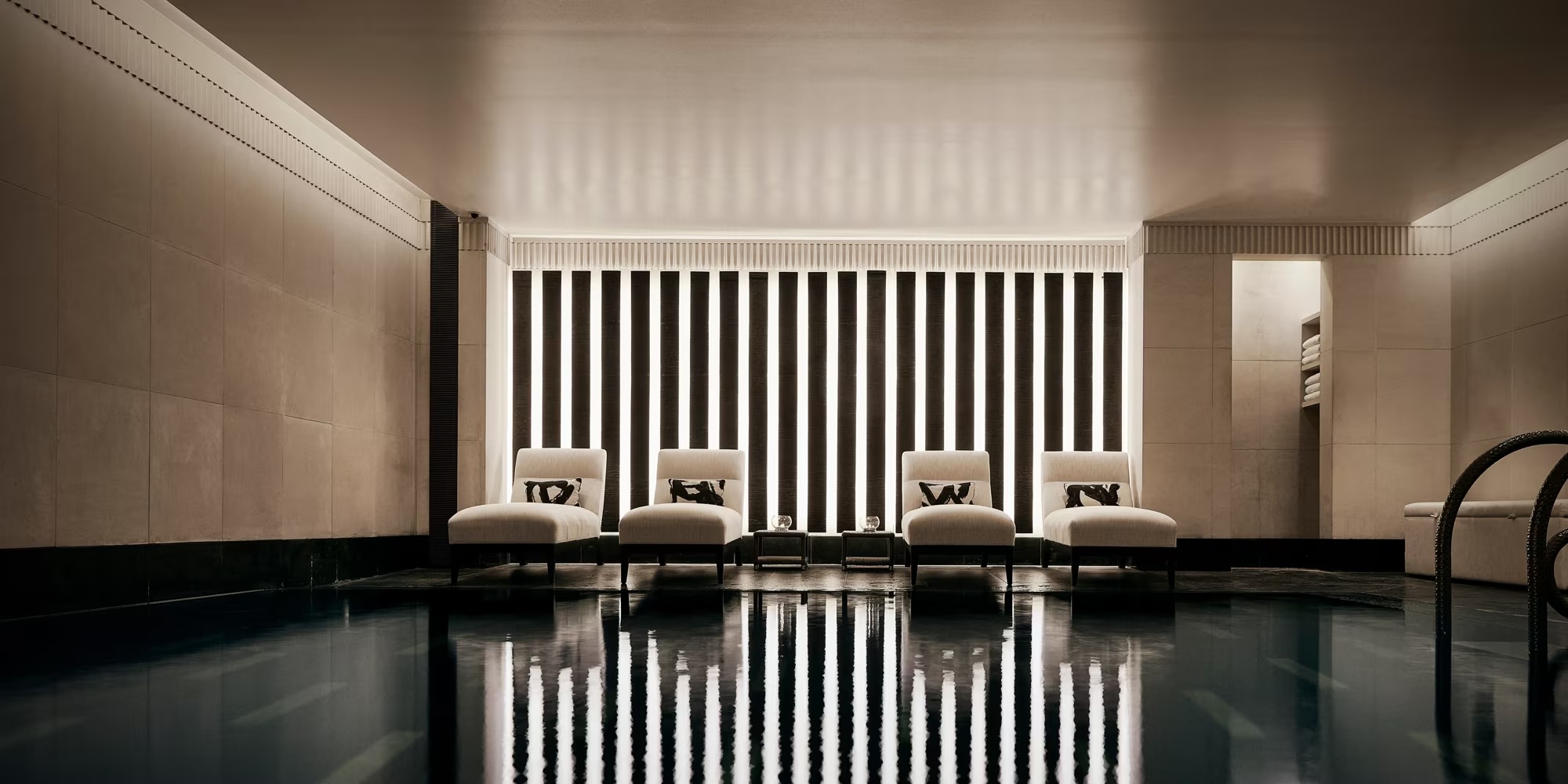
Four hotels in London warrant particular attention in the context of this journey — three currently operating at the level this piece demands, and one whose opening, when it arrives, will reshape the Mayfair conversation.
Claridge's in Mayfair is the essential grande dame reference point — and currently more interesting than its reputation alone suggests. A seven-year subterranean redevelopment completed at the end of 2023 expanded the property from 233 to 269 keys, adding a new spa and pool; phased additions continue through 2028. The hotel is mid-evolution, and that is precisely what makes it worth revisiting with fresh attention. It remains part of the Maybourne Hotel Group's London portfolio.
Also under Maybourne's ownership, The Connaught has achieved something no other UK hotel currently holds: Three Michelin Keys for the hotel alongside Hélène Darroze's three-Michelin-star restaurant operating within it — a combination confirmed in October 2025. A multi-million-pound restoration of the guest rooms drew on Asian and North African craftsmanship, resulting in interiors at once particular and entirely of a piece with the building's proportions.
The Cadogan, A Belmond Hotel, in Chelsea occupies a category of its own — not because of its facilities, which are excellent, but because of what actually happened here. The hotel opened within the Cadogan Estate in 1887. In 1895, Oscar Wilde was arrested in Room 118, an event John Betjeman fixed in verse in 1937; that room is now the Oscar Wilde Royal Suite. Lillie Langtry lived at 21 Pont Street — now part of the hotel — for seven years, and Room 106 retains the discreet wood-panelled door she had installed to receive the Prince of Wales without attracting the attention of other residents. This is a building in which the texture of late-Victorian history is still legible in the architecture. Willett's, a new British bistro, opened here in April 2026.
One forthcoming property demands particular attention in a piece of this kind. Cambridge House, Auberge Resorts Collection, at 94 Piccadilly in Mayfair, is among the most historically layered buildings in London yet to become a hotel. Commissioned by the 2nd Earl of Egremont in 1756 and designed by Matthew Brettingham, the Grade I-listed Palladian-style Georgian mansion was home to Lord Palmerston — Prime Minister, and a figure who shaped the architecture of mid-Victorian foreign policy as much as any individual of his era — from 1855 until his death in 1865, his funeral procession departing from the house. From 1865, the building served as the Naval and Military Club — known universally as 'the In and Out' after the painted signage on its entrance and exit gates, and counting T.E. Lawrence and Ian Fleming among its members — until 1999. Its transformation is the work of Reuben Brothers, part of a wider Piccadilly Estate regeneration, with interiors by Jean-Louis Deniot. The hotel will open with 102 rooms, Major's Grill — a restaurant conceived by Major Food Group, the group behind Carbone, set within an elaborate dining room dating to the house's 1878 transformation — and a double-level spa with two heated swimming pools, hydrotherapy, and seven treatment rooms. A private members' club with nine rooms designed by Laura Gonzalez completes a property whose ambition is matched by the weight of what already happened inside it. At the time of writing, Cambridge House had not yet opened; the expectation is 2026, and it is the London opening this office is watching most closely.
Across London's wider hotel landscape: The Dorchester, recently renovated with a deliberate reduction from 250 to 241 keys to enlarge room proportions, remains among the most considered expressions of the grand hotel form. Raffles London at The OWO occupies the former War Office on Whitehall — completed 1906, eight years in restoration, the first Raffles in the United Kingdom — with suites in the former offices of Churchill, Lloyd George, and Profumo. Brown's in Mayfair, a Rocco Forte property, was founded in 1837 by Lord Byron's former butler and Lady Byron's former maid across thirteen connected Georgian townhouses — London's oldest luxury hotel in the specific sense of never having been renamed, rebuilt, or relocated.
The Road Through Oxford
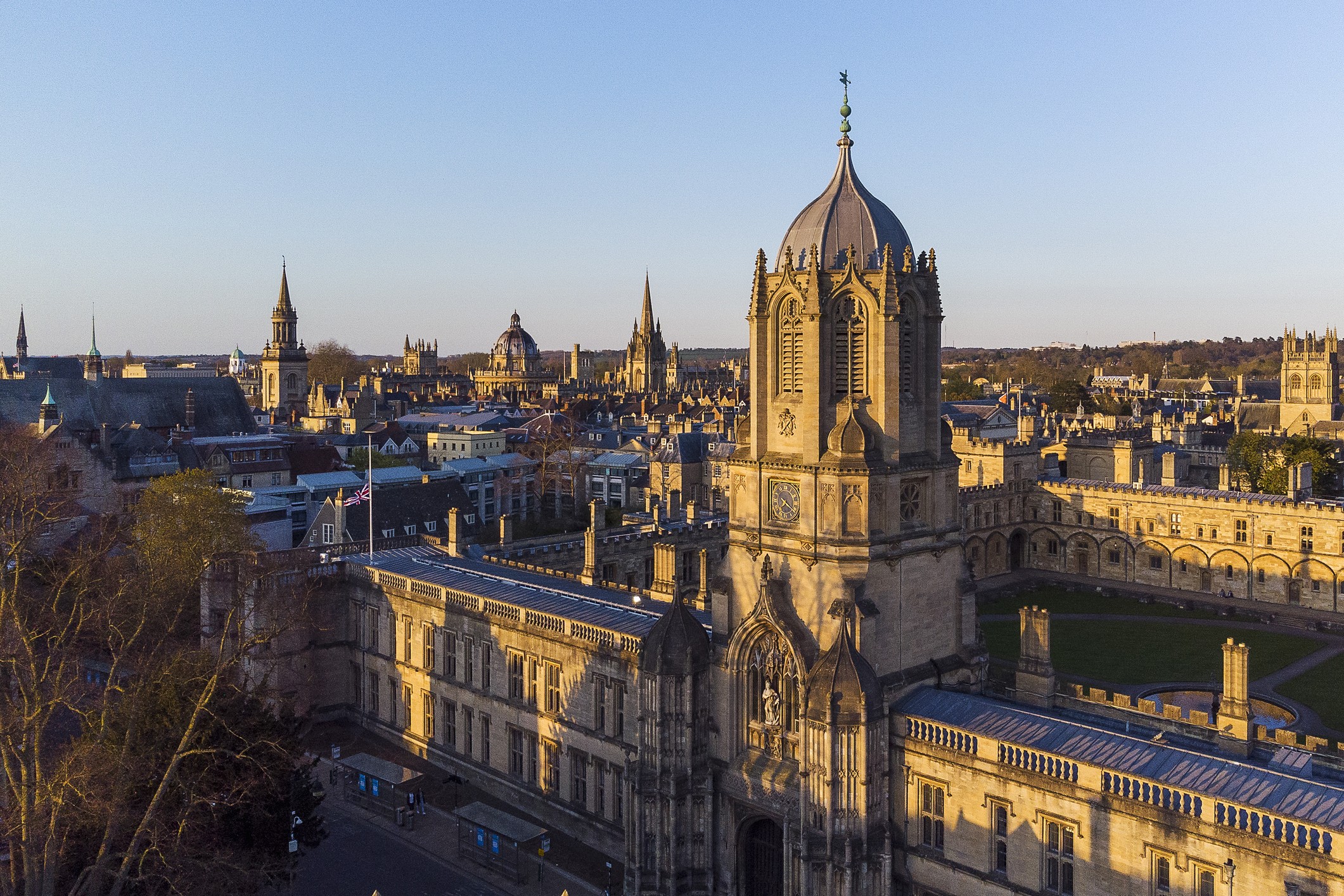
The journey from London to the Cotswolds by private car is not a transfer. It is a movement between two distinct registers of English life, and Oxford — placed almost precisely at the midpoint — offers the ideal reason to stop and let the transition happen at the right pace.
Christ Church repays the visit because its history is genuinely dense rather than merely famous. Cardinal Wolsey founded its precursor, Cardinal College, in 1525; after Wolsey's fall from royal favour, Henry VIII refounded and formally constituted Christ Church in 1546, making it simultaneously a college and — uniquely in Oxford — a cathedral chapter. Tom Tower, closing the entrance at St Aldate's, was designed by Christopher Wren and built between 1681 and 1682, completed in a deliberately Late Gothic style chosen to match the Henrician stonework beneath it. That Gothic register had not been used in a prominent English building for roughly a hundred and fifty years before Wren revived it here — an act of architectural deference so precise it reads as scholarship as much as design. The Great Hall is widely understood to have informed the imagining of the Hogwarts Great Hall in the Harry Potter stories — not through filming, which took place at Leavesden Studios, but through the kind of prior absorption that fiction operates on.
Christ Church's most genuine literary connection is with Charles Dodgson — Lewis Carroll — who served as Mathematical Lecturer here from 1855 and was a resident from 1851 until his death in 1898. Alice Liddell, the real Alice, was the daughter of the Dean of Christ Church; the story originated on a boating trip in 1862; Carroll gave Alice a handwritten manuscript in 1864, published as Alice's Adventures in Wonderland in 1865. The origin story of one of the most translated books in the English language is, in that sense, inseparable from this particular college and this particular stretch of river.
Oxford shaped — and occasionally resisted — a remarkable sequence of minds. The Chronicles of Narnia were written at Magdalen College; The Hobbit and the beginnings of The Lord of the Rings took shape at Pembroke and Merton. The university carries those associations in the way that old cities carry water: not visibly, but structurally. A visit of genuine length — advance-booked tickets are required for Christ Church, and private tours of the college, the cathedral, and the gardens are available on set dates — creates space to absorb that layering without being rushed through it.
The Cotswolds, At a Proper Pace
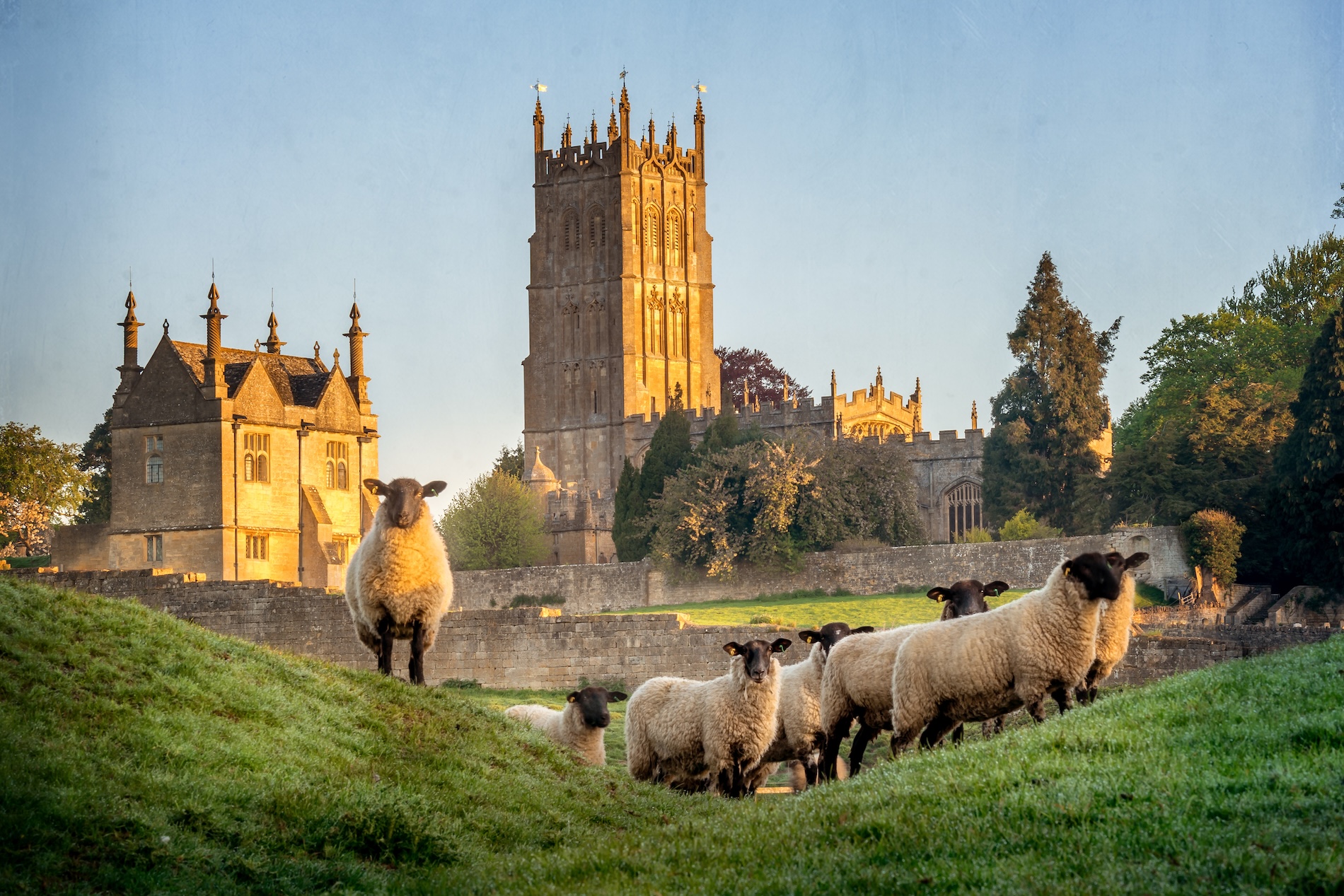
The Cotswolds National Landscape — officially renamed from 'Area of Outstanding Natural Beauty' in November 2023 — covers approximately 790 square miles, making it the largest National Landscape in England and Wales by area. The figures are useful only insofar as they correct a common underestimation: the Cotswolds is not a cluster of villages arranged around a country house hotel.
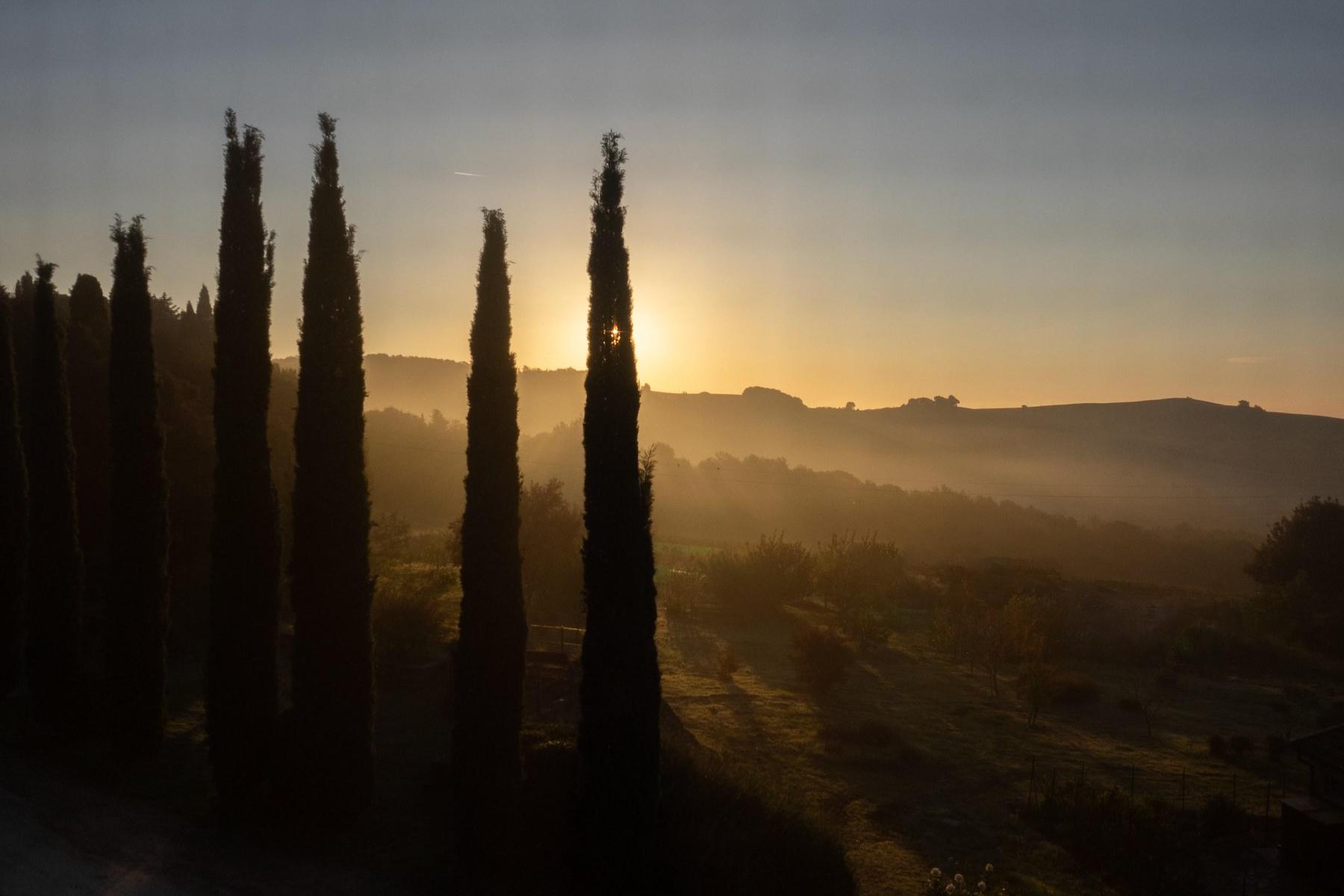
The landscape character is specific and consistent: warm honey-coloured limestone known as Cotswold stone, which deepens in tone as it weathers, used for almost everything — houses, walls, churches, field boundaries. Dry stone walls divide the rolling hills into the irregular geometry that only accumulates over centuries of individual decision-making. The medieval wool churches that anchor many of the most significant villages were funded by a trade that made this region, in the fourteenth and fifteenth centuries, among the wealthiest in England. The chalk streams winding through the lower valleys are among the rarest freshwater habitats in Europe. The lanes are genuinely winding — not scenic-route winding, but the result of a pre-enclosure field system that was never straightened out. The place rewards slowness in the literal sense.
The culinary argument for this part of England is made most clearly at The Wild Rabbit in Kingham, Oxfordshire, which holds one Michelin star. The restaurant is owned by Lady Bamford, and sources its organic meat, fruit, and vegetables directly and operationally from Daylesford Organic Farm — not as a marketing association but as a genuine supply chain between two properties a few miles apart. The Daylesford connection is what gives the kitchen its specific character: the sourcing philosophy is the cooking philosophy, inseparably.
Where to Stay in the Cotswolds

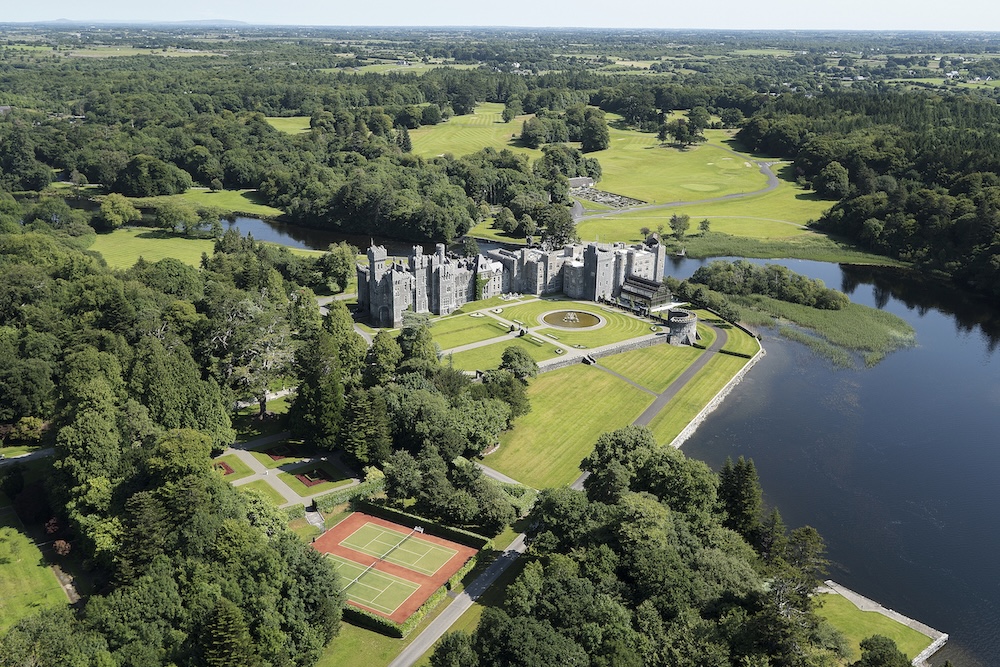
Estelle Manor, on a 60-acre Grade II-listed estate in North Leigh, Oxfordshire, sits at the Cotswolds fringe rather than within the National Landscape boundary itself — a geographic precision worth stating because the property's character is its own. It opened in May 2023 with 108 rooms and suites, four restaurants, and a Roman-inspired spa of approximately 3,000 square metres that is, by scale and ambition, among the most serious spa operations in the country. The estate sits within roughly 3,000 acres of surrounding parkland. Ranked No. 47 in The World's 50 Best Hotels 2025, it has established itself as a reference point in its own right rather than a regional entry.
Foxhill Manor at Broadway, Worcestershire, operates at a different register: eight rooms and suites in a Grade II-listed Arts and Crafts manor on the Farncombe Estate, with the option of exclusive-hire access that makes it, when taken in full, something closer to a private house. Named No. 1 UK hotel in Condé Nast Traveler's 2025 Readers' Choice Awards, it carries the intimacy that its scale allows: a staff-to-guest ratio that is genuinely attentive rather than structurally aspirational. There is an echo here of The Emory in London — both properties make the case that scale, held at this level of control, is itself a form of luxury.
Thyme, at Southrop in Gloucestershire, is the property most rooted in place: an independently owned estate on 150 acres at Southrop Manor, with cottage suites distributed across multiple historic estate buildings, a kitchen garden, cookery school, and spa. The experience of staying here is one of inhabiting a working countryside property rather than occupying a formal hotel. If Estelle Manor makes its argument through scale, and Foxhill Manor through intimacy, Thyme makes its argument through character — the sense that the land around it has a long and legible history that the property is genuinely embedded in, rather than placed upon.
Elsewhere in the landscape: Coombe End Manor is a private estate near Cheltenham, monastic roots dating to the fifteenth century, available for exclusive whole-house hire and particularly suited to families, multigenerational travel, and private celebrations. Cowley Manor Experimental reopened in July 2023 under the Experimental Group — the Paris hospitality group behind properties in Paris, Menorca, and Verbier, which acquired the Cotswolds estate in 2022 and set about its transformation — with interiors by Dorothée Meilichzon that bring a younger, more design-led sensibility to a house the traditional Cotswolds register might never have imagined. Dormy House at Broadway, a seventeenth-century farmhouse conversion on the Farncombe Estate and sister property to Foxhill Manor, shares access to the estate spa and carries a particular reputation for wellness programming.
One further property deserves acknowledgement, though it cannot currently be booked. Le Manoir aux Quat'Saisons, A Belmond Hotel in Great Milton, Oxfordshire, closed on 1 January 2026 for an eighteen-month redevelopment — the first closure in Raymond Blanc's four decades at the property he opened in 1984. Arnaud Donckele has been appointed as incoming Culinary Director, and the hotel expects to reopen in summer 2027. Those who want a sense of what it was in its final season before the closure will find that portrait in our Sculptured Stories piece on Le Manoir's Christmas and New Year season (sculpturedjourneys.com/sculptured-stories/belmond-le-manoir-oxfordshire-christmas-new-year), which captured exactly that moment. The reopening, when it comes, will be worth waiting for.
The Return

The journey back to London from the Cotswolds is, if the preceding days have been properly paced, a different experience from the journey out. The city that arrives does not feel like the same one that was left behind — partly because the contrast between the limestone lanes and the density of Mayfair is genuinely striking, but partly because a few days of that kind of stillness tends to sharpen what the capital actually has to offer. London is at its most legible when you have been away from it long enough to see it again.
The final nights in the city carry a different quality from the opening ones. The first arrival is about orientation; the return is about consolidation. A closing dinner — whether at Core, or Humble Chicken, or something quieter entirely — allows the journey to close on a note that belongs to the city rather than to the airport. The departure, when it comes, is from a place that has been genuinely inhabited: not visited, but lived in for long enough to understand what it is offering.
That is the particular quality this kind of journey produces when the pacing is right and each element is given the time it requires. Not a survey of England, but a passage through a specific and coherent strand of it — from the plural, restless energy of the capital, through the accumulated scholarship of Oxford, into the unhurried pastoral depth of the Cotswolds, and back to the city that started everything.
Private by nature. Extraordinary by design.
Questions About Travelling from London to the English Countryside
How much time should a London to Cotswolds journey take?
Considerably more than most travellers initially allow. London alone — two or three restaurants of real quality, the Soane Museum, an evening at Dennis Severs' House, a morning on horseback in Hyde Park — requires at least three full days to inhabit rather than pass through. The Oxford stop, if it is not to feel perfunctory, needs its own half-day or longer. The Cotswolds, at less than three nights, risks becoming a countryside backdrop rather than a place properly encountered. The return to London before departure needs to breathe. Seven to ten days is not extravagant for this sequence — it is the minimum at which each movement can do what it is designed to do.
What makes the Cotswolds a National Landscape rather than a national park?
The Cotswolds National Landscape — updated from 'Area of Outstanding Natural Beauty' in November 2023 — is one of forty-six such designations across England, Wales, and Northern Ireland. The distinction from a national park is primarily one of human settlement: National Landscapes tend to be more densely inhabited, more actively farmed, and more closely woven into the working economic life of the surrounding region. In the Cotswolds, this means the villages are not picturesque exceptions to a wild landscape — they are constitutive of it. The stone buildings, the parish churches, the dry stone walls, and the farm fields are the landscape, not punctuations of it. At 790 square miles, it is also internally varied, and different corners carry different characters.
Is Christ Church College in Oxford open to visitors?
Christ Church is open to visitors, with advance-booked tickets required — guided tours of forty to sixty minutes are the standard route, with private and special tours of the college, the cathedral, and the private gardens available on set dates. The experience rewards preparation: arriving without a sense of the building's history — the Wolsey foundation, the Henrician refoundation, the Wren tower, the Carroll connection — is to move through a sequence of handsome rooms without understanding what they are accumulating. Booking in advance is both logistically necessary and, in the context of a properly designed journey, naturally consistent with the pace the rest of the visit sets.
Which London hotels are currently expanding or newly opened?
The most significant forthcoming opening is Cambridge House, Auberge Resorts Collection, at 94 Piccadilly in Mayfair — a Grade I-listed Palladian-style Georgian mansion commissioned by the 2nd Earl of Egremont in 1756, later home to Prime Minister Lord Palmerston and, from 1865, the Naval and Military Club. Its transformation into a hotel by Reuben Brothers, with interiors by Jean-Louis Deniot and a restaurant by Major Food Group, has been anticipated since late 2025; at the time of writing, an opening in 2026 remained the working expectation but without a confirmed date. The largest hotel opening London has actually seen in 2026 is Six Senses London, which opened on 1 March at The Whiteley in Bayswater — the reimagined former William Whiteley department store, originally opened in 1911. The brand's first UK property offers 109 rooms and suites alongside 14 branded residences, Six Senses Place London (the brand's first private members' club), and a spa programme built around longevity and water-based rituals. Beyond those two: Claridge's completed a major subterranean expansion at the end of 2023, adding a spa and pool and increasing its key count to 269, with phased additions expected through 2028. The Peninsula London opened at Hyde Park Corner in September 2023 — the group's first European property. Raffles London at The OWO opened following an eight-year restoration of the former War Office as the first Raffles in the United Kingdom. The Emory in Knightsbridge opened as London's first all-suite hotel, reached via its private cobbled entrance on Old Barrack Yard.
What is the best base for exploring the Cotswolds?
The question is better framed as: what kind of experience does this particular journey need? Estelle Manor at North Leigh suits those who want scale, serious spa facilities, and the full range of restaurants within one property. Foxhill Manor at Broadway is for those who want the countryside at an intimacy that a larger hotel cannot replicate — eight rooms, exclusive-hire capability, and a staff-to-guest ratio that functions as a form of quiet editorial control over the stay. Thyme at Southrop is for those whose primary interest is in the land itself: the kitchen garden, the cookery school, the working estate. The question of which is 'best' is less interesting than the question of which is right for a specific journey.




.jpg)























-002.jpg)