St Moritz and Gstaad: Two Alps, Held in the Same Frame
There is a particular quality of light in the Engadin that has nothing to do with altitude and everything to do with reputation. It arrives off the lake in the late morning, flat and silver, and by early afternoon it has turned the Corviglia slopes the colour of champagne. It is the light Johannes Badrutt wagered on in 1864, when he invited four of his English summer guests to return for the winter, promising to cover their costs in full if they were unconvinced. They took him up on it, and the wager made its point. St Moritz is recognised as the birthplace of winter tourism from that same year, and of winter sport itself two decades later, in 1884 — the beginning of an entire idea: that the mountains, once considered uninhabitable between November and April, could become the most fashionable address in Europe.
St Moritz has never really let go of that origin story, because the origin story is still, in large part, the point. This was the first place in Switzerland lit by electric light, at Christmas in 1878, and the first in the Alps to stage a golf tournament, in 1889. The Cresta Run — a natural ice track that the St Moritz Tobogganing Club rebuilds by hand over several weeks each year, usually opening during Advent — has run every winter since the 1880s, and the town has gone on to host the Winter Olympics twice, along with a long succession of ski and bobsleigh world championships besides. The rest of St Moritz has always been more inclined to be seen than not. Furs on the promenade, private jets into Samedan, a jeweller’s row along Via Serlas that reads like a roll call of Paris and Milan. Snow polo — first played on snow anywhere in the world on this same lake, in 1985 — takes over the frozen surface in late January. White Turf, thoroughbred racing on that same ice, has run every February since 1907. None of it is subtle, and none of it is meant to be. St Moritz’s glamour has always been international, visible, performed a little — a glamour that wants an audience, because for a century and a half it has had one.
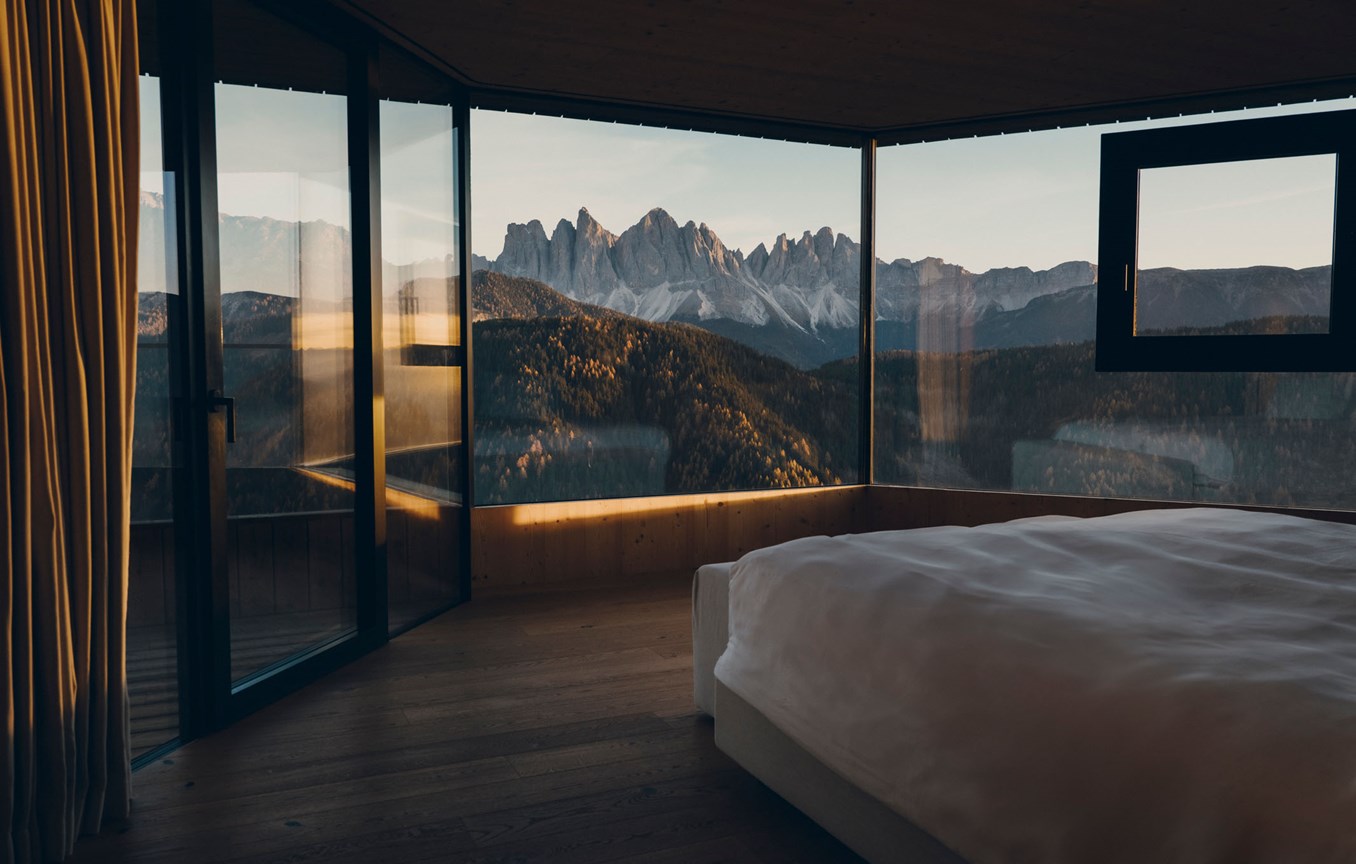
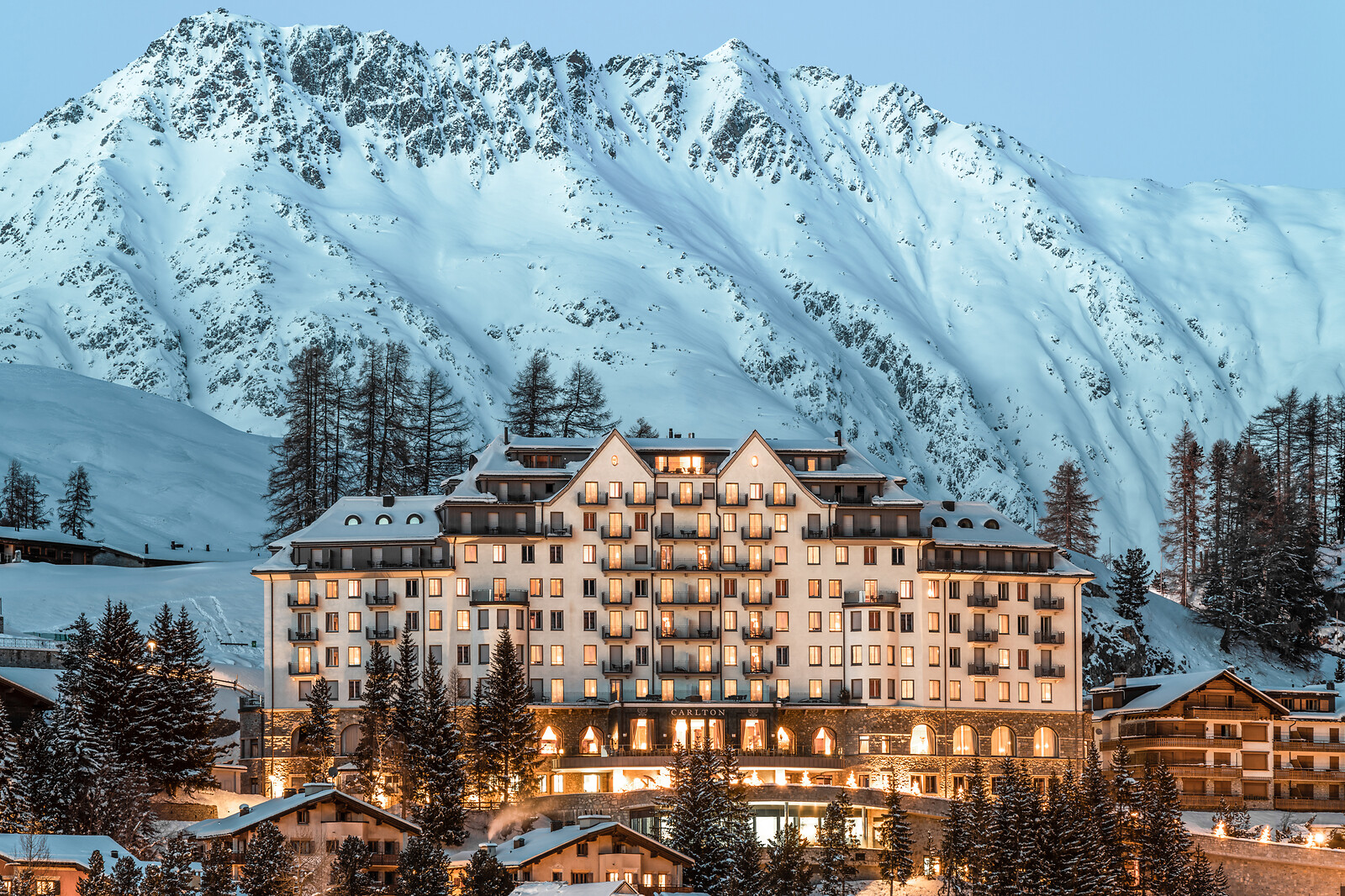
Overlooking that same lake, set slightly apart from the village on its own rise of ground, the Carlton has watched the spectacle from a certain remove since 1913. Every suite faces south, with views over the lake and the mountains beyond, and the sense of privacy is deliberate rather than incidental: this is a smaller, quieter hotel than its grand neighbours in the village centre, built for guests who want St Moritz on their own terms — close enough to the White Turf grandstand to feel the current of the season, far enough above the town to step out of it entirely at will. A private butler is arranged for every stay, and the hotel holds Green Globe certification. Dinner, when it isn’t taken on the property’s own terrace, is two Michelin stars’ worth of Da Vittorio — a restaurant where, each winter, a dedicated team from the Cerea family’s celebrated Bergamo operation relocates to St. Moritz for the Carlton’s season, bringing the family’s culinary philosophy to the Alps. Awarded 18 GaultMillau points alongside its two Michelin stars, it is regarded as one of Switzerland’s foremost Italian dining rooms. It is St Moritz distilled to its most considered form — the view, the history, the discretion of good service — without the requirement to be looked at in return.
Two and a half hours west, on the other side of a mountain range and, in most ways that matter, a different century of expectation, Gstaad keeps to itself.
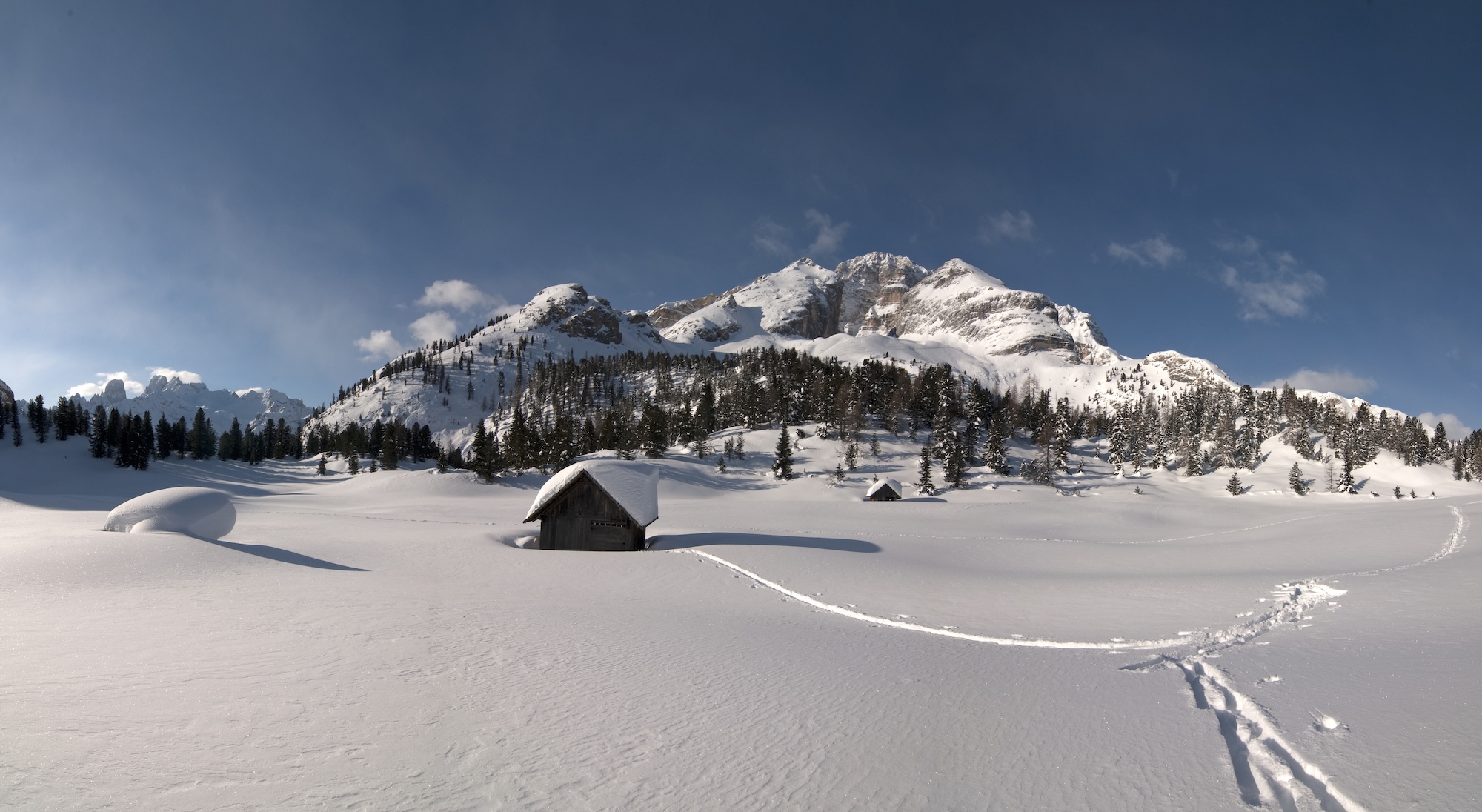
The contrast is not staged; it is structural. Where St Moritz built its reputation on being watched, Gstaad built its reputation on not being seen at all. The village sits low in the Bernese Oberland. Its wooden chalets have been protected by building regulation since the 1950s, strict enough that the skyline has barely shifted since the railway reached the valley in 1905 and ended its isolation. The village centre remains closed to cars today. There is no equivalent of Via Serlas here, no expectation that arrival should announce itself. Gstaad’s association with European aristocracy and old industrial fortune runs deep enough that discretion functions less as a marketing position than as an inherited manner — the kind of restraint that doesn’t need to be performed because it has simply never occurred to anyone present to do otherwise. The families who return to Gstaad, season after season, tend to have been returning for decades. Some own chalets their grandparents built. Few of them are interested in an audience.
The deeper contrast is the one within Gstaad itself. This was farming country long before it was anything else, and it has never fully stopped being farming country: cattle still graze the high pastures above the village each summer, and each September the Züglete brings entire herds down through streets lined with fine boutiques and Michelin tables, flowers wound through their horns, the same families walking beside them who always have. Switzerland’s own tourism authority is unusually direct about this — for all its well-known guests, the village has kept its original heritage rather than trading it away. It is this that separates Gstaad’s register of wealth from St Moritz’s. Old money here sits beside working farms rather than instead of them, and the discretion that draws people back, year after year, is inseparable from the fact that Gstaad was never built to be found in the first place.
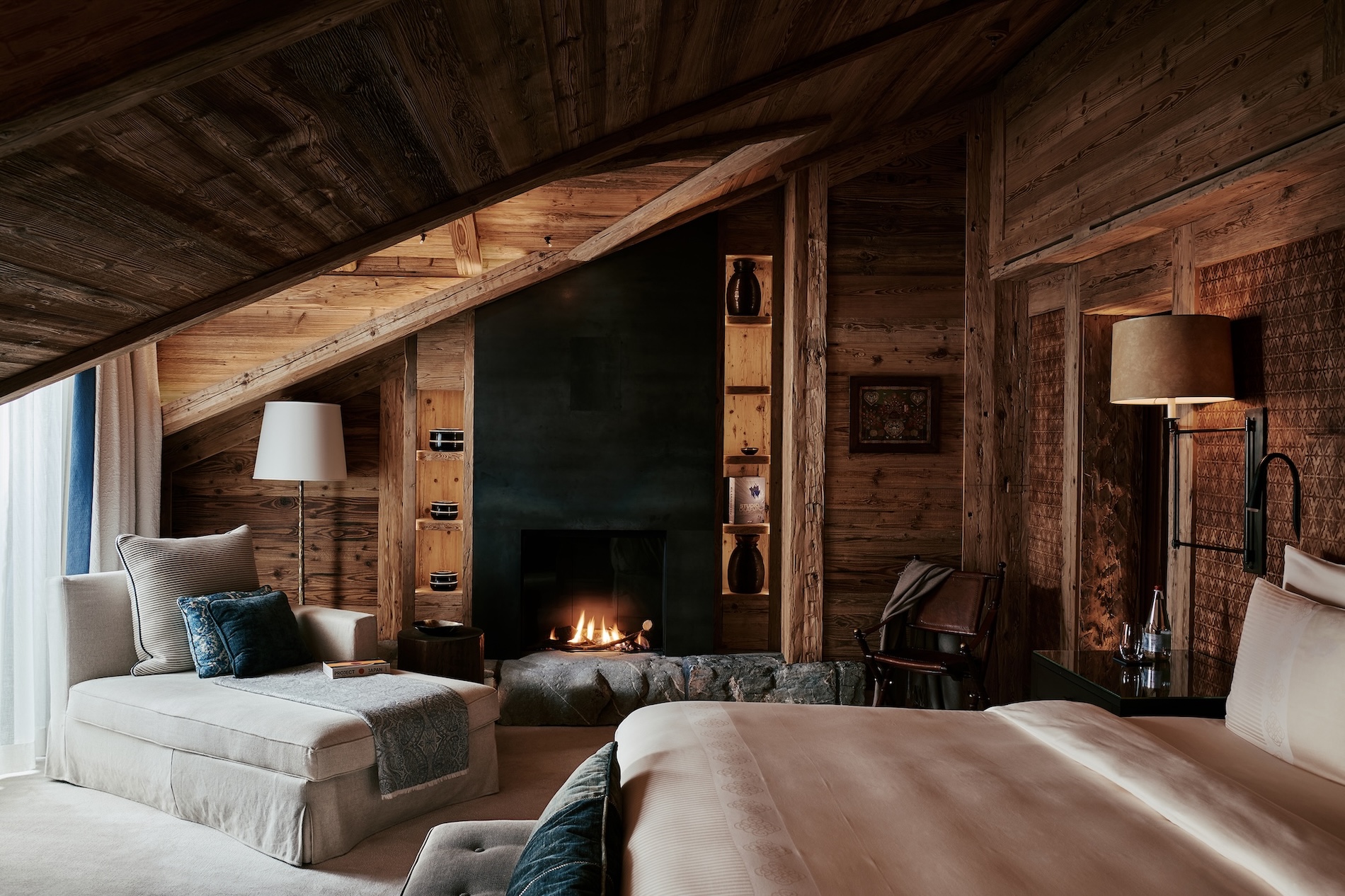
The Alpina Gstaad opened on the first of December 2012, built within the same architectural constraints that govern every other structure in the valley. The result reads less as hotel than as private residence at an uncommon scale: limestone and reclaimed timber, rooms and suites arranged around gardens and a mountain panorama, Switzerland’s first Six Senses Spa set into the hillside below. The hotel holds three MICHELIN Keys and has carried EarthCheck’s Gold sustainability certification for three consecutive years. There is a Michelin-starred dining room, a Japanese restaurant tucked past the lobby, a cigar room that feels borrowed from someone’s own chalet rather than assembled for guests. The effect is not of a hotel trying to impress. It is of a house that happens to have very good staff — the fireplaces lit before you reach the room, the art collection changing quietly through the year, a stillness that has less to do with the absence of activity than with the absence of anyone needing to prove anything. Where the Carlton offers St Moritz’s glamour with the volume turned down, the Alpina offers Gstaad’s privacy at full expression — because in Gstaad, privacy was never the exception. It was always the whole point.
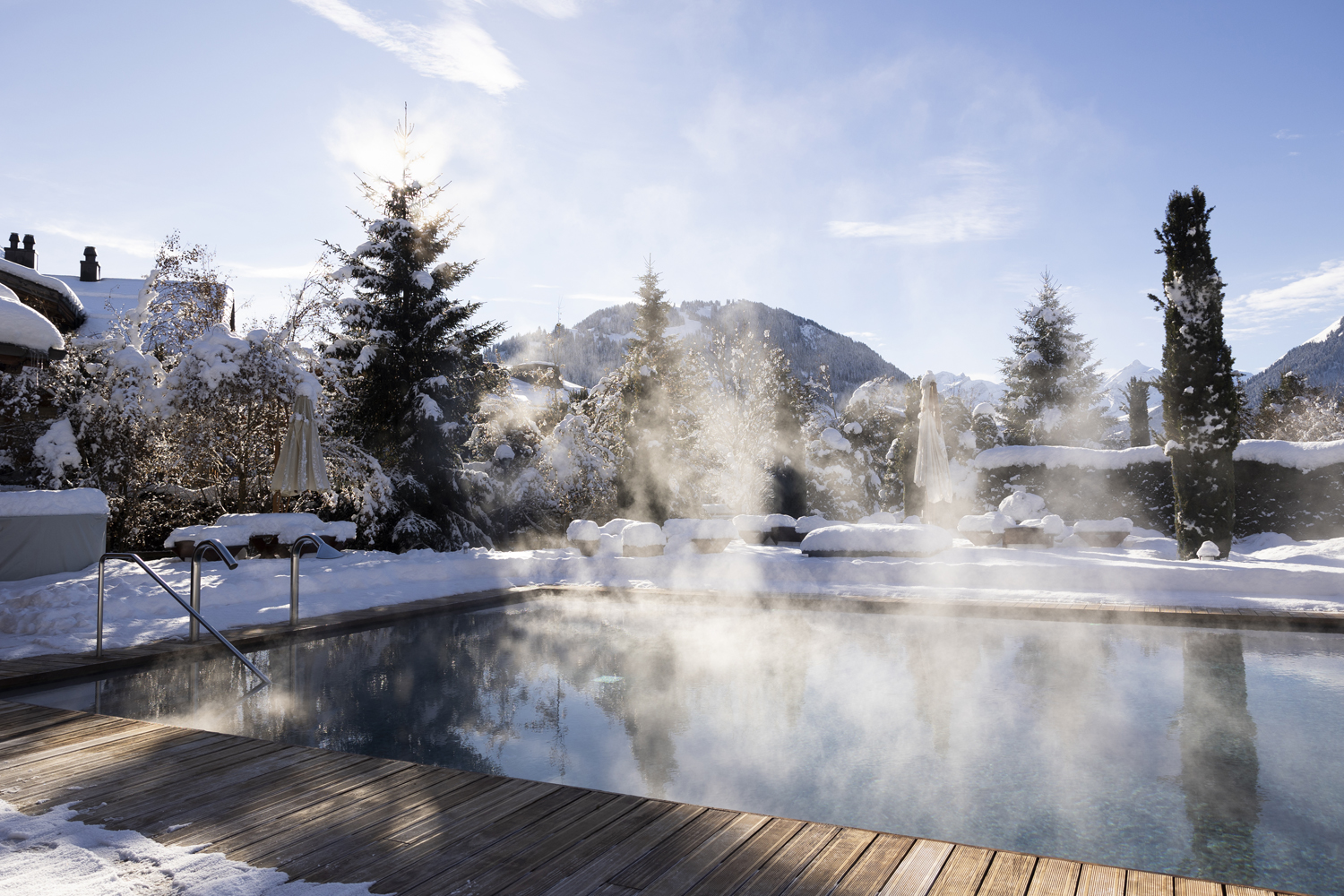
Gstaad’s hotel landscape is quietly shifting, too. The Park Gstaad — the village’s own original five-star hotel, opened in 1910 — is currently closed for a complete renovation, set to reopen in summer 2027 under Four Seasons management, with interiors overseen by the French designer Joseph Dirand. It is, in its own way, the same story this valley has always told: the old made new again, without ever needing to announce it.
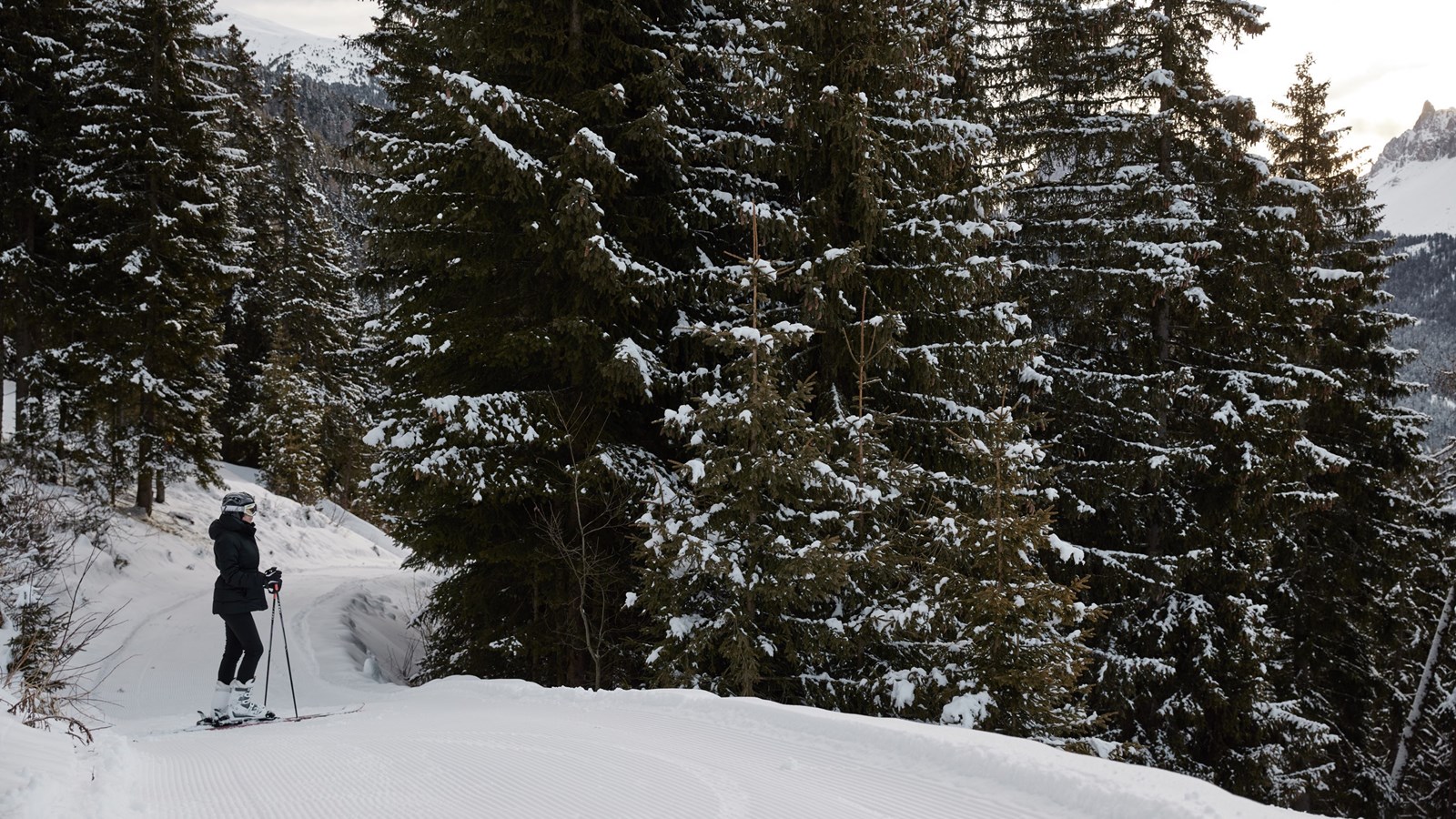
Both places reward the same season, roughly December into March, though the character of the snow and the crowd shifts across those months in each. St Moritz’s high season — polo, White Turf, the Cresta at its most animated — sits squarely in January and February, when the Engadin’s near-guaranteed sun draws its most visible crowd. Gstaad’s rhythm is quieter throughout, but shoulder weeks either side of the main season, particularly into early spring, offer the valley at its most private still — trails uncrowded, the village emptied of even its usual restraint. Getting to either requires a degree of intention that has always been part of the appeal: St Moritz by rail through Chur and the Albula line, or by private aircraft into Samedan, Gstaad by the GoldenPass line from Montreux, or by road from Geneva or Bern, arriving in a valley that seems to have quietly agreed, decades ago, to remain slightly harder to reach than everywhere else.
What St Moritz and Gstaad share, in the end, is not a personality but a conviction — that the Alps in winter are worth building an entire civilisation around, whatever form that civilisation takes. One built its civilisation in the open, on ice tracks and frozen lakes and a promenade designed to be walked slowly. The other built its civilisation behind chalet walls, in generations of the same families returning to the same slopes without needing anyone to notice. Two definitions of Alpine luxury, held an afternoon’s drive apart.
Later this year, a third: Courchevel, and the particular French answer to the same conviction.

For the fuller picture of Swiss alpine travel — planning, timing, and the two resorts in the wider context of Switzerland — see our Switzerland luxury winter travel guide.
Private by nature. Extraordinary by design.
A FEW THINGS WORTH KNOWING
When is the best time to visit St Moritz versus Gstaad?
St Moritz’s high season peaks across January and February, when White Turf horse racing on the frozen lake and the Cresta Run reach their most animated, and the Engadin’s near-guaranteed winter sun is at its most reliable. Gstaad rewards a longer window, December through March, with its quietest and most private character found in the shoulder weeks either side of the main season — late November into early December, and March into early April — when the valley empties even of its usual restraint.
How do you get to Gstaad?
Gstaad is reached most scenically by the GoldenPass line from Montreux, a rail journey that climbs through the Bernese Oberland’s pastureland before descending into the valley. By road, it is roughly two hours from Geneva Airport or ninety minutes from Bern. Private transfer is how we arrange it for our travellers — met on arrival, driven directly, with no connections to manage. Saanen Airport, a short distance from the village, also accepts private aircraft.
What makes Gstaad different from St Moritz?
Where St Moritz was built to be seen — polo on the frozen lake, a promenade lined with the grand names of Paris and Milan — Gstaad was built to remain unseen. Its low chalet skyline has been protected by building regulation since the 1950s, its village centre closed to cars, and its clientele drawn largely from European aristocracy and generational wealth that returns for decades rather than visits for a season. St Moritz’s glamour performs. Gstaad’s discretion doesn’t need to.
How do you arrange a bespoke Switzerland itinerary?
Every Switzerland journey we design is built individually around the traveller — St Moritz and Gstaad included. There is no set package: we combine private transfers, hotel access, and each destination’s own rhythm into a single bespoke arrangement, planned end to end through SCULPTURED JOURNEYS.
Are there any notable new hotel openings in 2027 in St Moritz or Gstaad?
The significant one is in Gstaad: The Park Gstaad — the village’s original five-star hotel, opened in 1910 — is being fully reimagined as The Park Gstaad, A Four Seasons Hotel, with interiors overseen by designer Joseph Dirand and a spa highlighting Clinique La Prairie. Four Seasons confirms an opening in summer 2027. St Moritz’s own hotel landscape remains stable for now, with its grand names continuing much as they are.
How do these towns commit to sustainability?
Both destinations sit within a broader Swiss commitment to environmental stewardship, and their leading hotels reflect it directly, on record with their own certification bodies. The Carlton holds Green Globe certification. The Alpina Gstaad has held EarthCheck Gold certification for three consecutive years running. Neither hotel treats this as a marketing position — both simply build it into how they operate.
If we decide to drive, is there parking at the properties you book for us?
Yes. The Carlton offers free open-air parking, with covered garage parking available for a nightly fee and electric vehicle charging on site. The Alpina Gstaad has a covered underground car park with valet service, also for a nightly fee. That said, our recommendation for both destinations remains private transportation arranged directly through SCULPTURED JOURNEYS — met at the airport or station, driven without a single detail left to chance, and free of forecourts and fees entirely.
Are these locations ideal for family holidays?
Both can be, though each carries its own register. The Carlton offers a crèche and an indoor play area for younger guests. The Alpina Gstaad has its own dedicated Kids World and a similarly considered approach to younger guests. Both hotels are just as practised at hosting three generations together as they are hosting adults alone, and families who want their children folded into a considered, well-run stay — rather than a theme-park version of one — tend to find both very well suited to it.




.jpg)